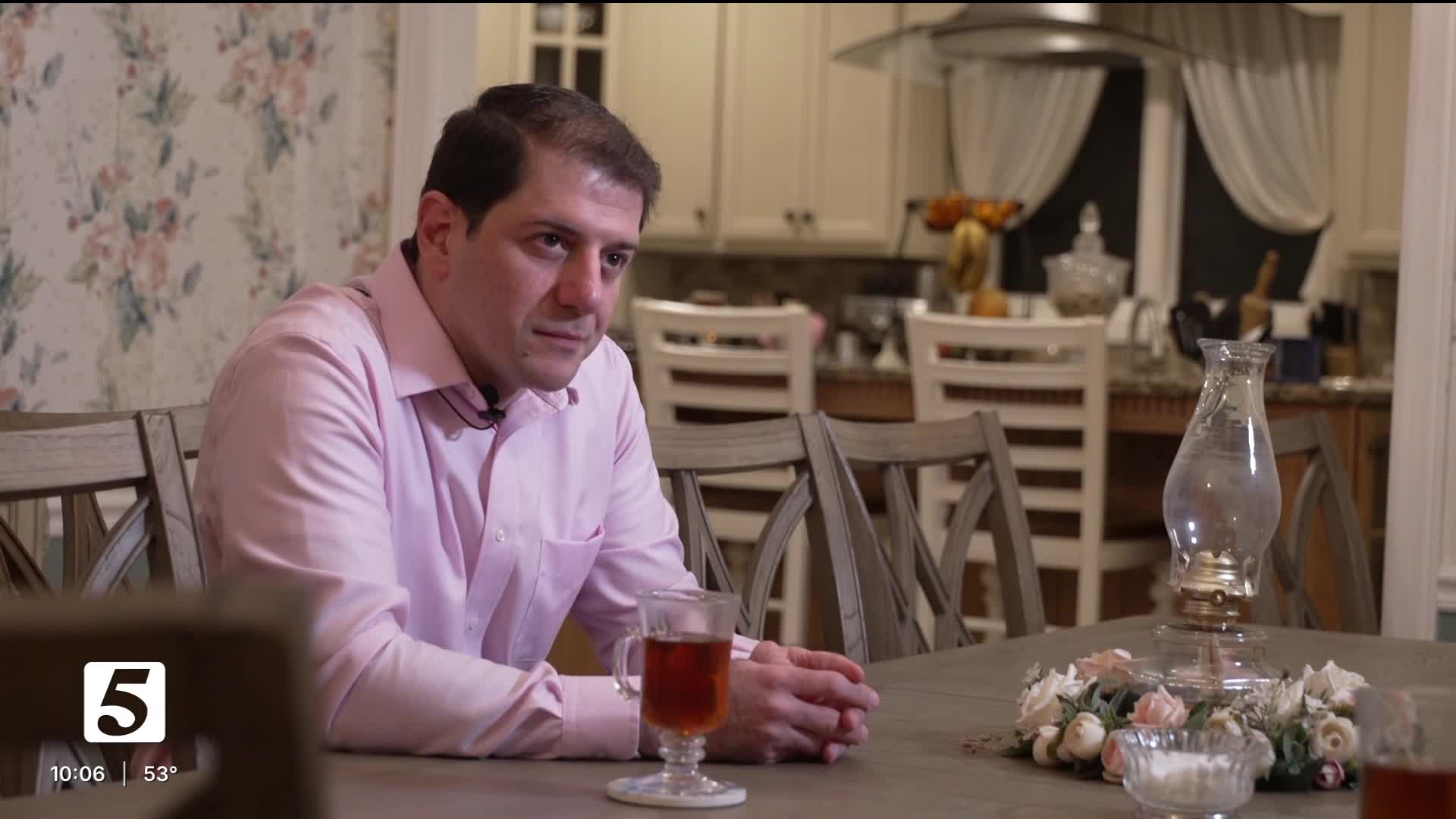


NASHVILLE, Tenn. (WTVF) — A Nashville man who fled Iran more than a decade ago says recent strikes in the country didn't feel like the start of a conflict — they felt like the possibility of freedom.
Saman Saadat was born and raised in Iran, growing up during the Iran-Iraq War. He says the fear he experienced wasn't just on the battlefield — it was part of everyday life.
"There was no hope, and that's the reality of that," Saadat said.
He says the fear wasn't bombs — it was authority.
"I was arrested for wearing a cap. I was arrested for being in a short-sleeve," Saadat said.
Leaving Iran meant safety, but it also meant sacrifice.
"There are things that people don't even believe that's normal and that's my life as a man. Life of my sister was significantly worse," Saadat said.
Saadat hasn't been allowed back to Iran in years. Now a Christian living in Nashville, he says he has missed weddings, funerals, and everyday moments most families take for granted.
"I have lost my grandma without being able to see her. I lost my uncles and my cousins, and they all have so many things happen, and I just have to sit here watching all those things happen," Saadat said.
But he says he never left Iran behind.
"Relatives are there. My heart is there," Saadat said.
When news broke of the recent strike, he woke up before dawn.
"It's never a feeling of yay. But it's a feeling of okay, maybe, maybe we are about to be free," Saadat said.
Then came reports that Iran's Supreme Leader had been killed. Saadat says the news brought him to tears.
"I started crying, and I couldn't control myself. I couldn't talk, and I was just standing there and was just crying and crying," Saadat said.
Moments later, his wife asked him whether their child might one day be able to see Iran.
"Does that mean my child can see Iran? Does that mean there's a chance that I can spend in Iran or even grow up, is that the possibility, and that has been the emotion for us," Saadat said.
For the first time, he says, hope feels possible.
"The target is not to hurt us. The target is not to damage us. The target is to save us," Saadat said.
And while he now calls America home, he says the connection to Iran never fades.
"Even though I'm American-Iranian, I'm still connected to that. You can't just disconnect and say it's goodbye," Saadat said.
That connection runs deep — even in the details of his Nashville home.
"I had to import the rug because I wanted to have what I have under my foot is actually feels something that has been made in Iran," Saadat said.
For Saadat, this isn't about politics. It's about the possibility of freedom.
"We never had a hope, and I think this is the first time that you're like, wow, that is possible. It is possible for a person like me," Saadat said.
Saadat says no one wants war — but after years of sanctions, negotiations, and failed efforts, he believes a direct strike was the only option left. He says for many Iranians, this isn't about conflict — it's about the chance for freedom for all of the Middle East.
This story was reported on-air by a journalist and has been converted to this platform with the assistance of AI. Our editorial team verifies all reporting on all platforms for fairness and accuracy.

September 11, 2001 is a day most associate with terror and tragedy. Austin Pollack shares a story from that day about hope and persistence: the effort to save a little girl’s life – with an organ donation. The problem? The young patient was in Houston, and her life-saving liver here in Nashville. With the grounding of all civilian aircraft, how could it be done? “Nobody ever said this isn’t possible.”
- Rhori Johnston