
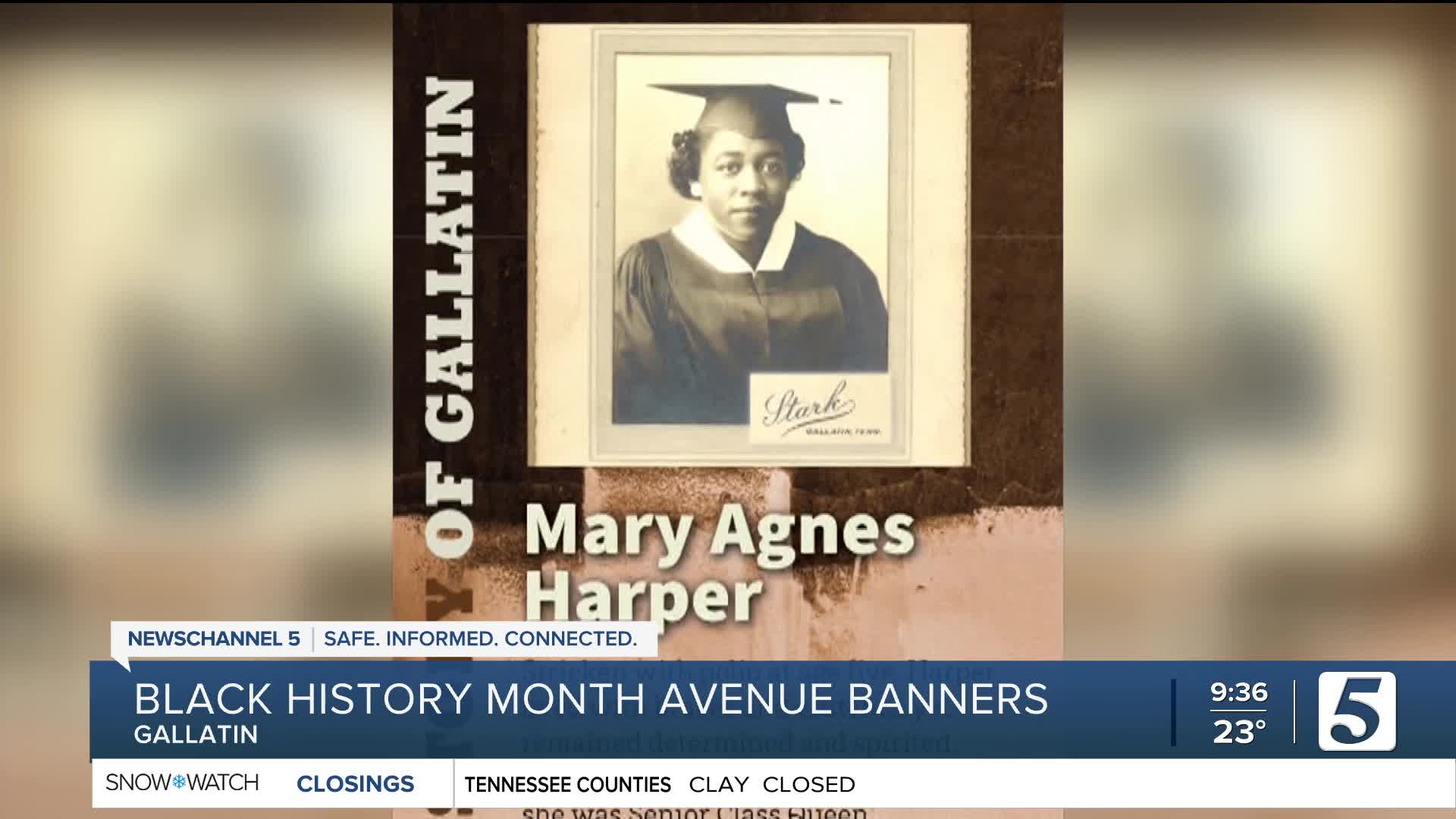


GALLATIN, Tenn. (WTVF) — The City of Gallatin is recognizing people, institutions and places for Black History Month that have made significant contributions to the community with their banners for the fourth year in a row.
The banners tell stories of perseverance, leadership and community. They were delayed by the winter storm and went up Wednesday.
This year's banners honor 17 individuals and stories, including Rev. R.A. Stewart, Principal of Union High School, the only high school for Black students in Sumner County, and Christopher Wright, the first African American to graduate from Harvard University. Other honorees include Andrew Cornelius Turner and Bishop Isaac Williams, whose leadership helped shape the city's educational and spiritual life.
One banner highlights the history of First Baptist Church of Gallatin, which was constructed using bricks salvaged from the Tennessee State Prison and transported by rail from Nashville. Church members cleaned the bricks at night to maintain a steady supply, knowing the white bricklayers hired for construction were paid a full day's wage even if work stopped due to shortages.
Want to see these inspiring banners in person and learn more about Gallatin's Black History Month celebration? Watch our live interviews to discover where you can find these displays throughout the city and hear from Mayor Paige Brown about the importance of recognizing these community contributors. Have a local history story to share? Contact Eric.Pointer@NewsChannel5.com
This story was reported by Eric Pointer and has been converted to this platform with the assistance of AI. Eric Pointer and our editorial team verifies all reporting on all platforms for fairness and accuracy.

September 11, 2001 is a day most associate with terror and tragedy. Austin Pollack shares a story from that day about hope and persistence: the effort to save a little girl’s life – with an organ donation. The problem? The young patient was in Houston, and her life-saving liver here in Nashville. With the grounding of all civilian aircraft, how could it be done? “Nobody ever said this isn’t possible.”
- Rhori Johnston