
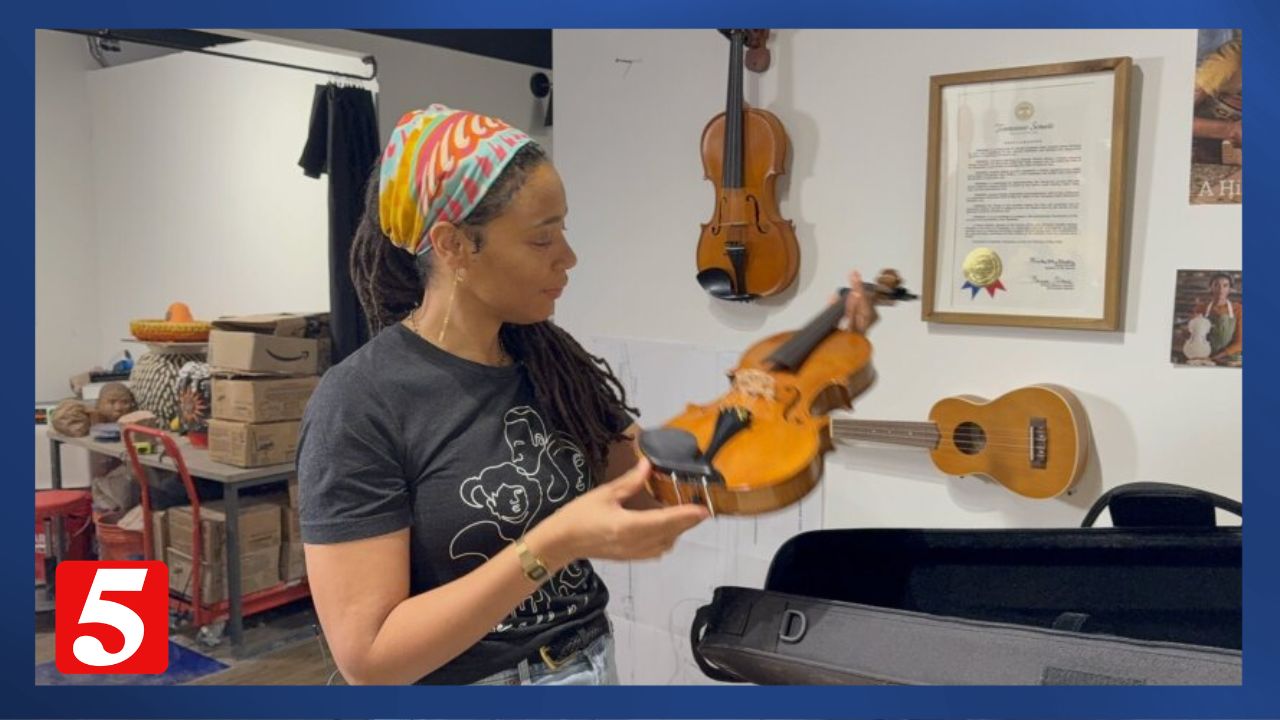


NASHVILLE, Tenn. (WTVF) — After being laid off from her job in hospitality, Amanda Ewing needed to find a new rhythm in life. The answer she landed on is one that's blazing trails and paving the way for others one piece of wood at a time.
Ewing is turning ordinary wood into art that will one day make music. Working from her studio at the Forge, a shared creative workspace, she has become what researchers believe is the first Black female violin maker on record in U.S. history.
When looking for a new career, Amanda decided to reprise old hobbies, like playing violin. So, she joined a local symphony and met a luthier.
"I never needed to think about where violins came from outside of the violin shop," Ewing said.
She started to shadow them, just to see how it was done. But it wasn't until someone told her that they'd never heard of a Black woman making instruments that her perspective changed.
"I was like this doesn't make any sense to me. How is this possible given the contributions of Black Americans in music for a very long time?" Ewing said.
That's when she decided to change her tune.
"I decided to take it a bit more seriously, go a bit more often, do a bit more research on my own, dive into instrument making so that I can have a full understanding of exactly what I was doing and eventually set myself up to be teaching individuals to make instruments after I finished my apprenticeship," Ewing said.
"I did not want anyone else searching and searching and searching and searching for hours and hours looking for instrument makers who look like them," Ewing said.
She spent five years learning the craft, mastering each note of the process. She has been independently making instruments for the past three years. So far she has made four violins one banjo and is in the process of making a bass.
"I want to be a resource for anyone who wants to make an instrument in the wood string family. My goal is to learn how to make all instruments so that I can teach individuals to make any instrument that they want to make," Ewing said.
She said representation matters.
"It seems so unattainable when you don't see someone like you reflected in whatever you want to do," Ewing said.
Amanda may be the first and only Black female luthier on record, but she doesn't want to be a solo act. She plans to continue and hopes to discover others who may have come before her. Even if she is the first, she plans to mentor and help others so she won't be the last.
Want to see Amanda Ewing's incredible craftsmanship in action? Watch the full video to hear the beautiful sounds of her handmade instruments and learn more about her inspiring journey from hospitality worker to history-making luthier. Have a story about someone breaking barriers in your community? Contact Eric at Eric.Pointer@NewsChannel5.com
This story was reported by Eric Pointer and has been converted to this platform with the assistance of AI. Eric Pointer and our editorial team verifies all reporting on all platforms for fairness and accuracy.

September 11, 2001 is a day most associate with terror and tragedy. Austin Pollack shares a story from that day about hope and persistence: the effort to save a little girl’s life – with an organ donation. The problem? The young patient was in Houston, and her life-saving liver here in Nashville. With the grounding of all civilian aircraft, how could it be done? “Nobody ever said this isn’t possible.”
- Rhori Johnston