



NASHVILLE, Tenn. (WTVF) — A bill moving through the Tennessee legislature would expand protections for some of the state's rarest waterways, designating new river segments as scenic and prohibiting landfills within 2 miles of their banks.
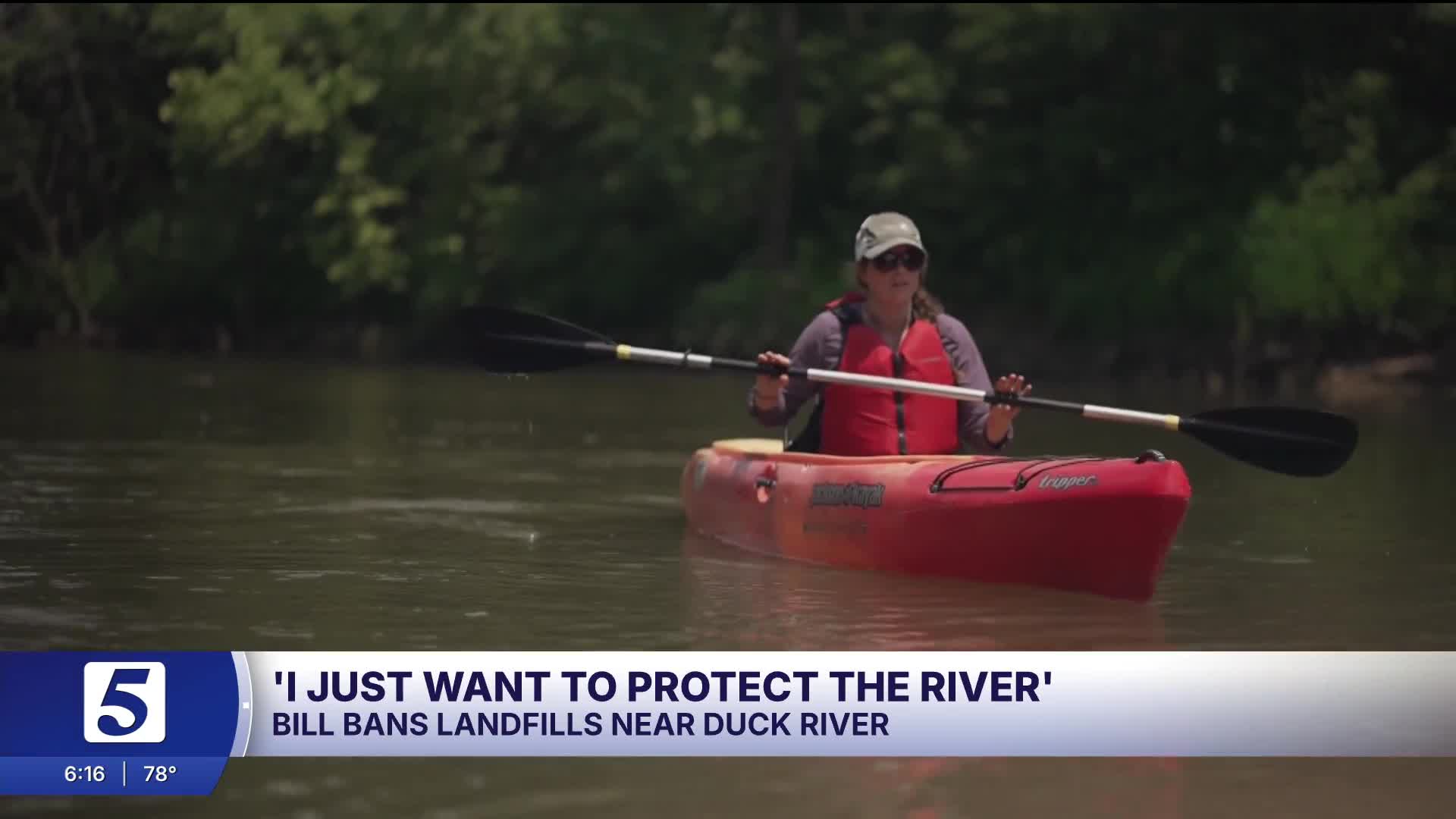
The Duck River, one of the state's scenic rivers, is among the most biodiverse in the country. Its designation as a scenic river means a portion of it is free-flowing and undeveloped, benefiting wildlife and recreation.
"You can go kayaking on them, see the mussels, the salamanders," one advocate said.
The Harpeth Conservancy's Grace Stranch said the bill would not only save taxpayers money but help keep generations healthy.
"Do we want a landfill within 2 miles of these particularly special rivers? And I would say the answer is no," Stranch said. "Only 1% of our rivers are designated state scenic rivers, and we need to have higher protection for those rivers."
Under current law, three classes of scenic rivers exist in Tennessee. The bill would add new rivers and river segments to the Class II pastoral river designation, which carries specific land use restrictions. Those restrictions limit activity within 450 feet of the riverbank on each side and already prohibit mining, commercial timber harvesting, and most road construction within conservation or public use easements.
The bill would designate the entirety of the Duck River as a Class II area, with the exception of the segment designated by the TVA as part of Normandy Reservoir. Current law only protects two specific segments of the Duck River under that classification.
The bill would also extend Class II protections to the full length of the Buffalo River, including portions in Wayne, Perry, Humphreys, and Lewis counties that are currently excluded. Additionally, four tributary segments would receive new Class II designations: Beaverdam Creek, Lick Creek, Piney River, and Swan Creek — all of which flow into the Duck River in Hickman County.
The landfill prohibition would apply not only within the boundaries of a designated Class II river county, but also in adjacent counties through which the river flows, even if the river is not designated as scenic in those counties.
The bill would also expand community outreach requirements. Under current law, those requirements — including notarized consent from private landowners before boundaries can be established — apply only to the Duck River. The bill would extend those protections to all new proposed scenic river area boundaries statewide.
Opponents have supported amendments to remove certain rivers from the bill's protections, or argued that a 2-mile buffer is too large. Stranch pushed back on that characterization.
"We are not using this as a sword to make it so we can't have landfills anywhere. That's not the intention. Our intention is to get the protections for the segment of rivers that need the state scenic river protection," Stranch said.
For bill sponsor Representative Pat Marsh, the issue is personal. He lives along the Duck River.
"I live on the Duck River. I love the Duck River. It's a beautiful river, it's pristine and one of the most biodiverse rivers in the nation," Marsh said. "What I'm trying to do in this bill is make sure the Duck is taken care of."
Marsh said his motivation extends to future generations.
"The people in my county and all the counties down the road love the Duck River," Marsh said. "We want the river to be ours for decades in the future."
The Duck River has often been at the center of conservation debates over how to balance preservation with growth.
Another scenic river, the Stones River, has been named in a lawsuit since 2022. I have reported on how the city of Murfreesboro said contaminants from a landfill leaked into the river, including near the intake pipe for the city's drinking water.
Advocates say stories like these are why the state's scenic rivers need greater protection.
"Our scenic rivers are incredible. They're lifelines for the community, they're special crown jewels of the state," one advocate said.
"These scenic rivers are incredibly special in our state," another advocate said.
The bill passed unanimously out of the Senate and is due for more debate in a House subcommittee.
I welcome your thoughts on this story. Please send me an email at Amanda.Roberts@NewsChannel5.com
This story was reported on-air by Amanda Roberts and has been converted to this platform with the assistance of AI. Our editorial team verifies all reporting on all platforms for fairness and accuracy.
