

NASHVILLE, Tenn. (WTVF) — The FBI is warning music lovers in Tennessee about a dangerous surge in scams involving artificial intelligence, fake artists, stolen songs, and concert ticket fraud.
Between the start of 2024 and September 2025, nearly 1,000 complaints were filed by singers, songwriters, producers, fans, and security directors. Victims lost millions of dollars in less than two years.
FBI Nashville investigators say criminals are exploiting AI technology to steal music and create fake identities. Impostors pose as musicians online to build trust with victims before asking for money for travel, recording costs, or emergencies. Victims, many of whom are over 60, have lost more than $12 million to these romance scams.
The FBI says ticket scams use fake websites and posts to sell concerts, meet-and-greets, or merchandise. Fans pay but receive nothing. Hackers also target artists' social media accounts and devices to steal unreleased work, demand payment, or impersonate them online.
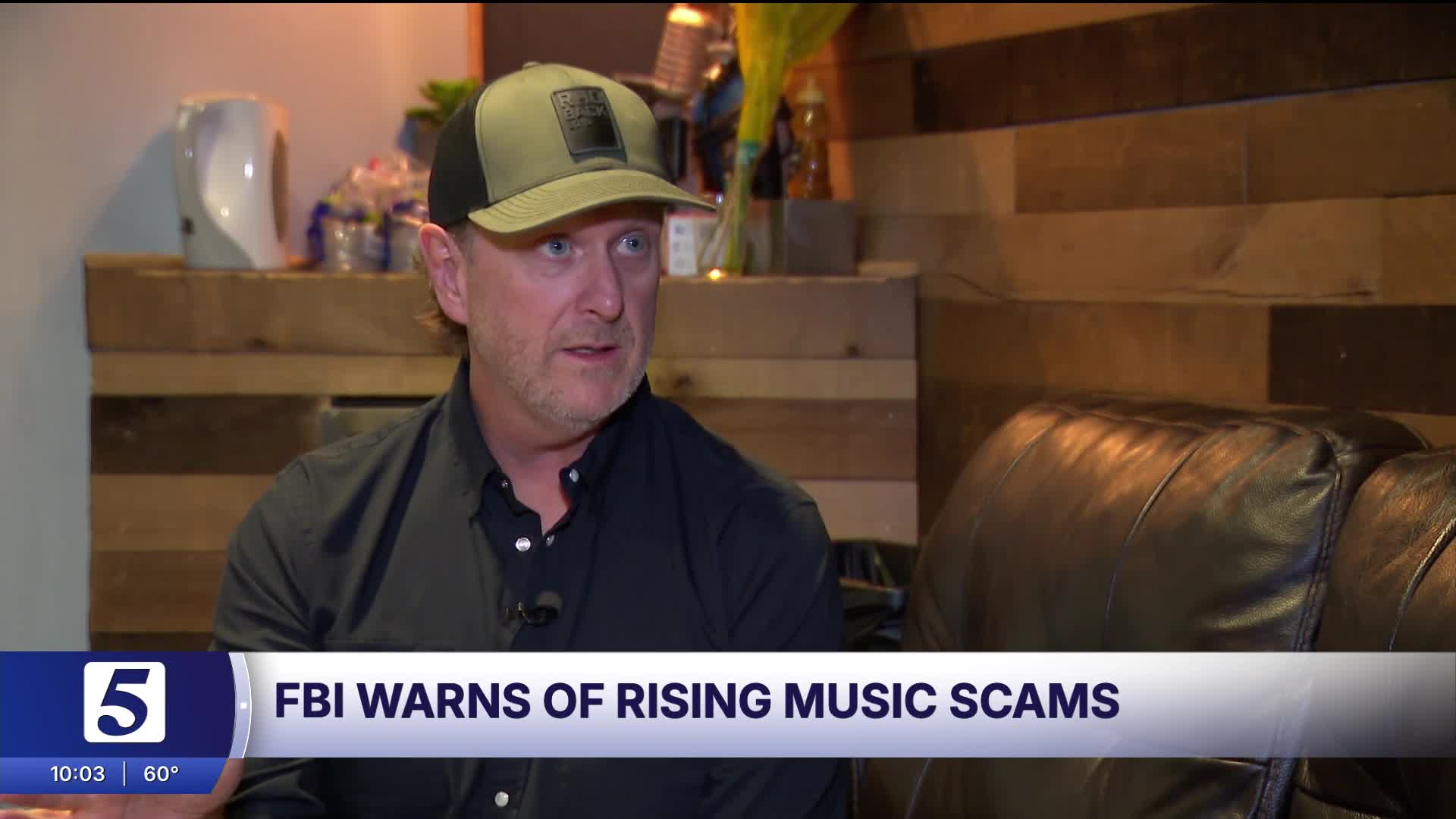
Jim Beavers has spent decades shaping the sound of Nashville as a songwriter. He is taking the stage at Tin Pan South this week to perform some of his favorites.
"Writing a hit song is a whole lot of magic and a whole lot of work too," Jim Beavers said.
Beavers is now facing a new kind of threat from AI.
"Well, when it comes to AI what most of us know, and maybe you don't, is that it is training itself on human-created copyrighted works. So it is not coming up with this stuff on its own," Beavers said.
As AI moves deeper into music, it is raising serious questions about creativity and ownership.
"I want the robots to mow my yard, not write my songs," Beavers said.
"I think AI pretending to be someone that it's obviously not is more a concern for the artist because it's really easy to dump in 10 vocals of a famous singer and then you or I could sing a vocal and just say make that sound like Artist X and it can do that, it's been able to do that for a couple of years," Beavers said.
"I mean, that's obvious fraud, and so I feel for anybody who's a victim of fraud, especially when they lose money, and if we're talking about, you said concerts as well, like they would prepay for a concert ticket, that's a lot of money these days," Beavers said.
For Beavers, the fight is not just about protecting songs, but protecting the soul behind them.
"I am concerned for the people behind me, but it's going to be a part of what we do, and I hope we get it figured out to where, as I've said, there's a human heartbeat somewhere," Beavers said.
The FBI offered a number of different ways to protect yourself, including keeping your systems and software up to date, creating strong and unique passphrases and using multi-factor authentication.
They also advise being careful when connecting to public Wi-Fi networks.
- Be careful when connecting to a public Wi-Fi network and do not conduct any sensitive transactions, including purchases, when on a public network. If you must use unsecure Wi-Fi, use a VPN service that starts upon initial connection.
If you or someone you know is a victim of fraud, click here.
Victims aged 60 or over who need assistance filing an IC3 complaint can contact the DOJ Elder Justice Hotline, 1-833-FRAUD-11 (or 833-372-8311).
This story was reported on-air by a journalist and has been converted to this platform with the assistance of AI. Our editorial team verifies all reporting on all platforms for fairness and accuracy.

September 11, 2001 is a day most associate with terror and tragedy. Austin Pollack shares a story from that day about hope and persistence: the effort to save a little girl’s life – with an organ donation. The problem? The young patient was in Houston, and her life-saving liver here in Nashville. With the grounding of all civilian aircraft, how could it be done? “Nobody ever said this isn’t possible.”
- Rhori Johnston