


NASHVILLE, Tenn. (Nashville Banner) — This story was originally published by the Nashville Banner. Sign up for their newsletter.
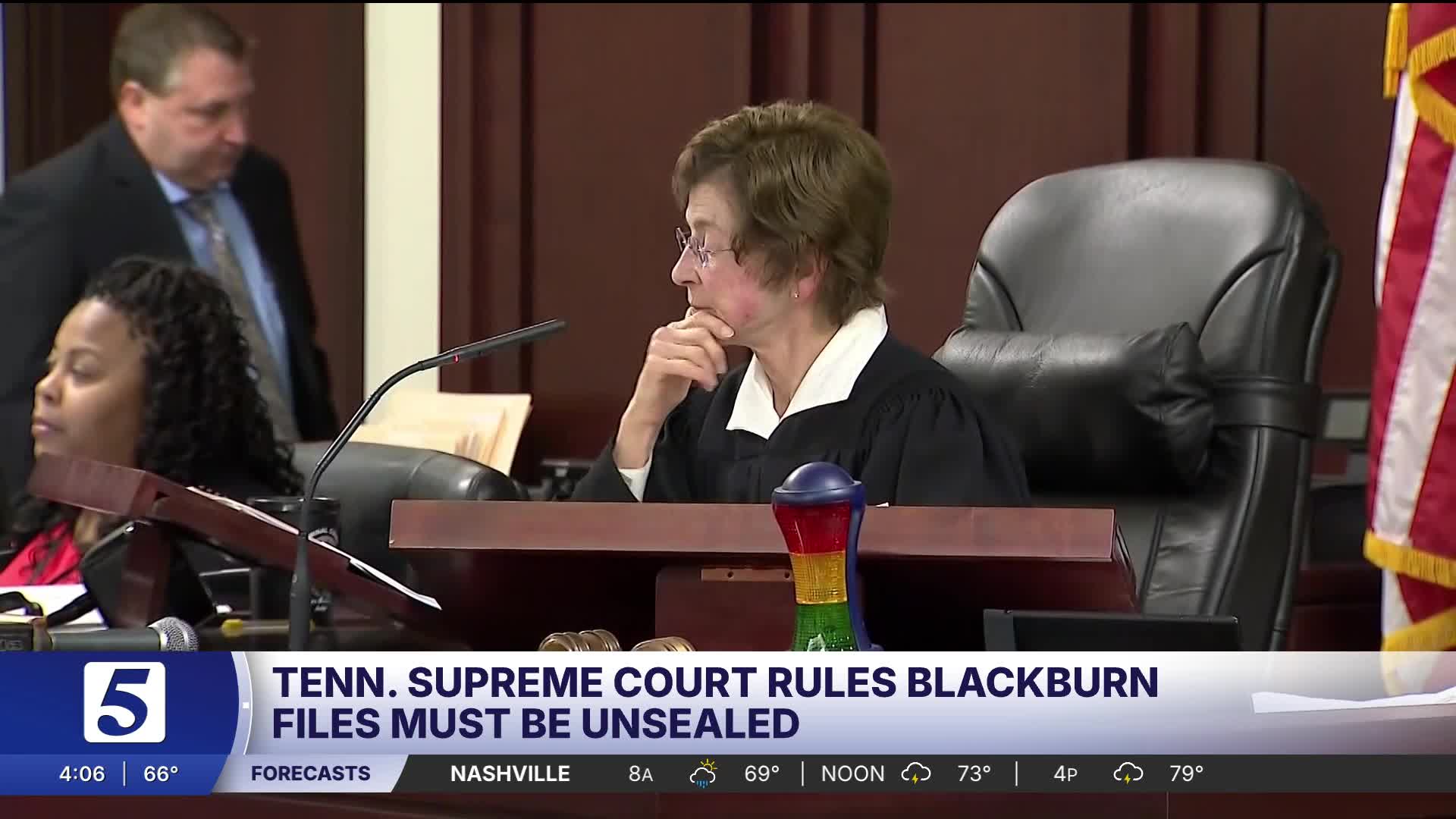
In a major victory for transparency, the Tennessee Supreme Court on Thursday unanimously ruled that a lower court must unseal records related to former Judge Cheryl Blackburn’s competence.
Following a series of articles about sealed court files, the Banner intervened in the criminal case of Randall Johnson in 2024, when attorneys for the defendant entered affidavits questioning the judge’s ability to perform her duties. Blackburn sealed the files without a proper order and then recused herself from the case. When the Banner asked Judge Angelita Dalton to unseal the files, she denied the request, stating that “more compelling interests [were] at stake.”
The court reversed Dalton’s decisions on Thursday, ruling that a review of the records found no reason for them to be kept from the public.
“We have carefully reviewed the three sealed documents and discern no compelling interest that would overcome the presumption of openness for judicial records,” wrote Justice Mary Wagner in the court’s decision.
“The presumption of openness is long rooted in the history of our Nation and State, originating from common law traditions that predate the Federal Constitution,” Wagner wrote. “This presumption strengthens public confidence in our judicial system.”
Banner attorney Daniel Horwitz hailed the ruling as a win for openness.
“This is a landmark victory for public access to judicial records in Tennessee,” Horwitz said. “The public will know more about what happens in our courts based on this decision, and judges will have more difficulty keeping their business secret from public scrutiny and review. We are proud to have won this important ruling on the Banner’s behalf and to have overcome the Attorney General’s efforts to obstruct transparency and review.”
In a footnote, the court also admonished clerks to stop removing cases from public databases, the subject of a previous Banner story.
“Further, technology or processes that automatically remove cases or records from public facing dockets should be eliminated. Except as might be required by statute, sealed cases and records should still appear listed on the public facing docket with properly anonymized titles,” Wagner wrote for the court.
All five justices agreed that the records should be made public. In separate opinions, Justices Bivens and Kirby disagreed only over the standard of review in the case.
A 2024 story found that Blackburn had been falling asleep during court and was misremembering the names of attorneys, causing concern among both prosecutors and defense attorneys.
Before the high court could unseal the records, Blackburn retired from the bench last year.
This article first appeared on Nashville Banner and is republished here under a Creative Commons Attribution-NoDerivatives 4.0 International License.

Kelsey Gibbs brings us a powerful story of humanity, compassion, and love in action while showing us the hard and lifesaving work our officers do daily. Nashville is lucky to have people like Lt. Hotz wearing the badge.
- Carrie Sharp