


NASHVILLE, Tenn. (WTVF) — With the drought in play across Middle Tennessee, several cities are placing burn bans into effect.
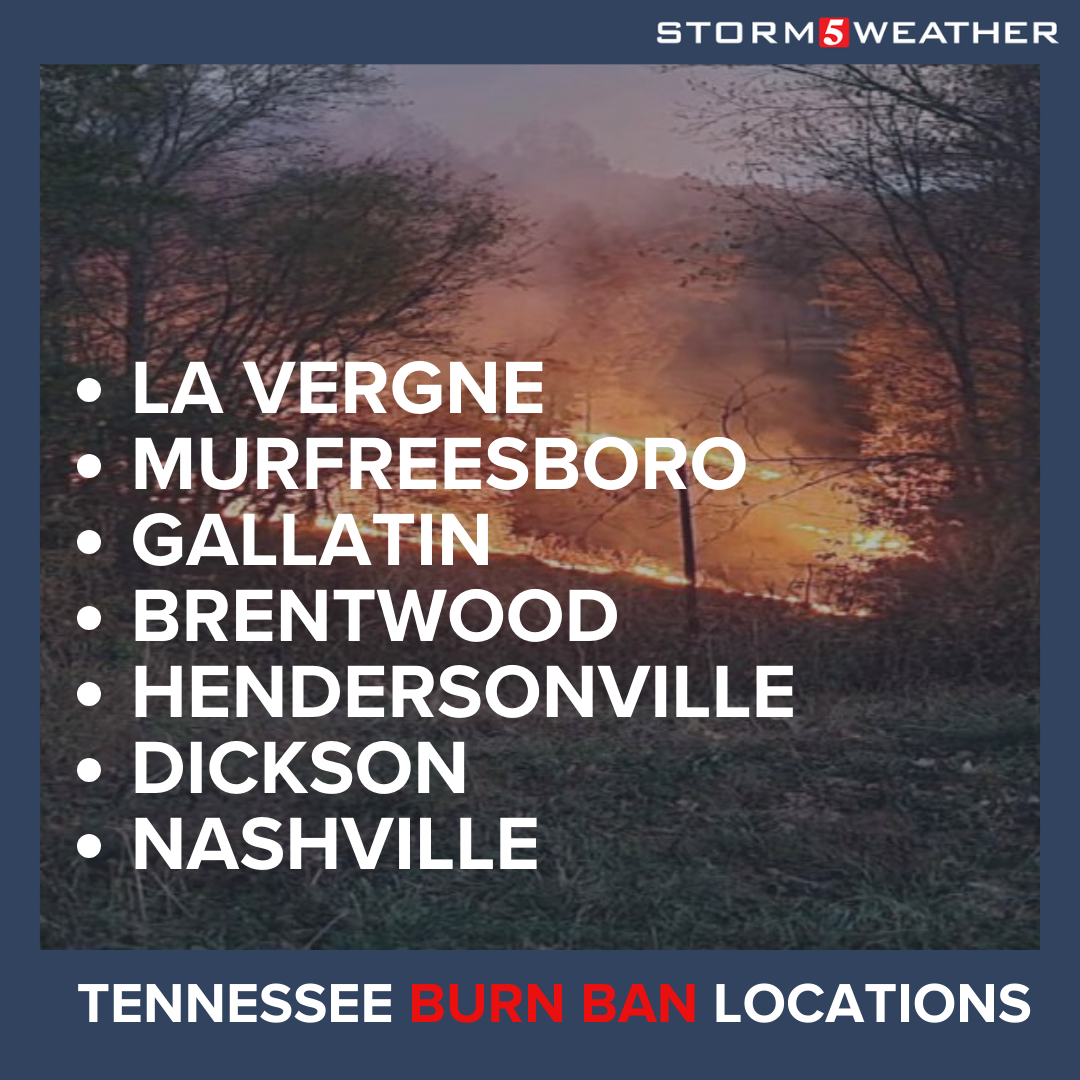
What does that mean?
That means not setting fire to brush or ditches and includes:
- Ditch banks
- Construction debris
- Fields, grassland
- Gardens
- Wooded areas
- Campfires, cooking fires
- Burn barrels.
Why is it like this?
Middle Tennessee is very dry right with heat in the triple digits and very little rainfall.
Burn bans are inspired by:
- Dry Conditions: Extended periods of low precipitation or drought can lead to dry vegetation, making it more susceptible to ignition and rapid fire spread.
- High Winds: Strong winds can quickly spread fires, making it challenging to control and contain them. Even a small, controlled burn can escalate into a larger and more dangerous fire under windy conditions.
- Low Humidity: Dry air with low humidity levels can contribute to the desiccation of vegetation, making it more susceptible to ignition.
- Wildfire Threat: If there is an elevated risk of wildfires in the area, authorities may impose burn bans as a preventive measure to reduce the likelihood of accidental fires that could escalate into major wildfires. A small wildfire is burning the Great Smoky Mountains right now.
- Air Quality Concerns: Burning certain materials can release pollutants into the air, affecting air quality. During periods of poor air quality, burn bans may be enacted to protect public health. There have been air quality alerts the last several days.
Do you have more information about this story? You can email newsroom@newschannel5.com.

September 11, 2001 is a day most associate with terror and tragedy. Austin Pollack shares a story from that day about hope and persistence: the effort to save a little girl’s life – with an organ donation. The problem? The young patient was in Houston, and her life-saving liver here in Nashville. With the grounding of all civilian aircraft, how could it be done? “Nobody ever said this isn’t possible.”
- Rhori Johnston