



This month's book picks for Heather Made Me Read It are here and there's something for everyone on our list!
Heather's Picks:
Yesteryear by Caro Claire Burke
Natalie lives a traditional lifestyle – and her followers are sick with envy. Her charming farmhouse on her working ranch is artfully cluttered, her husband is a handsome cowboy, her homemade sourdough boules are each more beautiful than the last. So what if there are nannies and producers and industrial-grade ovens behind the scenes? What her followers don’t know won’t hurt them.
Then, one morning, Natalie wakes up in a strange, horrible version of reality. Her home, her husband, her children—they’re all familiar, but something’s off. Is this a hoax? A reality show? A test from God? Natalie knows just two things for sure: this isn't her perfect life, and she must escape, by any means possible.
As darkly funny as it is shocking and gripping, Yesteryear is an electrifying examination of tradition, fame, faith and the grand performance of womanhood, from a thrilling new talent in fiction.
Lady Tremaine by Rachel Hochhauser
After the death of her second husband, Lady Etheldreda Verity Isolde Tremaine Bramley is solely responsible for her two daughters, Rosamund and Mathilde, her simpering stepdaughter Elin, a razor-taloned peregrine falcon, and a crumbling manor buried in the woods.
When a royal ball offers the chance to change their fortunes, Ethel risks her pride in pursuit of an invitation for all three of girls - only for her hopes to be fulfilled by the wrong Elin.
Yet as her stepdaughter's engagement to the future king unfolds, Ethel discovers a sordid secret hidden in the depths of the royal family, forcing her to choose between the security she craves and the feckless stepdaughter who has rebuffed her at every turn...
Madison's Picks
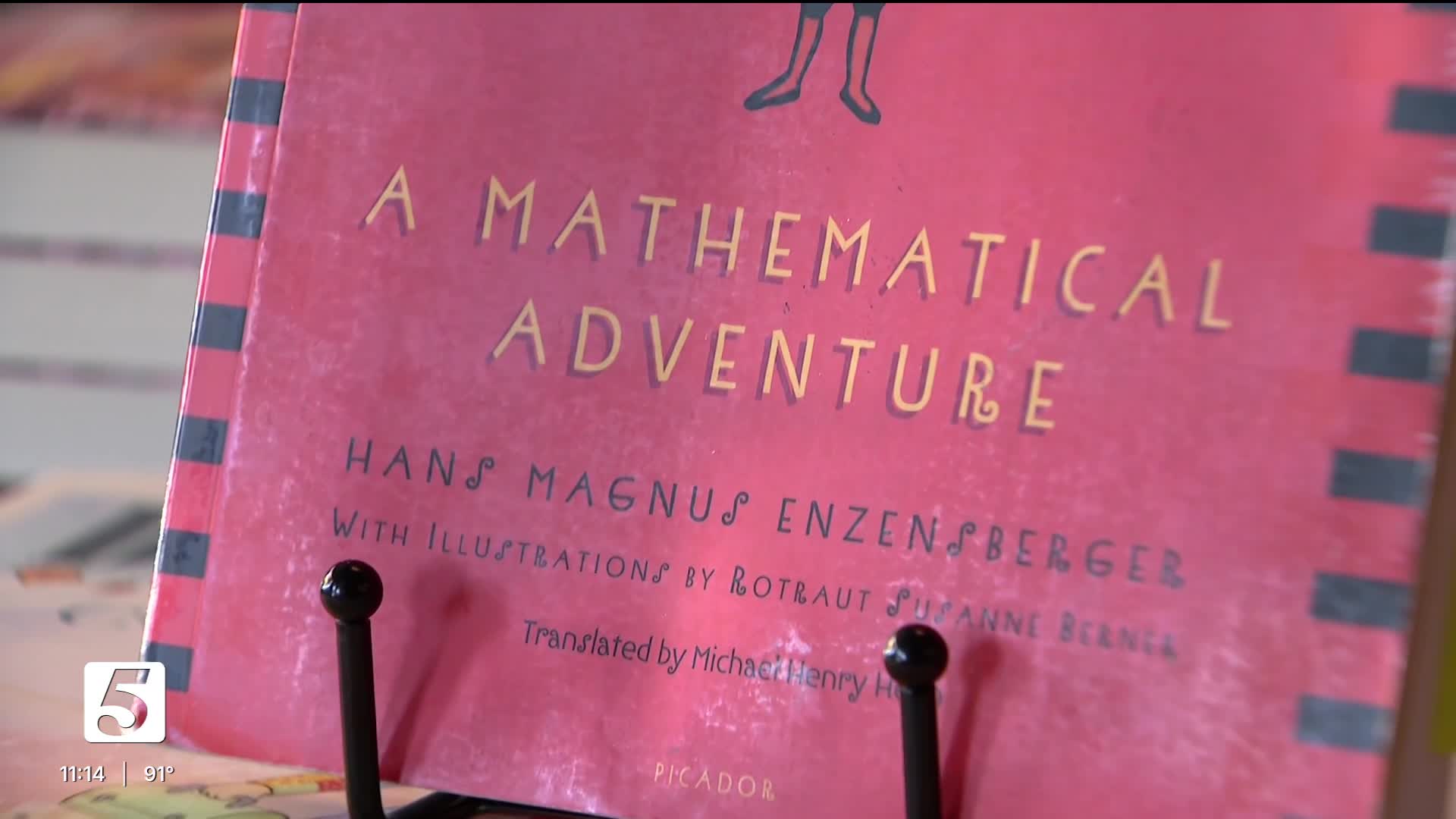
The Number Devil by Hans Magnus Enzensberger
In twelve dreams, Robert, a boy who hates math, meets a Number Devil, who leads him to discover the amazing world of numbers: infinite numbers, prime numbers, Fibonacci numbers, numbers that magically appear in triangles, and numbers that expand without end. As we dream with him, we are taken further and further into mathematical theory, where ideas eventually take flight, until everyone―from those who fumble over fractions to those who solve complex equations in their heads―winds up marveling at what numbers can do.
Hans Magnus Enzensberger is a true polymath, the kind of superb intellectual who loves thinking and marshals all of his charm and wit to share his passions with the world. In The Number Devil, he brings together the surreal logic of Alice in Wonderland and the existential geometry of Flatland with the kind of math everyone would love, if only they had a number devil to teach them.
Making the Unequal Metropolis by Ansley T. Erickson
In a radically unequal United States, schools are often key sites in which injustice grows. Ansley T. Erickson’s Making the Unequal Metropolis presents a broad, detailed, and damning argument about the inextricable interrelatedness of school policies and the persistence of metropolitan-scale inequality. While many accounts of education in urban and metropolitan contexts describe schools as the victims of forces beyond their control, Erickson shows the many ways that schools have been intertwined with these forces and have in fact—via land-use decisions, curricula, and other tools—helped sustain inequality.
Taking Nashville as her focus, Erickson uncovers the hidden policy choices that have until now been missing from popular and legal narratives of inequality. In her account, inequality emerges not only from individual racism and white communities’ resistance to desegregation, but as the result of long-standing linkages between schooling, property markets, labor markets, and the pursuit of economic growth. By making visible the full scope of the forces invested in and reinforcing inequality, Erickson reveals the complex history of, and broad culpability for, ongoing struggles in our schools.
