

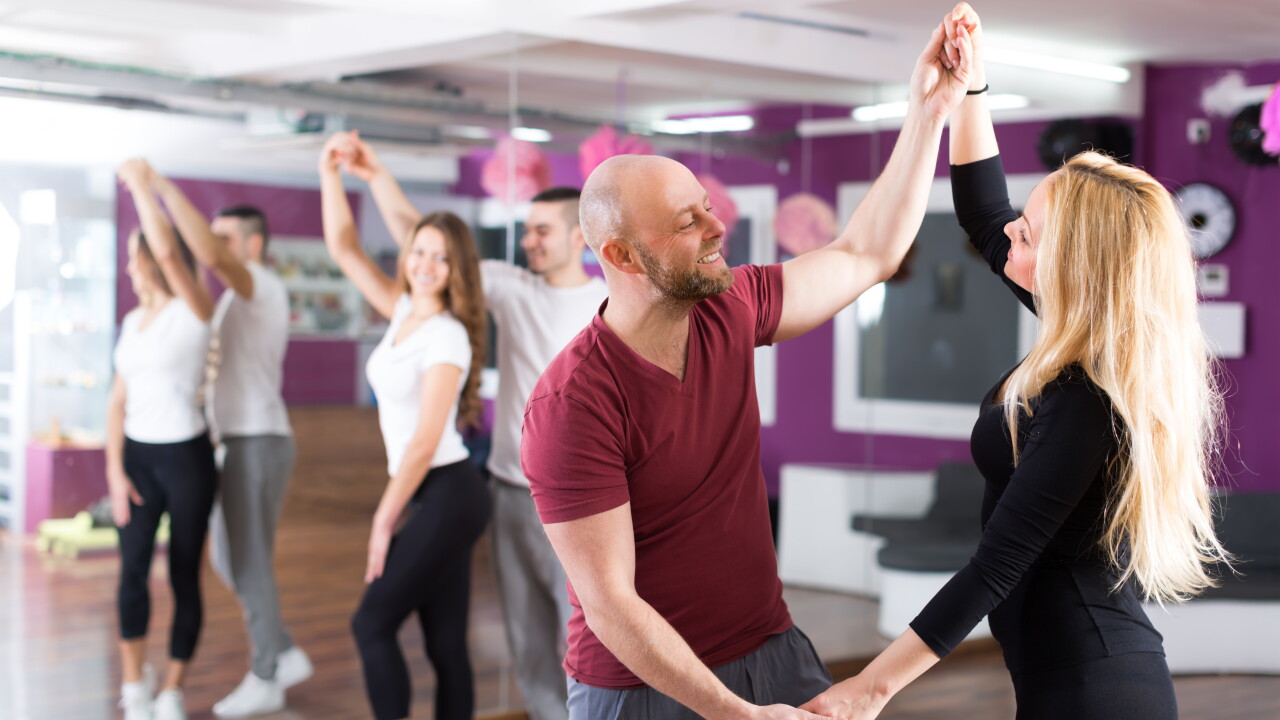

A Cambridge University study found that eight weeks of salsa dancing significantly reduced depression and social anxiety in young adults — and researchers say the implications go well beyond the dance floor.
Mental health care is expensive, hard to access, and often feels distant from everyday life. But a new study suggests one of the most effective tools for easing depression might be as close as your nearest dance studio.
Cambridge University researchers tested salsa dancing as a treatment for mild to moderately severe depressive symptoms in young adults — and the results were striking enough to turn heads in the mental health research community.
- 121 — Young adults studied
- 8 weeks — Length of salsa class
- 18–24 — Age range studied
How Is Your Mental Wellness Right Now?
Five quick questions. Find out where you stand — and what the research says about people like you.
How often do you participate in a group social activity — a class, club, team, or recurring gathering?
- Several times a week — Frequent social engagement is a strong protective factor. The Cambridge study found that even structured group activity like a salsa class produced measurable improvements in loneliness and social anxiety.
- Once a week or so — Once a week is a solid baseline. The Cambridge participants attended an eight-week salsa class and saw significant reductions in depressive symptoms — consistency mattered.
- A few times a month — Sporadic social activity is better than none, but the study's results were tied to a structured, repeated class format over eight weeks — regularity appears to be part of what makes it work.
- Rarely or never — Isolation is closely linked to depressive symptoms. The Cambridge study specifically tracked loneliness as one of the outcomes — and both groups in the study reported improvements there, suggesting any structured social activity helps.
Do you currently have a regular physical activity routine?
- Yes, most days — Great. Physical movement is already a recognized mood-support tool. The salsa study layered social connection and rhythmic movement on top — a combination that researchers say produced greater reductions in social anxiety than either element alone might.
- Yes, a few times a week — A few sessions a week is meaningful. The Cambridge researchers found that structured dance classes — an eight-week commitment — were enough to produce a significantly greater reduction in symptoms compared to a control group that waited three months.
- Occasionally — Occasional movement is a start. The study's participants were young adults aged 18 to 24 with mild to moderately severe depressive symptoms — many were likely not regular exercisers, which makes the positive results even more accessible to replicate.
- No regular routine — No routine yet is exactly where many of the 121 study participants started. The Cambridge researchers specifically designed the salsa class as an accessible entry point — no prior dance experience required.
How would you describe your general level of daily happiness lately?
- Pretty good — I feel positive most days — That is a strong baseline. The Cambridge study tracked daily happiness as a specific metric and found that salsa participants reported larger improvements in daily happiness than the control group — suggesting structured joyful activity can lift an already decent mood even further.
- Mixed — some good days, some rough ones — Variability is common. The study focused on young adults with mild to moderately severe depressive symptoms — a range that includes many people who describe their mood as inconsistent rather than consistently low.
- Mostly low, but managing — The study was designed specifically for people in your position — those experiencing real but not severe symptoms. Researchers found the salsa class produced significantly greater reductions in symptoms compared to simply waiting for things to improve.
- Struggling — most days feel hard — Reaching out matters. The Cambridge study targeted mild to moderately severe depressive symptoms — the range where structured, accessible interventions like dance classes showed the most promise. Talking to a health professional is always the right first step.
How comfortable are you meeting new people in a group setting?
- Very comfortable — I enjoy it — Social ease is an asset. The Cambridge study found that even participants who were already socially engaged saw improvements in social anxiety after the salsa class — suggesting the structured, low-stakes group environment reinforced positive habits.
- Somewhat comfortable — mild nerves — Mild nerves are normal. Social anxiety was one of the specific outcomes tracked in the Cambridge study — and salsa participants experienced greater reductions in social anxiety than the control group, even among those who weren't severely anxious to begin with.
- Uncomfortable — I tend to avoid it — Avoidance is a common response to social anxiety. The study found that both the salsa group and the control group reported some improvement in social anxiety — but the dance participants saw significantly greater reductions, which researchers tied to the repeated, low-pressure social exposure the class provided.
- Very uncomfortable — it causes real distress — Significant social anxiety deserves real support. The Cambridge study specifically chose salsa as a social dance format — the partner-and-group structure was intentional, designed to rebuild social comfort gradually over eight weeks.
Have you ever taken a structured dance class as an adult?
- Yes, regularly — You already know what the researchers confirmed: structured dance combines physical movement, social engagement, and rhythmic joy in a single activity. The Cambridge study found those elements together produced significantly greater reductions in depressive symptoms than a control group.
- Yes, a few times — A few experiences give you a foundation. The study's eight-week format was designed to be long enough for participants to build real comfort with the form — not just sample it once.
- No, but I am open to it — That openness is meaningful. Researchers called dance classes an accessible way to reduce depressive symptoms — the barrier to entry is intentionally low, and no prior experience is needed for the benefits to emerge.
- No — and I would not be comfortable trying — That resistance is worth noting. The Cambridge study found that both groups — those who danced and those who waited — reported some improvements in loneliness and generalized anxiety. But the dance group's gains in social anxiety and daily happiness were significantly larger, suggesting the discomfort of trying something new may itself be part of the benefit.
Your answers above reflect something the Cambridge researchers were trying to understand more precisely: which people benefit most from structured social movement, and why. The 121 young adults they recruited were not clinical patients — they were people navigating the kind of low-grade, persistent mood struggles that millions of Americans recognize but rarely seek formal treatment for.
That is precisely what made the study design interesting. Researchers randomly assigned participants to either an eight-week salsa class or a waitlist control group that had to wait three months before taking the class. The comparison was not salsa versus therapy — it was salsa versus doing nothing, which is what most people with mild depressive symptoms actually do.
The results were not subtle. Participants who took the salsa class showed a significantly greater reduction in depressive symptoms than those who waited. Both groups reported some improvement — in areas like loneliness, social anxiety, and generalized anxiety — but the dancers pulled clearly ahead on two specific measures: social anxiety and daily happiness.
Researchers at Cambridge concluded that the findings support dance classes as an accessible way to reduce depressive symptoms. That framing matters. Accessible is a deliberate word choice — it signals that the researchers see this not as an elite or niche intervention, but as something most people can realistically try.
What the Research Actually Says
You need to be a good dancer for the mental health benefits to kick in.
Verdict: false
The Cambridge study recruited people with no mention of prior dance ability. The eight-week class was the intervention — meaning participants were learning as they went. The social and physical structure of the class, not dance skill, appears to be what drove the results.
Both the dance group and the waitlist group saw some mental health improvements.
Verdict: true
The study found improvements in areas like loneliness and generalized anxiety across both groups. The key finding was that the salsa participants saw significantly greater reductions overall — particularly in social anxiety and daily happiness.
The study focused on severe clinical depression.
Verdict: false
Researchers specifically recruited young adults with mild to moderately severe depressive symptoms — not clinical or severe cases. This is the range most commonly experienced by people who do not seek formal mental health treatment.
Dance classes are being described by researchers as an accessible mental health tool.
Verdict: true
The Cambridge researchers explicitly framed their findings around accessibility — describing dance classes as an accessible way to reduce depressive symptoms. That language is intentional and meaningful in public health research.
How to Try the Salsa Approach Yourself
- Look for a structured class, not a drop-in — The Cambridge study used an eight-week format — the consistency and progression of a structured class appear to be part of what drives results. A recurring commitment is different from a one-time session.
- Prioritize a group setting — Salsa is inherently social — you rotate partners, make eye contact, and navigate shared rhythm. The Cambridge researchers specifically chose social dance, not solo movement, as the format. The people in the room are part of the intervention.
- Give it the full eight weeks before judging — The study's control group had to wait three months before taking the class — meaning the comparison was patience vs. action. The full eight-week commitment is what the research actually tested, not a two-week sample.
- Track how you feel — not just how you dance — Researchers measured anxiety, loneliness, and daily happiness — not dance skill. When you start a class, notice those markers: Do social situations feel slightly less draining? Do you have moments of genuine enjoyment? Those are the metrics that matter.
- Treat it as a complement, not a replacement — The Cambridge study targeted mild to moderately severe depressive symptoms. If your mood struggles feel more serious, a structured activity is a valuable addition to professional support — not a substitute for it.
What makes the Cambridge findings worth paying attention to is not just that salsa dancing is fun — it is that the study was designed carefully enough to separate genuine effect from placebo. The random assignment, the control group, and the specific tracking of distinct outcomes like social anxiety and daily happiness give the results more weight than a wellness trend piece.
For the roughly 121 young adults who participated, the study was a structured proof of concept. For the millions of Americans in their twenties navigating low-grade depression without professional support, it points toward something practical: a community class, a consistent schedule, and other people in the room might be more powerful than we have given them credit for.
About the Cambridge Study: How It Was Designed
The study was conducted by Cambridge University and published in the summer of 2025. Researchers focused specifically on social dance-based activities as an intervention for mental health — a growing area of research interest.
The 121 participants were young adults between the ages of 18 and 24 who had mild to moderately severe depressive symptoms. They were randomly assigned to either an eight-week salsa class or a waitlist control group. The control group had to wait three months before they could take the class.
During the study, participants were asked to report on their mental health status. Researchers tracked changes in depression, anxiety, social anxiety, loneliness, and daily happiness. The randomized design — where who gets the intervention is determined by chance, not self-selection — is considered a stronger form of evidence than observational studies.
The study's conclusion was specific: dance classes represent an accessible way to reduce depressive symptoms, with particular benefits in social anxiety and daily happiness for those who participate versus those who wait.
Finding Your Next Step
- Search for community dance classes: Many parks and recreation departments, community centers, and YMCAs offer low-cost structured dance classes for adults. Look for eight-week or semester-format programs rather than open drop-ins.
- Prioritize group formats: The Cambridge study used social dance — partner and group movement — as the specific format. Solo fitness classes have different benefits. The social element appears to matter for mood and anxiety outcomes.
- Reach out if you are struggling: The Cambridge study targeted mild to moderately severe symptoms. If your mental health feels more serious than low-grade, talking to a doctor, counselor, or mental health professional is always the right first call alongside any lifestyle change.
Sources & References
- Primary source: Scripps News — Kelly Broderick
- Cambridge University — Study on salsa dance classes and depressive symptoms in young adults, published summer 2025
