
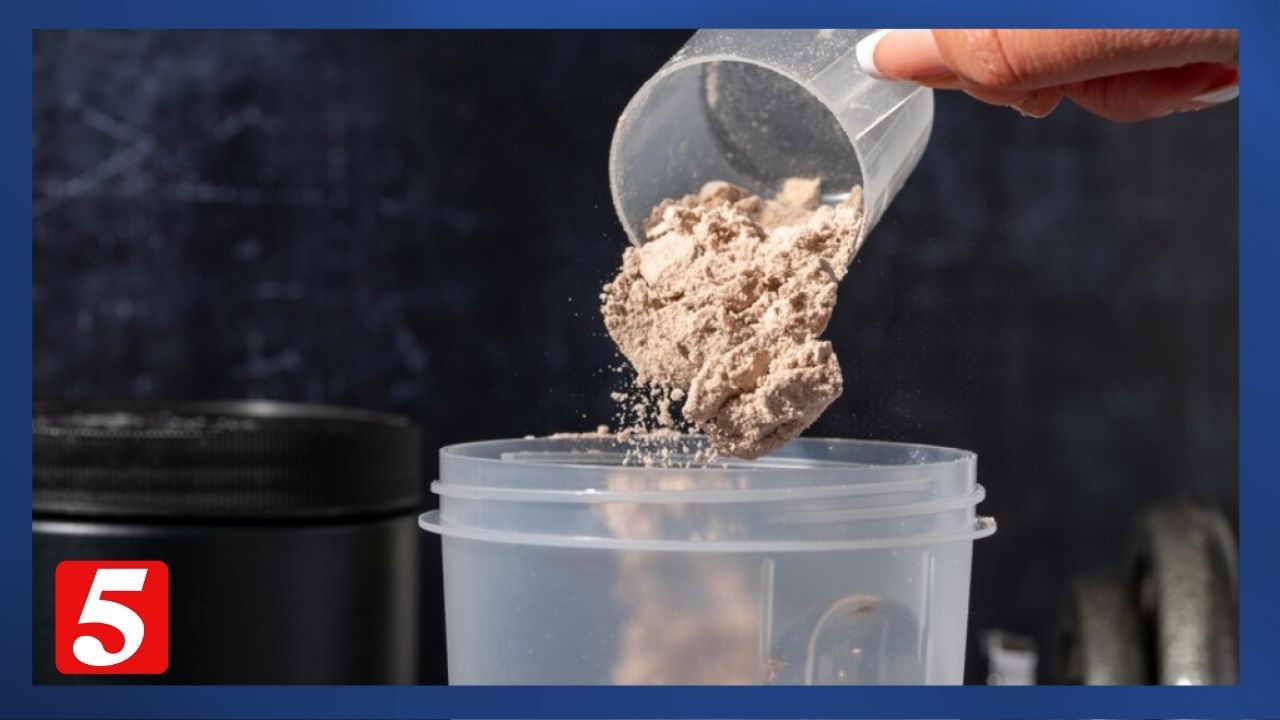


NASHVILLE, Tenn. (WTVF) — Last year, a Consumer Reports investigation found concerning levels of lead in some popular protein powders—raising big questions for the millions of people who use them every day.
Now, Consumer Reports is back with new lab tests on more popular brands, and what they found could affect everyone who uses these supplements.
Last fall, Consumer Reports tested dozens of protein powders and ready-to-drink shakes. What the lab found raised red flags: more than two-thirds contained more lead in one serving than Consumer Reports food-safety experts say is safe in a full day.
“Our previous protein powder investigation prompted a crazy wave of reactions and concerns from readers," said Paris Martineau. "One of the most common responses we got was questions from readers asking, what about all the other protein powders out there?”
This time, researchers tested five reader-requested chocolate protein powders: Clean Simple Eats, Equate from Walmart, Premier Protein, Ritual, and Truvani.
The results were notably different. -- All five powders came back with low levels of lead.
According to Consumer Reports threshold, these powders are safe for daily or near-daily consumption.
On average, these powders also had lower levels of lead and arsenic than the products Consumer Reports tested in its earlier investigation. But the testing also raises questions about why so many other protein powders still contain higher levels of heavy metals.
“There are no federal limits for lead in protein powder. And while the FDA requires that manufacturers keep their products free of harmful contaminants, it is largely up to the companies themselves to determine what counts as harmful and to determine how often to test,” said Martineau.
Nutritionists say most of us don’t need protein supplements at all. Foods like beans, tofu, eggs, dairy, fish, and lean meats can cover your protein needs.
But if you rely on powders, Consumer Reports says don’t assume “healthy” means risk-free. Their advice: be cautious—and consider using protein powder only occasionally.
And while a lot of people focus on protein, it’s fiber that most adults are missing. The Academy of Nutrition and Dietetics recommends about 25 grams for women and 38 grams for men, depending on age and other factors.
Do you have more information about this story? You can email me at jennifer.kraus@newschannel5.com

September 11, 2001 is a day most associate with terror and tragedy. Austin Pollack shares a story from that day about hope and persistence: the effort to save a little girl’s life – with an organ donation. The problem? The young patient was in Houston, and her life-saving liver here in Nashville. With the grounding of all civilian aircraft, how could it be done? “Nobody ever said this isn’t possible.”
- Rhori Johnston