


NASHVILLE, Tenn. (WTVF) — A lot of people are concerned about lead exposure, especially in their kids.
And with lead popping up in everything from toys to cookware, you may be wondering what's the best way to find out if you or your family has been exposed.
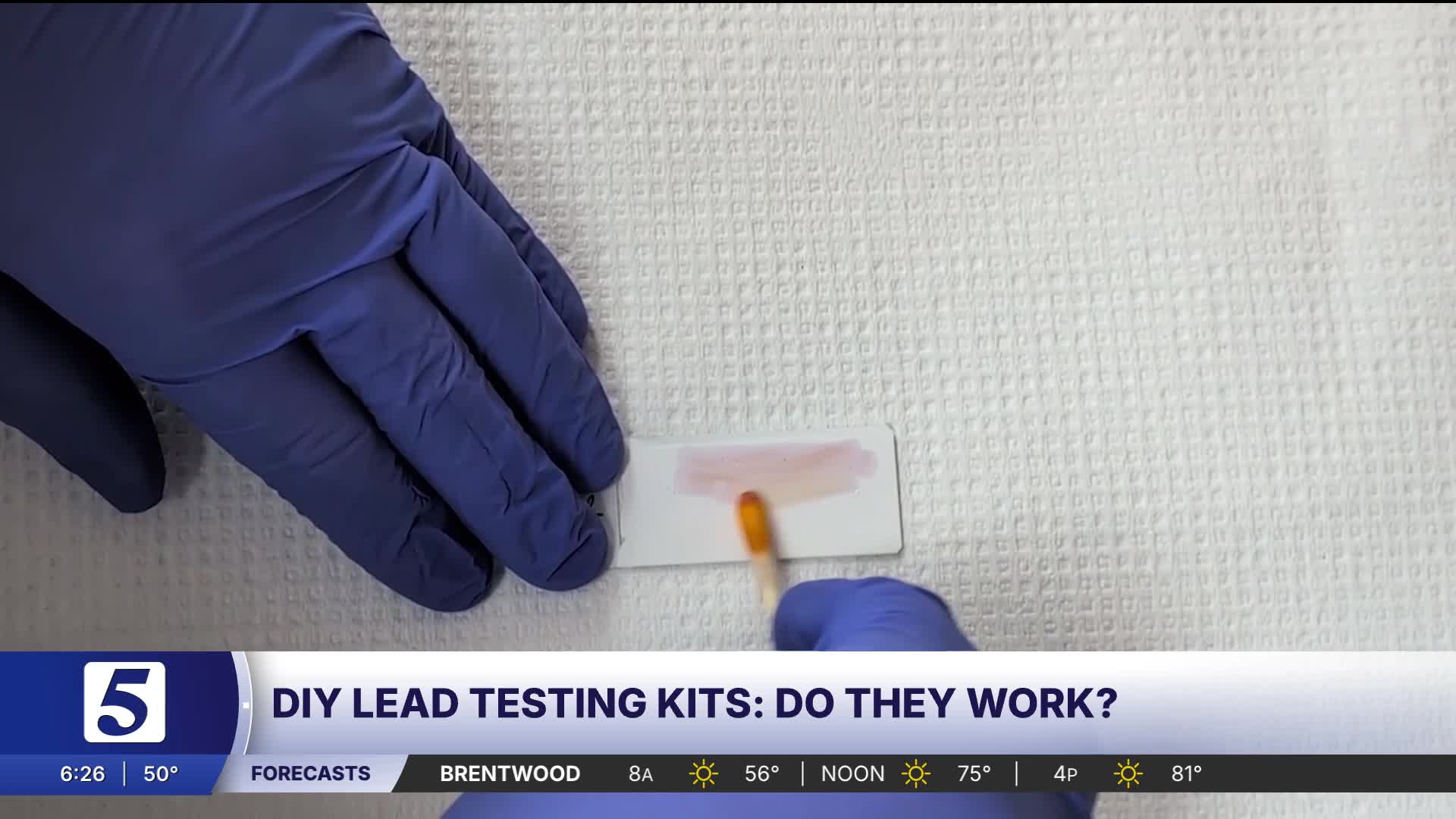
People are looking for quick ways to check for lead in their homes and some use those do-it-yourself lead testing kits. But do they actually work, and are they reliable?
Consumer Reports put nearly a dozen of these kits to the test to find out.
Cookware, spices, protein powders, even faucets—recent headlines about lead showing up in everyday products may have you wondering what in your home could be a concern.
“A lot of people are concerned about lead in their home, vintage dishes or vintage toys," Consumer Reports Investigative Reporter Lauren Kirchner said.
Consumer Reports safety experts noticed more people filing complaints with the Consumer Product Safety Commission after home test kits flagged toys and other household items for possible lead. That raised a big question: how accurate are these kits? CR put 11 of the most popular DIY lead kits to the test.
“Pretty much all of the test kits did very well in clearly detecting high levels of lead. Lower levels that could still be potentially harmful, the test kits didn’t do as well," Kirchner said.
In some cases, the kits failed to detect lead in a toy known to contain it.
“That shows us that if you get a negative test kit result, you might still potentially have a problem," Kirchner said.
What can parents do then to reduce their kids' lead exposure?
A good place to start is to avoid vintage toys, cribs, and painted furniture. Newer toys are generally safer, thanks to stricter regulations enacted after 2008.
If you’re concerned about something in your home, Consumer Reports says the safest option is to send it to a certified lab to have it professionally tested or simply keep it away from kids.
Consumer Reports reached out to all 11 test kit manufacturers. Many of them said their products are meant for a quick initial screening, not as a substitute for professional lab testing.

September 11, 2001 is a day most associate with terror and tragedy. Austin Pollack shares a story from that day about hope and persistence: the effort to save a little girl’s life – with an organ donation. The problem? The young patient was in Houston, and her life-saving liver here in Nashville. With the grounding of all civilian aircraft, how could it be done? “Nobody ever said this isn’t possible.”
- Rhori Johnston