
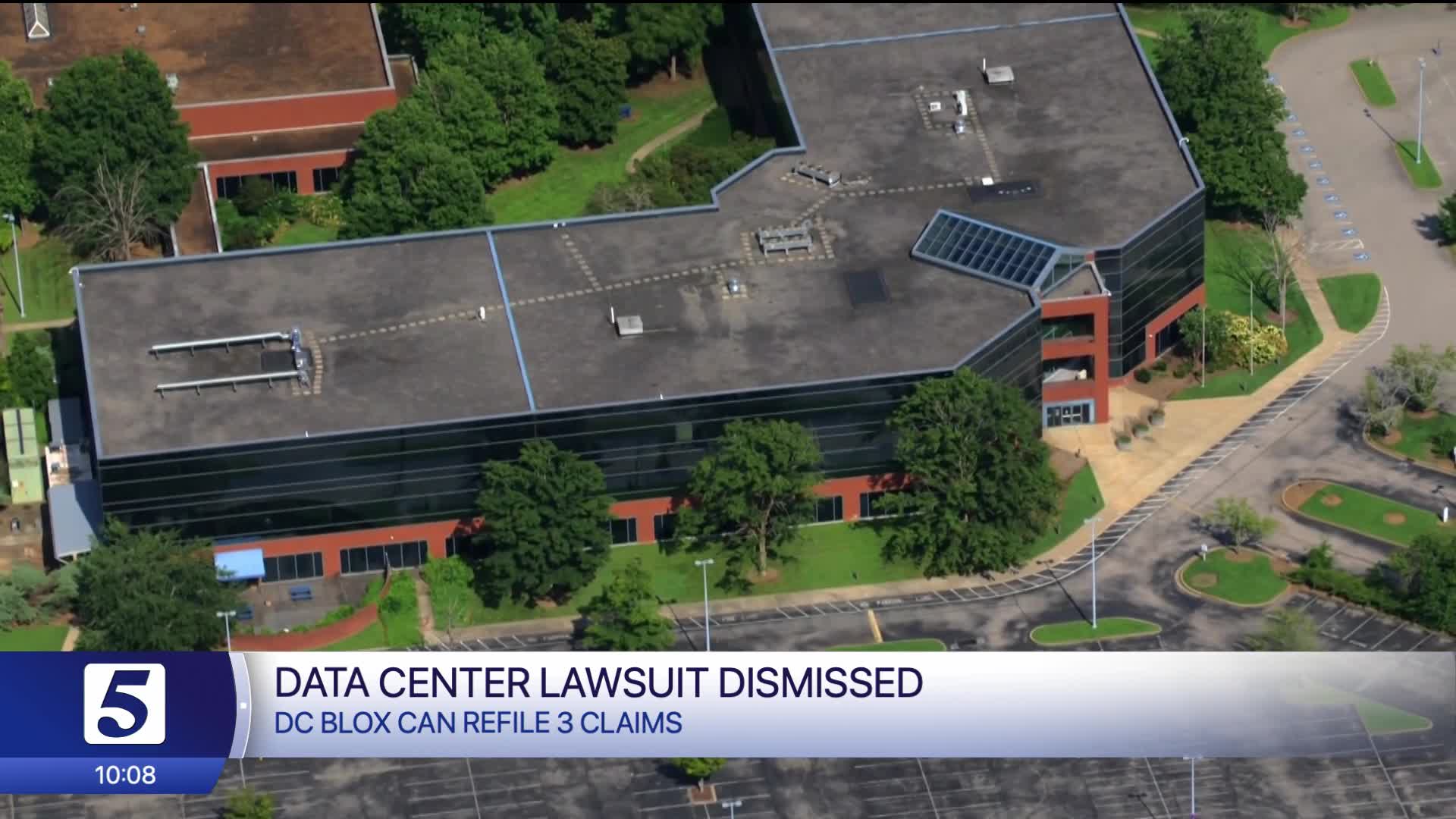


NASHVILLE, Tenn. (WTVF) — A federal judge has dismissed all nine claims brought by DC BLOX in its lawsuit against Metro Nashville over the company's proposed data center development near the Nashville Zoo, dealing a significant setback to the project.
U.S. District Judge Eli Richardson, of the Middle District of Tennessee, issued the ruling, finding that DC BLOX failed to adequately state viable legal claims against Metro. The company had invested roughly $23 million to acquire two parcels totaling about 23.49 acres at 648 and 650 Grassmere Park Drive before Nashville leaders moved to halt data center development through a temporary permitting moratorium.
While the ruling dismisses all claims, the judge left the door open for DC BLOX to revise and refile three of them. Counts I, III and IV were dismissed without prejudice, allowing the company 21 days to submit an amended complaint addressing deficiencies identified by the court. The remaining six claims were dismissed on separate legal grounds.
At the heart of the decision was the court's finding that DC BLOX failed to clearly identify the property interest underlying its constitutional claims.
"The Court cannot adequately evaluate plaintiffs' constitutional claims" because it is unclear what specific property interest is at issue, Richardson wrote.
One of the company's key allegations was that Metro violated its equal protection rights by treating DC BLOX differently than another data center developer, RadiusDC. The court rejected that argument, noting the city's moratorium applies only to the acceptance, processing, approval and issuance of zoning, grading and building permits, as well as administrative appeals.
The judge found RadiusDC was not similarly situated to DC BLOX because the moratorium does not apply to trade permits, undermining the company's comparison.
The court also dismissed five declaratory judgment claims that centered on questions of Tennessee law, including issues involving zoning ordinances, land-use decisions and property rights. Richardson ruled that those matters are more appropriately handled by state courts, which are better positioned to interpret state law.
DC BLOX sued Metro after the Metro Council began considering legislation that would temporarily pause certain permits for new data center developments. The company argued the move was a targeted effort to stop its Grassmere Park Drive project and claimed Metro violated its constitutional rights while interfering with its property interests.
In the ruling, Richardson acknowledged DC BLOX may feel it was treated unfairly by the government but said those allegations alone do not establish a valid federal case.
The judge wrote that the company may believe it received a "raw deal" or was "sandbagged," but those circumstances, by themselves, are not enough to create a federal cause of action.
Metro Legal Director Tyler Yarbro praised the decision.
"I am pleased with the ruling and remain confident that Metro has acted lawfully in its dealings with DC BLOX and in the enactment of the moratorium on data center permitting," Yarbro said in a statement.
The legal battle comes after months of opposition from residents and community groups concerned about plans to build a large-scale data center adjacent to the Nashville Zoo.
DC BLOX did not immediately respond to a request for comment. A spokesperson for the Nashville Zoo said a statement would be available Thursday morning.
The company now faces a decision on whether to amend portions of its complaint in federal court or pursue some of its claims through the state court system.
This story was reported on-air by journalist Kelsey Gibbs and has been converted to this platform with the assistance of AI. Our editorial team verifies all reporting on all platforms for fairness and accuracy.

September 11, 2001 is a day most associate with terror and tragedy. Austin Pollack shares a story from that day about hope and persistence: the effort to save a little girl’s life – with an organ donation. The problem? The young patient was in Houston, and her life-saving liver here in Nashville. With the grounding of all civilian aircraft, how could it be done? “Nobody ever said this isn’t possible.”
- Rhori Johnston