

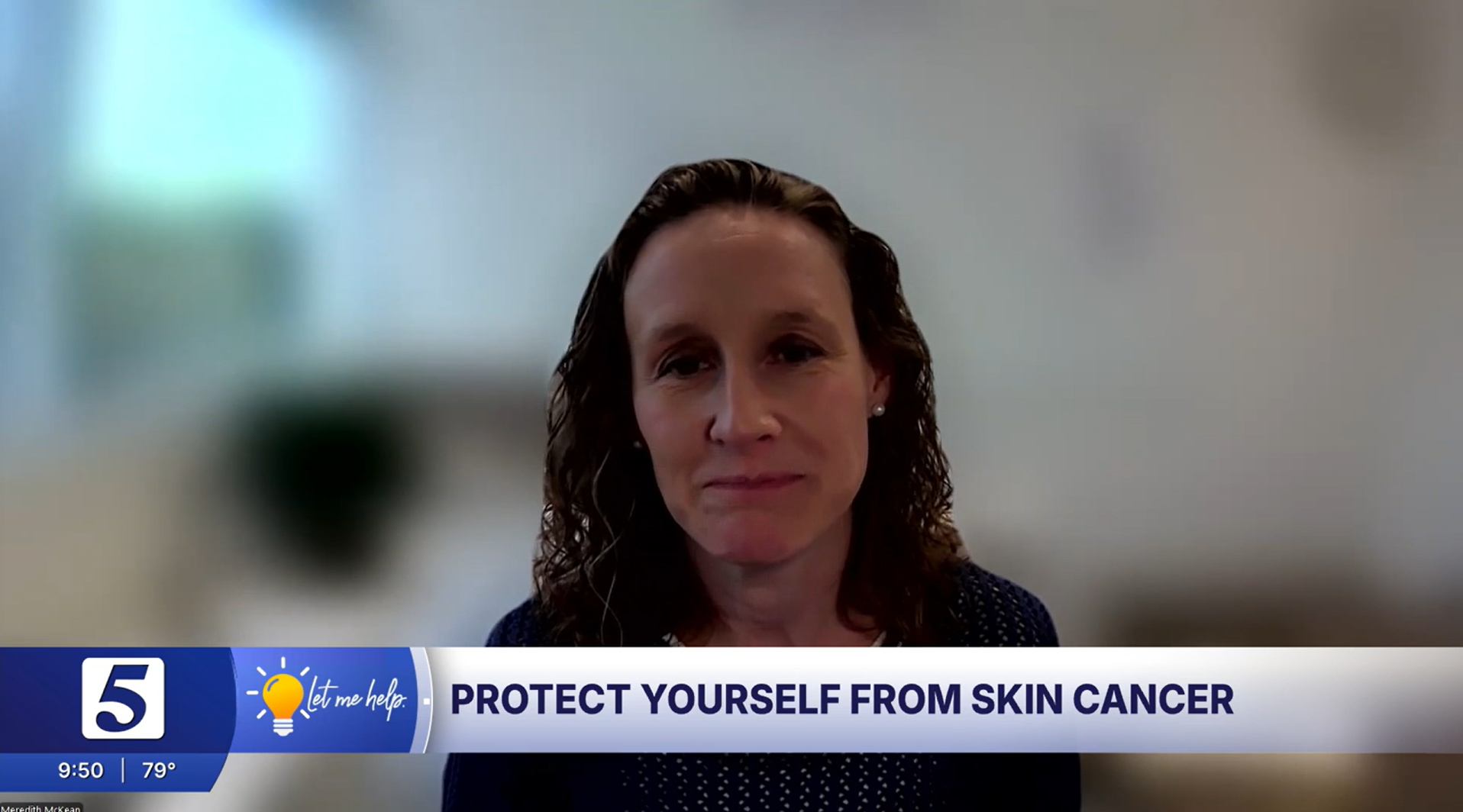

NASHVILLE, Tenn. (WTVF) — Skin cancer is often thought of as highly preventable, yet rates continue to rise. Dr. Meredith McKean is a medical oncologist with SCRI Oncology Partners and Director of Melanoma and Skin Cancer at Sarah Cannon Research Institute. She expresses the importance of wearing suncreen with SPF 30 or more to protect your skin from UV rays. There are also products including shirts and hats that provide SPF protection.
"There is still UV exposure on cloudy days and in the shade, so that's why wearing sunscreen is really the foundation," Dr. McKean says.
The highest risk of skin cancer is lifelong exposure. Dr. McKean warns sunburns in your younger years can increase your risk for skin cancer later in life. She says early prevention is needed, but at least an early diagnosis can make a difference. Get your skin checked with your primary care physicians or dermatologist.
Checking your skin at home is helpful as well. Use the ABCDE's when you inspect a lesion.
- Asymmetry: Does one side look different than the other?
- Border: Does it have irregular borders?
- Color: Are there darker or lighter spots within the same lesion?
- Diameter: Is it larger than a pencil eraser?
- Evolving: Is it changing?
"Cutaneous melanoma or melanoma of the skin is the most common type," Dr. McKean says. "There's a number of other different subtypes of melanoma. We know melanocytes, cells that can develop into melanoma, are present on the mucosal surfaces like sinuses and G.I. tract."
It can also be present on the hands and feet. Dr. McKean says medical professionals see this in patients who are African American or Asian.
There's also uveal melanoma which is a rare form of melanoma found in the eye. It can affect your vision, and some patients notice during eye exams.
Dr. McKean says, "We have a number of clinical trials ongoing for patients, particularly with uveal melanoma in addition to all of the rare subtypes to try to develop better treatments for patients."
One new treatment is a personalized treatment where oncologists will use the patient's tumor to develop a vaccine. There are also novel cellular therapies where oncologists use the patient's immune system to further attack their cancer.
For more information, visit cancercarescri.com.
Watch this Let Me Help segment in the video player above.
For more great tips like this, catch NewsChannel 5 This Morning at 9 a.m. on weekdays. If you'd like to submit a tip, email us at letmehelp@newschannel5.com.
