


NASHVILLE, Tenn. (WTVF) — When a cold case is solved, it can mean closure for a community.
In late February, investigators cracked a high-profile, 30-year-old cold case.
7-year-old Morgan Violi was kidnapped from Bowling Green and killed back in 1996. Her body was found in White House, Tennessee.
Officials say three decades later, they got a new lead. The FBI tested hair from the criminal's van and entered the DNA evidence into a database called CODIS, the Combined DNA Index System and got a hit for a man named Robert Froberg. He was later charged with the crimes.
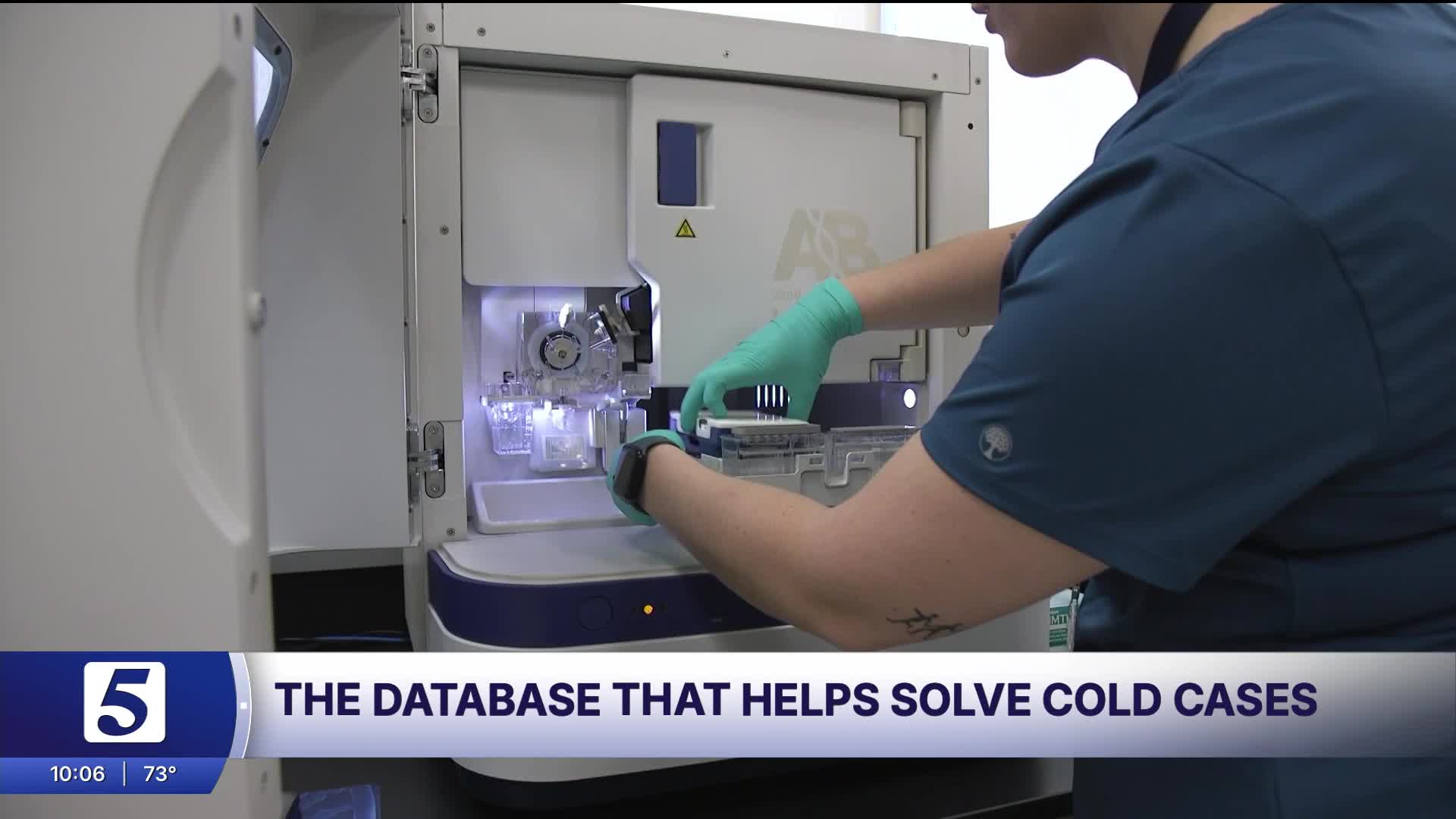
Brandon Elkins, a special agent with the TBI, and Vanessa Martinucci, the director of the MNPD Crime Lab, weighed in on the power of the CODIS database.
While neither agency had a hand in Violi's case, they both work on cold cases and say CODIS has been a game changing tool.
"Things are happening behind the scenes. The computer is doing the work, to some degree, for us," Martinucci said with a laugh.
Without this FBI-run computer system, thousands of cold cases, like Morgan Violi's, might have been a mystery forever.
"CODIS has helped to identify serial killers, serial rapists across the country," Martinucci explained.
"And it's great, right? We use CODIS on probably almost every cold case in some way. In each way we're touching CODIS, and a lot of times CODIS is the sole way that we're able to solve those cases," said Special Agent Elkins.
The database works like this. Either DNA from case evidence, or a profile of an offender or arrested person, is entered into the system. If and when there's a match, investigators are able to link criminals to their crimes, both locally and nationally.
This works especially well with cold cases. Once there's new evidence, or a new profile entered in — like someone who just got arrested and put in jail —that's when there's a hit.
"A lot of that evidence has just been sitting in a warehouse somewhere, and officers have been able to go back and pull out evidence and find very small pieces of evidence," said Martinucci. "Whether it just be a single hair that has some skin attached, and get a DNA profile off of it and get that into the database and find a match."
While CODIS has been around since 1994, a more robust collection of profiles and increasingly sophisticated DNA analysis has made the system far more effective.
"It's amazing. It's come so far," said Elkins, who added there's likely thousands more Tennessee cold cases to solve. "It's making it tougher to commit crimes, and I believe we're going to see less cold cases as time goes on."
CODIS is largely a criminal database, but it has another function as well. It can help find missing people through donated family DNA and unidentified remains. In that way, the database helps to solve even more cases.
Do you have more information about this story? You can email me at nikki.hauser@newschannel5.com.

Kelsey Gibbs brings us a powerful story of humanity, compassion, and love in action while showing us the hard and lifesaving work our officers do daily. Nashville is lucky to have people like Lt. Hotz wearing the badge.
- Carrie Sharp