

NASHVILLE, Tenn. (WTVF) — In Nashville, the dream is simple: write a great song and get someone to sing it.
But for songwriter Chris Gray, finding the right voice to bring his music to life has not always been easy. So he turned to an unconventional solution — artificial intelligence.
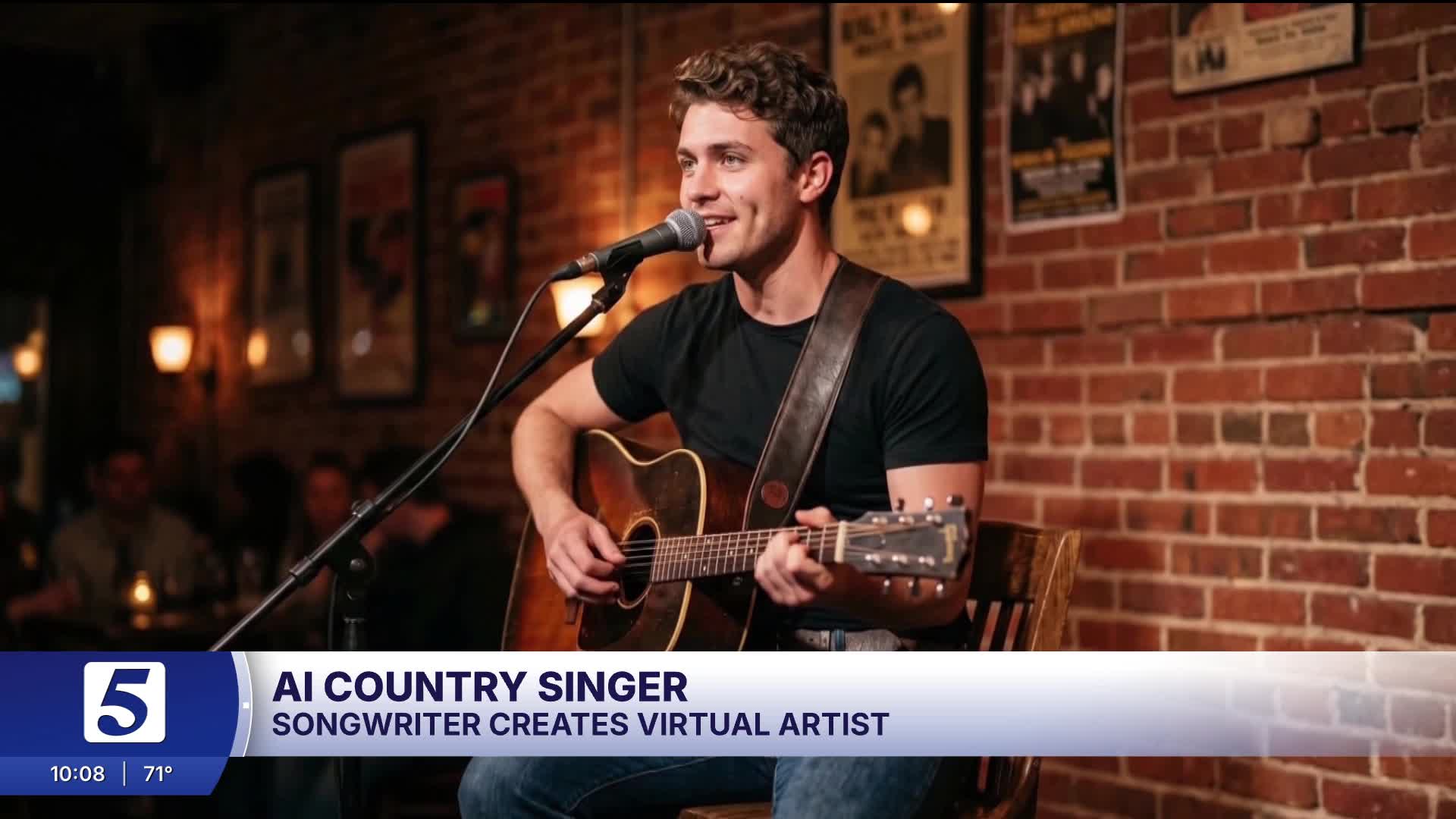
Gray created an AI singer named “Vance Drake” to perform songs he has written over decades in Nashville.
“Vance Drake is my AI singer, and he sings my songs,” Gray said. “He’s not a real person, but I created him.”
The idea comes at a time when artificial intelligence is becoming a growing topic of debate in the music industry. At the Nashville Songwriter Awards, many songwriters expressed concerns about AI replacing human creativity.
“There’s the emotion part of it, the heart of a song that I don’t think AI can replicate,” one attendee said.
Songwriter and former ASCAP president Paul Williams also emphasized the importance of human-created music.
“If you’re going to copyright a song, it has to be created by a human,” Williams said.
Gray agrees that songwriting itself should remain human. He says AI is simply helping him share songs that may otherwise never be heard.
“This is a way of creating an AI artist to sing,” Gray said. “He’s a singer. He sings my songs. He doesn’t write.”
Gray has spent decades writing music in Nashville. Legendary music executive Buddy Killen once included one of Gray’s songs in a country Christmas book, and Alabama lead singer Randy Owen recorded one of his songs, “Braid My Hair.”
Gray says he still hopes major artists will record some of his music one day.
“I’ll never forget Buddy,” Gray said. “I’m still trying to get that song cut. I’d love for Carrie Underwood to hear it, but I’ve had it for 20 years. And Vance Drake — if nobody else cuts it before November — you’ll hear it. Vance Drake will sing it.”
For Gray, AI provides access to production tools that independent songwriters often cannot afford.
“I would spend a lot of money being able to get this mix,” he said. “So it kind of levels the playing field with major record labels who have a much bigger budget than I do.”
But Gray says transparency is critical. He believes listeners should always know when music is being performed by an AI-generated artist.
“There are some AI singers out there that have lots and lots of streams,” Gray said. “They’re on social media, but the people behind it aren’t disclosing that they’re AI, and they’re fooling some people.”
Gray says that is something he refuses to do.
“I just want to use it to get my songs out there and let people hear what I do,” he said.
Gray plans to release a new song through Vance Drake every month while continuing to clearly identify the artist as AI-generated. The songs themselves, he says, remain rooted in human songwriting and real-life experiences.
You can find Vance Drake’s music on streaming platforms and social media. To learn more, you can email Vancedrakemusic@gmail.com
This story was reported on-air by journalist Kelsey Gibbs and has been converted to this platform with the assistance of AI. Our editorial team verifies all reporting on all platforms for fairness and accuracy.

September 11, 2001 is a day most associate with terror and tragedy. Austin Pollack shares a story from that day about hope and persistence: the effort to save a little girl’s life – with an organ donation. The problem? The young patient was in Houston, and her life-saving liver here in Nashville. With the grounding of all civilian aircraft, how could it be done? “Nobody ever said this isn’t possible.”
- Rhori Johnston