
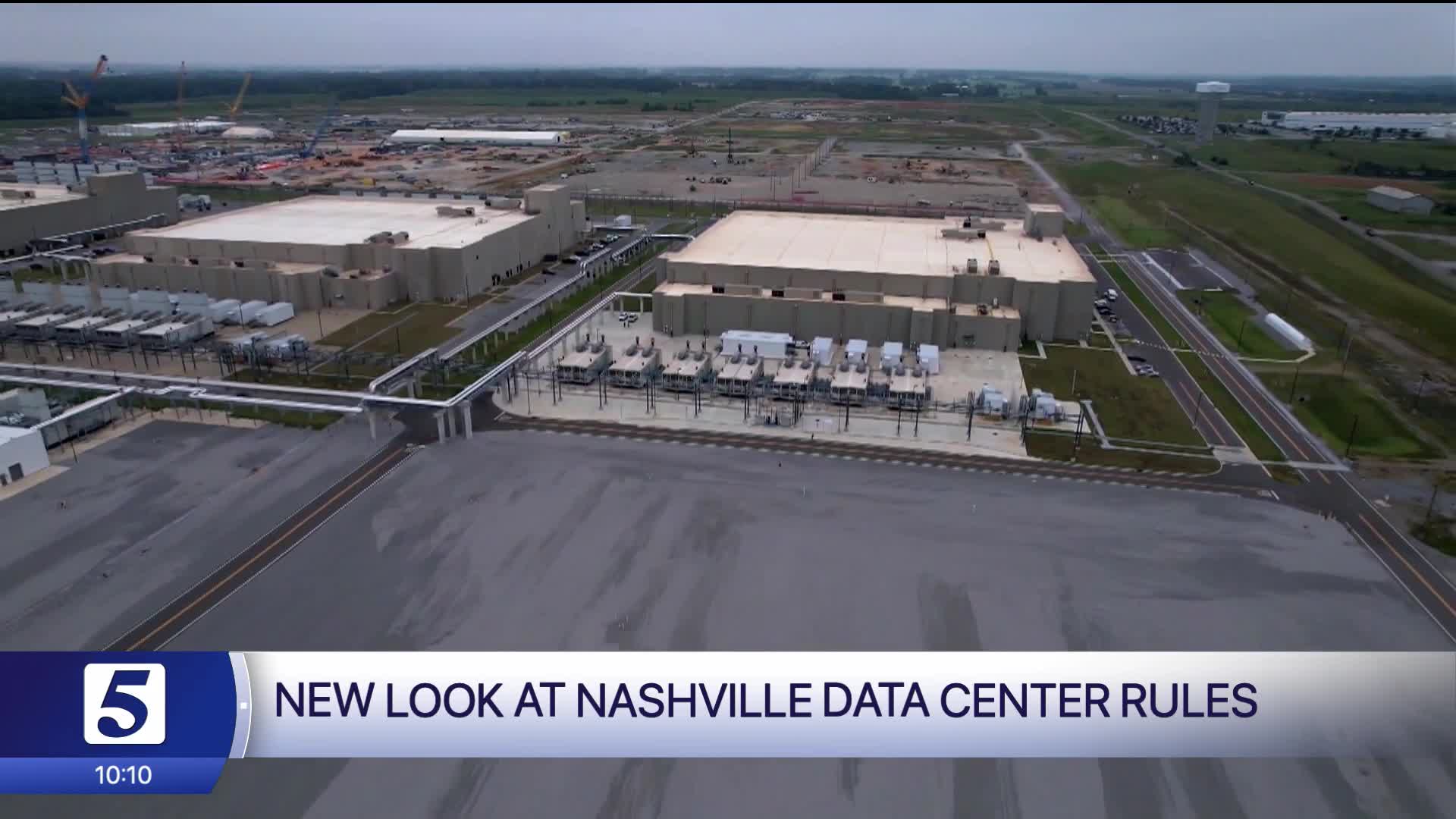


NASHVILLE, Tenn. (WTVF) — Before Nashville's next large data center can power up, it will have to clear a new set of rules aimed at limiting the impact these facilities can have on surrounding communities.
Metro Council approved new zoning regulations for data centers in July, creating five classifications based on factors including size and electrical load. The regulations prohibit the largest category, campus data centers, countywide.
Councilmember Rollin Horton, a sponsor of the legislation, described Nashville's approach this way during an interview with NewsChannel 5: "Nashville has passed some of the strictest rules and regulations protecting all of Davidson County from the dangers of data centers."
The regulations followed significant public debate over data center development in Nashville, particularly after plans emerged for a DC BLOX facility next to the Nashville Zoo. In July, more than 100 people spoke in opposition to data center development during Metro Council public hearings.
Under Nashville's new framework, allowable data centers face different requirements depending on their size.
Small data centers have a 100-foot separation requirement from specified sensitive uses, while medium facilities generally face a 500-foot requirement. Large facilities face a 2,640-foot, or half-mile, separation requirement. Sensitive uses identified by the framework include residences, schools, daycares, religious institutions, parks and zoos.
A new Metro Data Center Impact Assessment & Policy Recommendations compared Nashville's regulations with policies being adopted or considered in other communities. It found Nashville's requirements for small and medium facilities generally align with other jurisdictions, but said the half-mile buffer for large facilities makes Nashville"somewhat of an outlier."
"We set very strict distance requirements, especially compared to other cities," said Horton. "And so I think it's important not just that we look at how we can continue to improve our regulations, but make sure that there's no effort to water down or weaken them."
The regulations include more than where facilities can be built. They require closed-loop cooling systems, establish daytime and nighttime noise limits, require 24-hour noise monitoring and require utilities to confirm they have capacity to serve a proposed project. New data centers must also provide renewable energy systems accounting for at least 15% of annual power use.
Despite concluding that the city's framework provides a strong foundation for addressing many known risks, Metro's report identifies several issues officials say warrant further evaluation.
Among them are vibration, increases in background noise and potential contaminants in wastewater discharged from cooling systems.
Nashville currently limits data center noise at the property line to 65 decibels during the day and 55 decibels at night. But the report says the city could consider another safeguard limiting how much a facility can increase the existing background noise around it, even if it remains below those absolute limits.
Vibration is another area Metro says needs further research. The new regulations do not establish a separate vibration limit or require a vibration impact assessment comparable to the required noise assessment.
Metro also wants to further study wastewater from closed-loop cooling systems. The report says that discharge can potentially contain substances including heavy metals and PFAS and recommends determining whether existing contaminant standards adequately capture potential data center process-water impacts. The report does not say Nashville's water has been contaminated by data centers.
"I think we have the strictest and most comprehensive rules in the entire country. That said, this is a very fast-evolving industry. So I think it's important that we continue to monitor how the industry develops and make sure that our rules and regulations stay one step ahead of the industry," said Horton.
Perhaps one of the biggest questions is what happens when Nashville's framework encounters a new proposal.
Metro's report says the city has yet to apply the new regulatory framework to a new data center proposal, meaning some challenges remain relatively unknown.
The report recommends several changes to how Metro implements the rules, including required pre-application coordination, completeness reviews and phased approvals tied to utility milestones.
It also recommends forming a working group involving Metro, Nashville Electric Service and the Tennessee Valley Authority to develop compliance procedures, coordinate enforcement and determine whether additional resources will be needed as applications, inspections and monitoring begin.
Do you have more information about this story? You can email me at Patsy.Montesinos@NewsChannel5.com

September 11, 2001 is a day most associate with terror and tragedy. Austin Pollack shares a story from that day about hope and persistence: the effort to save a little girl’s life – with an organ donation. The problem? The young patient was in Houston, and her life-saving liver here in Nashville. With the grounding of all civilian aircraft, how could it be done? “Nobody ever said this isn’t possible.”
- Rhori Johnston