



NASHVILLE, Tenn. (WTVF) — A new Tennessee law allows some Nashville businesses to get help paying their property taxes but only if they operate inside a specific zone that stretches nearly 3 square miles across the city.
The relief comes through a tourism development zone, or TDZ, that was originally created in 2009 to help fund the Music City Center convention center.
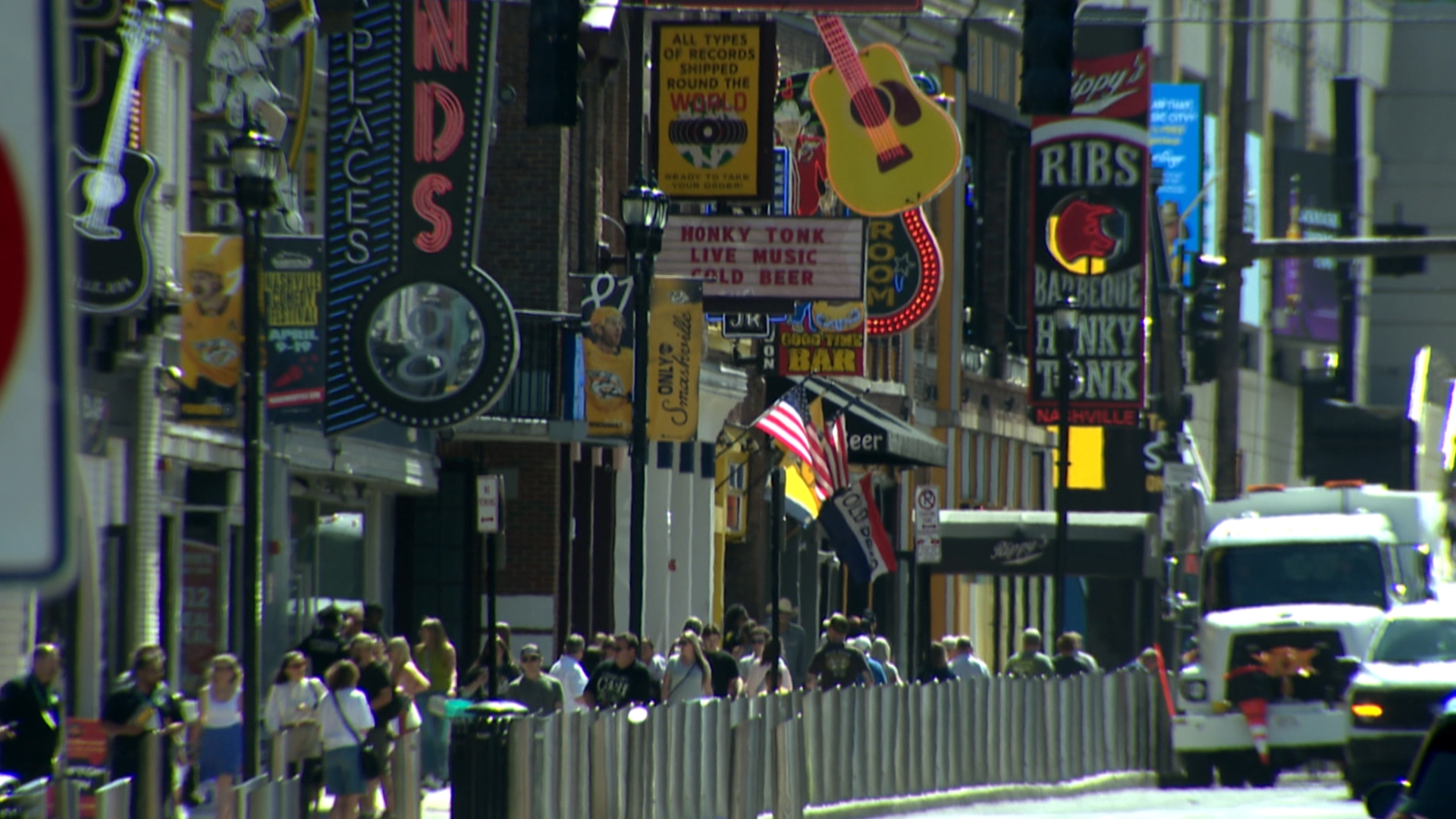
Under the new law, a tourism board can use excess sales tax revenue generated inside the zone to help pay property taxes for bars, restaurants, and other businesses located within the zone, including those on lower Broadway.
The tourism board has not yet been appointed.
To understand how the tourism zone works, you have to go back to when it was created in 2009, during the intense debate over whether Nashville should build a new convention center.
Opponents said the project was too expensive, and worried taxpayers would be on the hook for excessive costs if it failed.
So, the Metro Council created a Tourism Development Zone in which a portion of the state and local sales tax generated inside the zone would go directly to pay for the convention center.
Today, if you buy boots or beer on Broadway, or anywhere else inside the zone, most of the state and local sales tax does not go to schools, fire, or police. It goes to the convention center.
The zone generates far more money than the convention center needs, which is not surprising when you see how large the zone is.
The boundary is shaped like a key and stretches nearly 3 square miles.
It extends past Centennial Park, up West End Avenue, includes part of the Gulch, and covers most of downtown Nashville.
Tennessee House Speaker Cameron Sexton (R) Crossville, said Metro drew the zone, not the state.
When asked on Inside Politics if he was surprised by the size of the zone, Sexton replied, "Yeah, we were shocked."
This year, state lawmakers extended the life of the zone and passed a bill dictating how the excess money can be used.
The new tourism board can now help pay property taxes for bars and restaurants on lower Broadway and other businesses within the tourism zone.
"We don't want our local business owners going under. We want to help them be a vibrant thing. They've invested a lot of money in lower Broadway in all these bars and all these other restaurants and everything and we want to make sure they stay in business," Sexton said.
The relief comes as bar owners, including those behind Tootsies and Kid Rock's bar, argued their property appraisals were too high, forcing their property tax bills to skyrocket by hundreds of thousands of dollars.
Just this month, bars on lower Broadway lost their appeals before the Metro Board of Equalization to have their property values lowered.
Christian Paro, who started the non-political Nashville Property Tax Coalition, said he was glad to hear downtown businesses may get some help.
"Thanks for acknowledging the pain those downtown businesses are feeling," Paro said.
His coalition now includes hundreds of Davidson County businesses that say recent property tax increases could force them to close.
"The bills are unaffordable," Paro said.
But Paro is concerned the state's property tax relief only helps businesses inside the key-shaped tourism zone, leaving out everyone else.
Nashville Mayor Freddie O'Connell also raised concerns about the approach.
"I do have concerns about the way that you say to homeowners and smaller businesses outside the TDZ that this is a fair approach," O'Connell said.
O'Connell said the property tax relief provision was the state's idea, not Metro's.
"It's not something we wanted to see in the bill, but it's something I guess state legislators thought was important," O'Connell said.
Paro, whose business is outside the tourism development zone, said the overall approach raises a bigger policy question.
"Why don't we just not do the taxes wrong. Let's get better policy," Paro said, when asked about the concept of using taxes to help offset taxes.
State officials will appoint the majority of members to the new tourism board that will oversee the excess money from the zone.
