

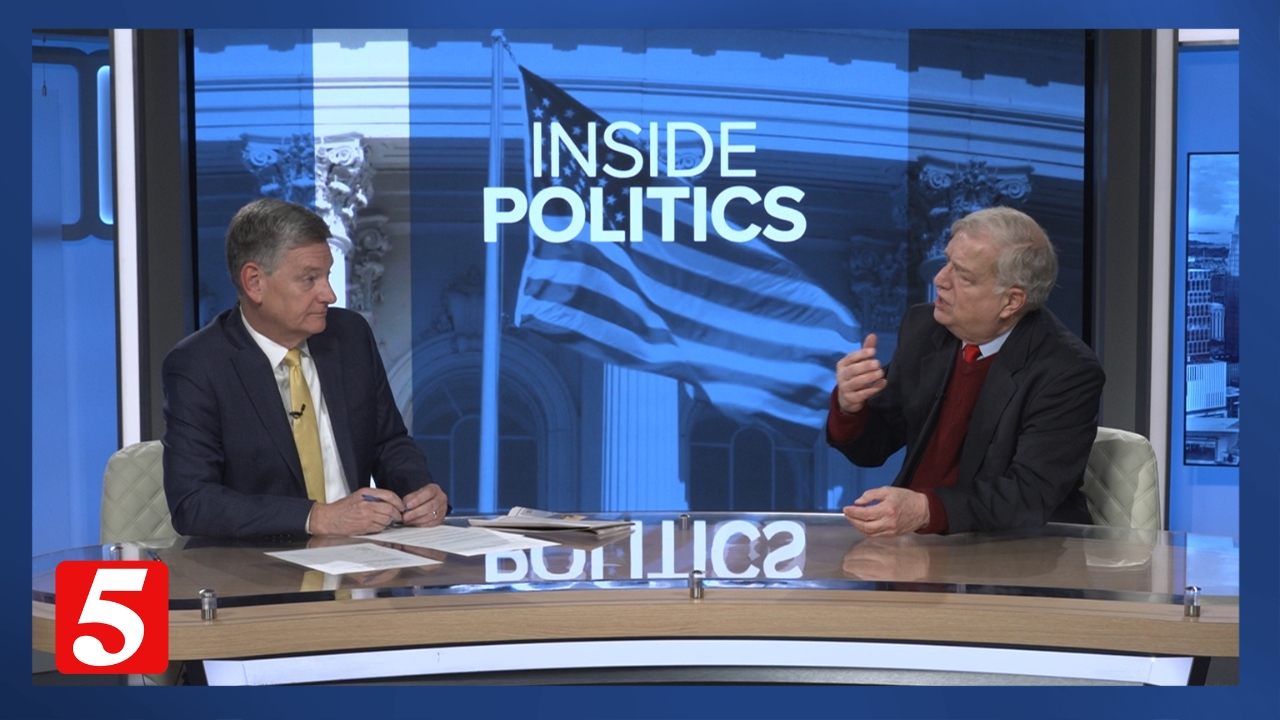


NASHVILLE, Tenn. (WTVF-TV) — A foreign policy expert said on Inside Politics that U.S. military action in Venezuela signals "a period of great change in American foreign policy."
Vanderbilt Professor Thomas Schwartz is an American historian focused on U.S. foreign relations and American politics.
Schwartz said current U.S. policy is, "going back in time to when the United States asserted its right to patrol the Western Hemisphere."
The Western Hemisphere includes North and South America as well as Greenland.
The Eastern Hemisphere includes Asia and most of Europe and Africa.
President Trump has cited the Monroe Doctrine from President James Monroe in 1823.
The doctrine aimed to keep European countries out the Western Hemisphere because they posed a threat to U.S. security.
Past presidents like Teddy Roosevelt used the Monroe Doctrine to "police" countries in the Western Hemisphere such as Latin America and South America.
"What seems to be happening is we're going back 100 years to President Teddy Roosevelt and the early part of the last century," Schwartz said.
President Trump has added to the Monroe Doctrine even calling it the "Donroe Doctrine."
Schwartz said the focus on the Western Hemisphere explains President Trump's interest in Greenland.
"Now we are moving toward a time when United States acts, it doesn't worry about international law, international approval and just acts on the President's sense of the national interest," Schwartz said.
President Trump has insisted Greenland should be part of the United States for security reasons.
But President Trump seems less interested in other parts of the world, like Europe.
"The United States is actually determined to pull back from its defensive role in Europe to spend less on Europe and focus on other regions like the Western Hemisphere," Schwartz said.
While the U.S. threatens to increase military actions in South America, critics worry the use of force to advance American interests could send a message to China or Russia that they can use force in Taiwan or Ukraine.
"We have to come up with a way to advance our national interests that does not at the same time put us in a league with other more ruthless, authoritarian powers," Schwartz said.
You can watch the entire interview with Professor Thomas Schwartz on Inside Politics which airs at 7pm on Friday on NewsChannel 5 Plus.
It is also a podcast.
Just enter "Inside Politics Nashville" wherever you get your podcasts and start listening.
