
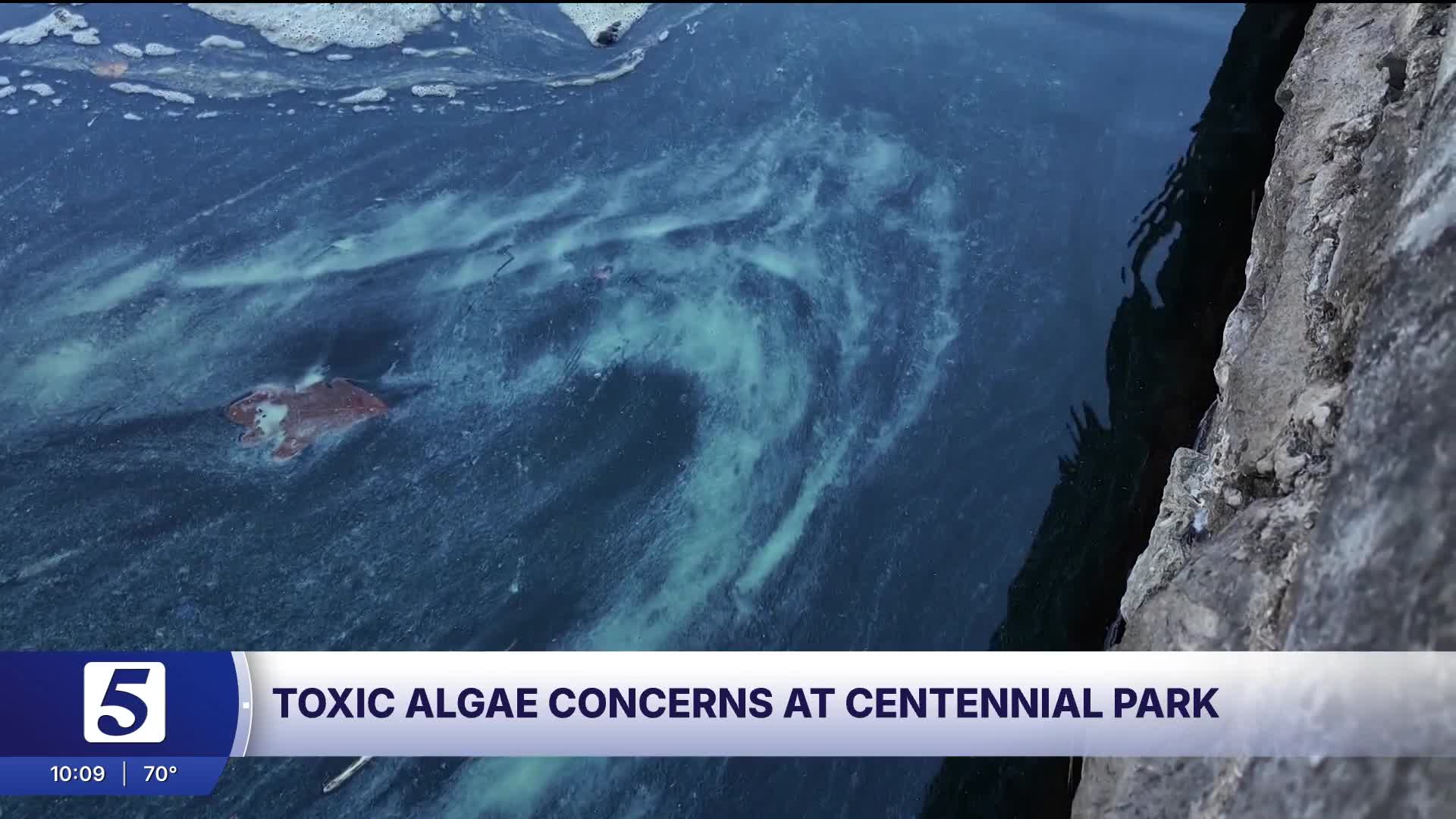


NASHVILLE, Tenn. (WTVF) — State officials are testing the water at Centennial Park after a suspected harmful algal bloom appeared on the surface of the pond, and experts are urging visitors to avoid any contact with the water until results come back.
Metro Parks posted warning signs around Watauga Lake on Thursday, warning people to keep children and pets away from the water while testing is underway. The Tennessee Department of Environment and Conservation collected water samples to determine exactly what is floating in the pond.
Experts say the green layer could be blue-green algae, which can release dangerous toxins into the water. Scientists warn those toxins can attack the liver and central nervous system, make people sick, and in some cases kill pets within a day.
"If you stay out of the water, your risk of getting a serious illness is close to zero," said Dr. William Schaffner, a professor of infectious diseases at Vanderbilt University Medical Center.
Schaffner said exposure can cause a range of symptoms depending on the level of contact.
"They can sometimes cause minor and occasionally major illnesses. For example, skin rashes if you get your hands wet. Sometimes the fumes can irritate your eyes, give you a sore throat, or even give you kind of a fever feeling," Schaffner said.
Pet owners visiting the park are also being warned to bring bottled water and keep animals out of the pond.
"You don't want to drink the water, go into it, or let your pet in it because pets exposed to these toxins can become more seriously ill. So when in doubt, stay out," Schaffner said.
Harmful algal blooms, or HABs, are more common during stretches of hot, dry weather. Experts say they also thrive when excess nutrients, including fertilizer runoff, enter the water.
Middle Tennessee State University biology professor Dr. Frank Bailey explained why the blooms carry a specific designation.
"The reason they're called harmful algal blooms and not just algal blooms is because those particular organisms can make a toxin that gets released into the water," Bailey said.
Metro Parks says the lake's aeration system is fully operational and that the pond is treated every two weeks to maintain circulation. Workers also use dye to block sunlight and reduce excessive algae growth.
Some park visitors said they noticed a strong odor coming from the pond in recent weeks, and some are now asking the city to install larger and more visible warning signs.
State data shows confirmed cases linked to harmful algal blooms have climbed over the years — from 4 cases in 2019 to 19 in 2026. Bailey said the trend is being seen far beyond Tennessee.
"We are starting to see more and more of them, not just in the United States, but all over the world. Now that is probably a product of higher temperatures, also of more and more nutrients getting into the water from fertilizers," Bailey said.
Experts say there is no need to panic, but they want people to learn the warning signs before getting into the water. State officials expect to receive the water test results sometime this week. Until then, park officials say visitors and pets should avoid all contact with the pond water.
Do you have more information about this story? You can email me at Patsy.Montesinos@NewsChannel5.com

September 11, 2001 is a day most associate with terror and tragedy. Austin Pollack shares a story from that day about hope and persistence: the effort to save a little girl’s life – with an organ donation. The problem? The young patient was in Houston, and her life-saving liver here in Nashville. With the grounding of all civilian aircraft, how could it be done? “Nobody ever said this isn’t possible.”
- Rhori Johnston