


NASHVILLE, Tenn. (Nashville Banner) — This story was originally published by the Nashville Banner. Sign up for their newsletter.
At 11:30 p.m. on a Friday in 2023, Nashville real estate developer Mack McClung emailed then-Metro Water Services assistant director John Honeysucker, asking him to look into a holdup on a townhome project in Hermitage.
One minute later, Honeysucker replied, “Will do first thing Monday morning.”
True to his word, Honeysucker contacted a Metro Water colleague and had the necessary approval by end of business on that Monday.
It was just one of hundreds of instances in recent years in which Honeysucker aided McClung and other executives at his real estate company, Vastland.
The frequent refrains: I will get this handled. I will research and get handled. I will get this expedited. Honeysucker asked Metro colleagues for help on Vastland projects on the Fourth of July, late at night and early in the morning, and while the colleagues were on vacation.
Taken individually, the instances might not raise major red flags. It was, in part, Honeysucker’s job to unclog bureaucratic logjams.
Honeysucker was a top official at one of the city's largest departments, with a budget of more than $400 million and work that reaches every Nashvillian. Metro Water Services manages the city's drinking water and wastewater system and oversees stormwater services.
He had a reputation among many Metro councilmembers for solving problems for constituents — a burst water main, a problem with Nashville Electric Service or a delay securing a permit. If someone — inside or outside Metro — needed to get in touch with a city department, Honeysucker knew who to call. Some who worked with him have described him as a type of fixer.
But the relationship with McClung and Vastland went deeper than that, according to thousands of pages of emails and other documents obtained by the Banner via public records requests. Honeysucker, McClung and local engineer and land planner Roy Dale are the subject of an ongoing federal investigation, the Banner exclusively reported in July. Federal authorities have declined to disclose the nature of the investigation, and no charges have been filed against the three men.
On McClung’s behalf, Honeysucker set up meetings with Metro departments and councilmembers, physically delivered documents for Vastland, forwarded potential business deals to McClung while soliciting others, cashed in favors to fasttrack approvals from Metro colleagues and invoked the authority of higher-ups to secure others. He was invited to McClung’s surprise masquerade birthday party and helped out the developer’s real estate agent girlfriend with a Metro request.
A new charge letter from Metro alleges that sort of treatment was both routine and not exclusive to McClung — that Honeysucker demonstrated “sustained misuse” of his governmental position.
‘Inappropriate relationships’ with developers
Honeysucker was on administrative leave due to the federal investigation when the first charge letter from Metro was issued. It accused Honeysucker of lying to Metro officials after his phone was seized by the FBI. It ultimately was resolved with a 15-day suspension.
The second letter, filed on Aug. 18, accuses Honeysucker of longstanding unethical relationships with three unnamed Nashville developers — none of whom, according to available information, is McClung.
Much of the charge details similar arrangements as the one with McClung. Honeysucker helped developers get what they needed from Metro while maintaining undisclosed financial relationships with the same developers, the letter contends.
“You routinely used your Metro Government email account to conduct private business, communicate with developers with whom you had personal or business relationships, advocate on their behalf before Metro departments, and use your position to facilitate approvals, resolve permitting issues, or otherwise influence governmental processes,” the letter states.
It goes on to state that Honeysucker’s communications demonstrate a “sustained misuse of [his] official position and Metro Government resources to advance private interests, provide preferential treatment, and compromise the independence and impartiality required of your position.”
Honeysucker defended his record in a brief interview with the Banner.
“My role with Metro was to work with everyone and to help problem-solve to the best of my ability, whether throughout the development community or just in the community with constituents in general,” Honeysucker said last week. “That's the role I was tasked to do. That relationship-building, it was never restricted to one dynamic within the city.”
Honeysucker retired from Metro prior to a disciplinary hearing on the matter.
If you have information about Nashville’s development community and the Metro permitting process, please contact reporter Stephen Elliott at selliott@nashvillepublicmedia.com, or on Signal at stephen.81.
A Metro executive order prohibits city employees from actions that would create even the appearance of using public office for private gain, giving preferential treatment to anyone or losing complete independence or impartiality.
City law further prohibits employees from taking actions that could create "the impression that any person can improperly influence, or unduly enjoy their favor in, the performance of their official duties." Local law also prohibits employees from providing services "for compensation, directly or indirectly, to a person or organization who is requesting an approval, action, or determination" from Metro.
The charge letter breaks the allegations down into three main buckets.
With the first unnamed developer, Metro describes a back-and-forth relationship in which Honeysucker helped resolve permit issues and offer other official aid while also requesting a cost estimate for a private development Honeysucker was working on on Rock City Street in Inglewood.
He made similar requests of at least three different developers in recent years. Three years prior, Honeysucker had asked McClung about pricing a different real estate project the Metro employee was working on privately.
“Could you send these plans to your supplier for an estimate,” Honeysucker wrote to McClung the same day he was working to advance a Bellevue project at Metro for Vastland. “My desire is that since you buy in bulk that I could get my small list of items at your cost.”
The property on Rock City Street in Inglewood on which John Honeysucker requested a cost estimate for a private development. Honeysucker was still working on that Rock City project as the FBI was closing in. He forwarded updates to his plan for the property, from his Metro email account, to Metro Zoning Administrator Joey Hargis for review on the same day his phone was seized in July. His architect responded with updated drawings, and the good news that he had the zoning to build a garage apartment at another property he owns, after Honeysucker had been placed on administrative leave the following morning. Later that day, a Metro Codes official emailed Honeysucker and his architect to say the plans were approved. That property has since been listed for sale.
The letter describes "numerous instances in which you developed and maintained inappropriate relationships and communications with members of the development community.”
According to the second letter, Honeysucker purchased property from a second developer on West Trinity Lane in 2021. Honeysucker also provided private security services to the developer, with the invoices going to his Metro email account, without disclosing the secondary employment. Honeysucker, according to the charge letter, asked a state senator for support for one of the developer’s projects, writing that the legislation would “allow us to obtain a liquor license for our new development.” He lobbied other state lawmakers on McClung’s behalf, too, according to the email records.
In April 2026, according to the charge letter, Honeysucker actively participated in meetings in the MWS director’s office about sewer capacity and fees for one of the developer’s projects without disclosing the ongoing business relationship. Two years prior, according to records obtained by the Banner, Honeysucker asked Metro Water colleagues to move forward with a request by the same developer for a property just down the road. Once his request was successful, he forwarded it to the developer and his attorney, who responded, "You the man."
“In these interactions, you used the authority and influence of your position as Assistant Director to provide assistance, preferential access, or favorable treatment that was inconsistent with your responsibilities as a public servant," the letter continues.
During the interview, Honeysucker declined to comment when asked about the side gig and requests for cost estimates.
According to the charge letter, Honeysucker "actively assisted" a third developer in marketing a property for sale. Email records show that Honeysucker sent marketing materials about the property to McClung in 2024: "Is this a site that you might have interest in purchasing?" Honeysucker asked. Honeysucker forwarded marketing material for another property from its owner to McClung later that year, according to the records.
Additionally, the letter continues, Honeysucker communicated with a Metro Planning Department employee about a proposed modification to the zoning at the property being marketed, and the Planning Department treated the request differently because it was coming from Honeysucker.
"If [Water Services] is asking for this modification, that will probably change the way we look at it," the Planning employee wrote. "Up to this point, this has been presented as the applicant requesting a modification from the approved layout. If you want us, from y'all's perspective, to consider the change layout, just let me know so I can route that up to Planning leadership."
Honeysucker replied: "[Water Services] is okay with the modification."
"These communications reflect that you invoked the position of Metro Water Services in discussions concerning a private development project in which Metro Water Services had no official role requiring your intervention," the letter continues.
The letter notes that Honeysucker asked the third developer about material costs for yet another real estate project Honeysucker was working on.
Metro additionally charged Honeysucker with failing to submit required financial disclosures between 2020 and 2023, as previously reported by the Banner.
“Trust is a fundamental requirement of effective leadership and assistant directors must be trusted and relied upon without hesitation,” Metro Water Services spokesperson Sonia Allman said in an email. “This is not an option. This trust was broken and the misconduct that led to the breakdown was addressed immediately.”
A helping hand
Records reviewed by the Banner further flesh out the sort of relationships that are described in brief in the eight-page charge letter.
In April 2024, when the Vastland team was seeking a series of approvals for a housing development in Bellevue, land surveyor Jimmy Yates suggested to McClung that Honeysucker handle the process.
"I think it probably best if John does this, and I talked to John about this a few weeks ago but you have to actually take copies of the approved stormwater plans to the front desk at planning, to the urban foresters office and to the NDOT desk at the development service building to get a sign off on that grading permit number and if we try to do it they will just take it and put it in a stack and we'll never hear from them," Yates wrote. "I think John should be able to get quicker service if he is the one delivering them."
About an hour later, Honeysucker asked officials at Metro Codes for sign-off "at the request of councilman Spain." The following day he did the same with an official from the Nashville Department of Transportation.
When McClung's girlfriend was trying to demolish a home within a protected historic overlay in Salemtown and develop the lot, Honeysucker asked for an expedited review, telling a Metro colleague that "this was referred to me by the administration." One official who spoke to the Banner did not recall the specific property but found it implausible that the mayor’s office would be involved in a single-lot teardown.
When two of Vastland's most prominent projects required state legislation to sell alcohol, Honeysucker worked state lawmakers on McClung's behalf.
In a January 2025 email to state Rep. Aftyn Behn, whose district includes one of the properties, Honeysucker wrote from his Metro government email to introduce her to McClung and memorialize a conversation they had recently had.
"Mack McClung is a great friend of mine and his company and staff are top notch," Honeysucker wrote. "I offer total support for the projects they have working."
When the legislation was transferred to state Rep. Bob Freeman, Honeysucker wrote to McClung, "Bob is a good friend of mine and I will contact him now to get support."
"John is there anyone you don't know?" McClung replied.
"Not really, lol," Honeysucker wrote.
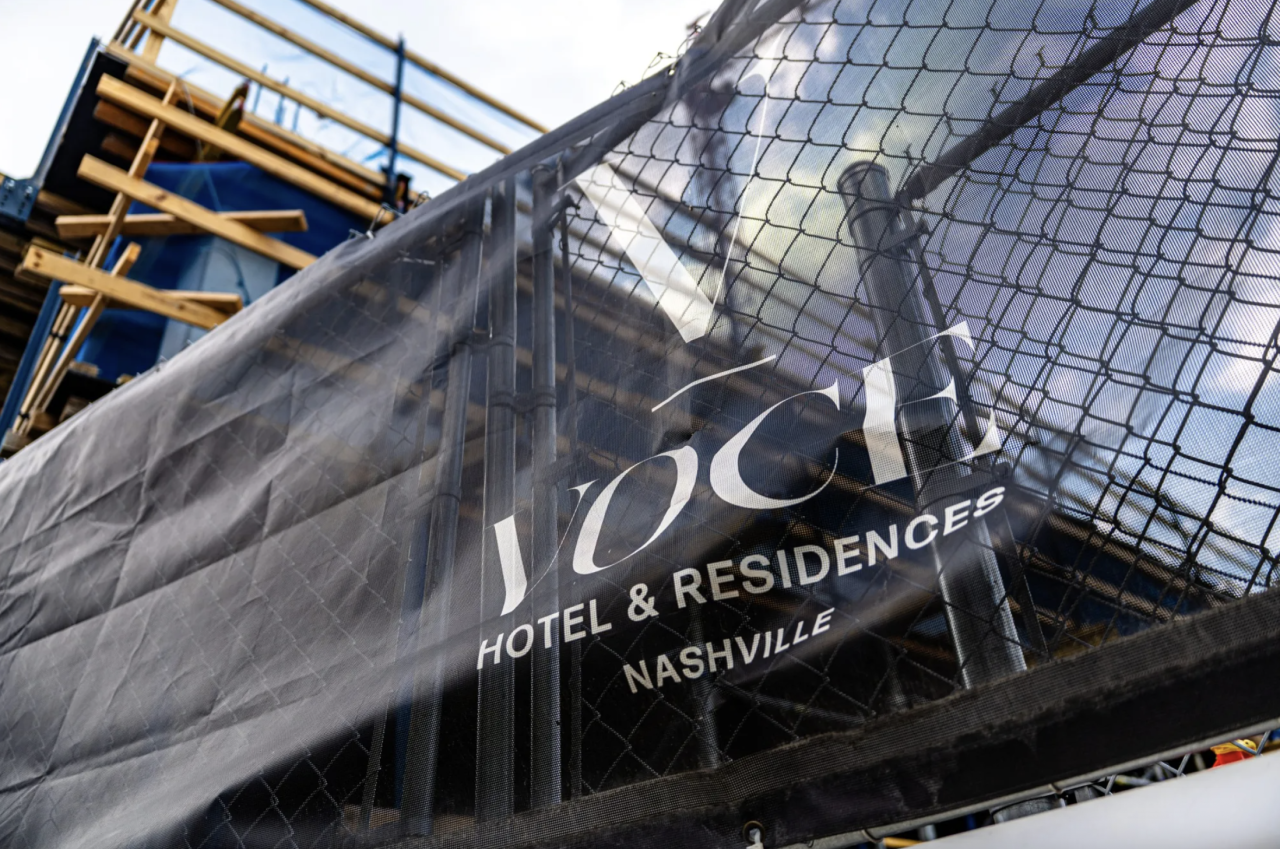
The construction site of Voce Hotel and Residences, a 25-story Vastland development, on Hayes Street. In another instance later in 2025, Vastland required an amendment to zoning for its Voce hotel/condo project in Midtown. Metro Planning officials were reluctant to sign off, so the Vastland team, with Honeysucker included, crafted a letter for district Councilmember Jacob Kupin and other friendly representatives to sign in support of the change. Honeysucker offered to get signatures from Councilmembers Brandon Taylor and Olivia Hill.
"I have printed them off and will proceed with getting them signed," Honeysucker wrote.
One Metro official who worked with Honeysucker but who is not authorized to speak with the media, described Honeysucker as "conscientious and dedicated.” But when the signature gathering was described, the official said, "I wouldn't do that."
A longstanding Metro official
Honeysucker had worked at Metro for 12 years. His roles over the years included managing relationships between the department and Metro Council, developing strategic plans for community outreach and managing relationships with wholesale customers. He was promoted to assistant director at the department in 2021.
New records obtained by the Banner also shed additional light on that tenure.
A file earlier provided by Metro's central human resources office included only glowing reviews of Honeysucker. MWS Director Scott Potter wrote in a 2023 evaluation that Honeysucker "will always do the right thing and will refuse to do otherwise."
But a personnel file later released by Metro Water includes more details.
It describes two incidents in 2024. One HR letter alleges that Honeysucker “used profanity and shouted at another member of the leadership team” during a MWS meeting. A colleague had to “hit the table to deescalate the situation, but you continued,” the letter contends.
A month after that situation was resolved, a subordinate at Metro Water filed a complaint for bullying and threatening and abusive behavior.
The investigation was hampered by the differing interpretations of events by Honeysucker and the subordinate, but HR conversations with other employees turned up evidence of similar behavior. One employee told HR he had "heard Mr. Honeysucker on occasion speak to employees as if they are beneath him."
According to the documents, Honeysucker admitted that he had "sometimes spoken to employees in a less than professional manner," meaning "a tone that can be received as condescending, abrasive and at times inclusive of profane language."
A paper trail
It can be extremely difficult to land a conviction in a federal public corruption case.
In 2024, the U.S. Supreme Court took the side of an Illinois mayor who took payments from a vendor, ruling that payments made after an official decision — "gratuities" — rather than before an official decision do not violate an anti-bribery law.
Recent case law has also made it more crucial for prosecutors to show an explicit quid pro quo in order to secure a conviction.
That can be challenging, unless the participants in the scheme write down the purpose of a payment.
In November 2022, the Vastland team was seeking a temporary occupancy permit for their Studio 154 project downtown.
“I will get this handled,” Honeysucker responded in an email.
He sent the info to Brady Rich of Metro Codes, who handled the requested extension.
Honeysucker forwarded Rich’s confirmation to Roy Dale, previously uninvolved in the discussions according to the released emails, at 2:46 p.m. on Nov. 4, 2022.
At 4:16 p.m. that day, Dale emailed McClung and a Vastland accountant summaries of outstanding balances on invoices, with a total of $36,000 due.
One item listed as a deliverable on the invoice: “extension of temporary use and occupancy for the use of a hotel.” Honeysucker had just secured such an extension.
Another deliverable is listed as “obtaining a letter from Metro Codes assuring the allowance of units to be sold or rented or a combination of both to be used as a hotel.”
According to emails obtained in the records requests, Honeysucker (without Dale) helped McClung seek just such a letter. The Metro employee set up a meeting between McClung and Hargis, the zoning administration in the codes department, that summer. McClung, with Honeysucker copied, provided a letter for Hargis to sign, with the unusual breakdown of condos and hotel units at the property sanctioned.
“I was just following back up with You to see if I could get a copy of the signed letter, if it has been signed please,” Honeysucker prodded Hargis a week later. “I am currently at your building finishing a meeting if possible.”
Three days after Honeysucker confirmed the extension from the codes department, Dale copied Honeysucker on another exchange with McClung and a Vastland accountant. After a discussion, the parties agreed on a total due on multiple invoices, including the ones describing tasks that records suggest were completed by Honeysucker, not Dale. (Dale, through an attorney, declined to comment.)
"Thats [sic] perfectly acceptable," Dale wrote of the agreed-upon check. "I can have John pick it up tomorrow if that is Ok."
This article first appeared on Nashville Banner and is republished here under a Creative Commons Attribution-NoDerivatives 4.0 International License.

September 11, 2001 is a day most associate with terror and tragedy. Austin Pollack shares a story from that day about hope and persistence: the effort to save a little girl’s life – with an organ donation. The problem? The young patient was in Houston, and her life-saving liver here in Nashville. With the grounding of all civilian aircraft, how could it be done? “Nobody ever said this isn’t possible.”
- Rhori Johnston