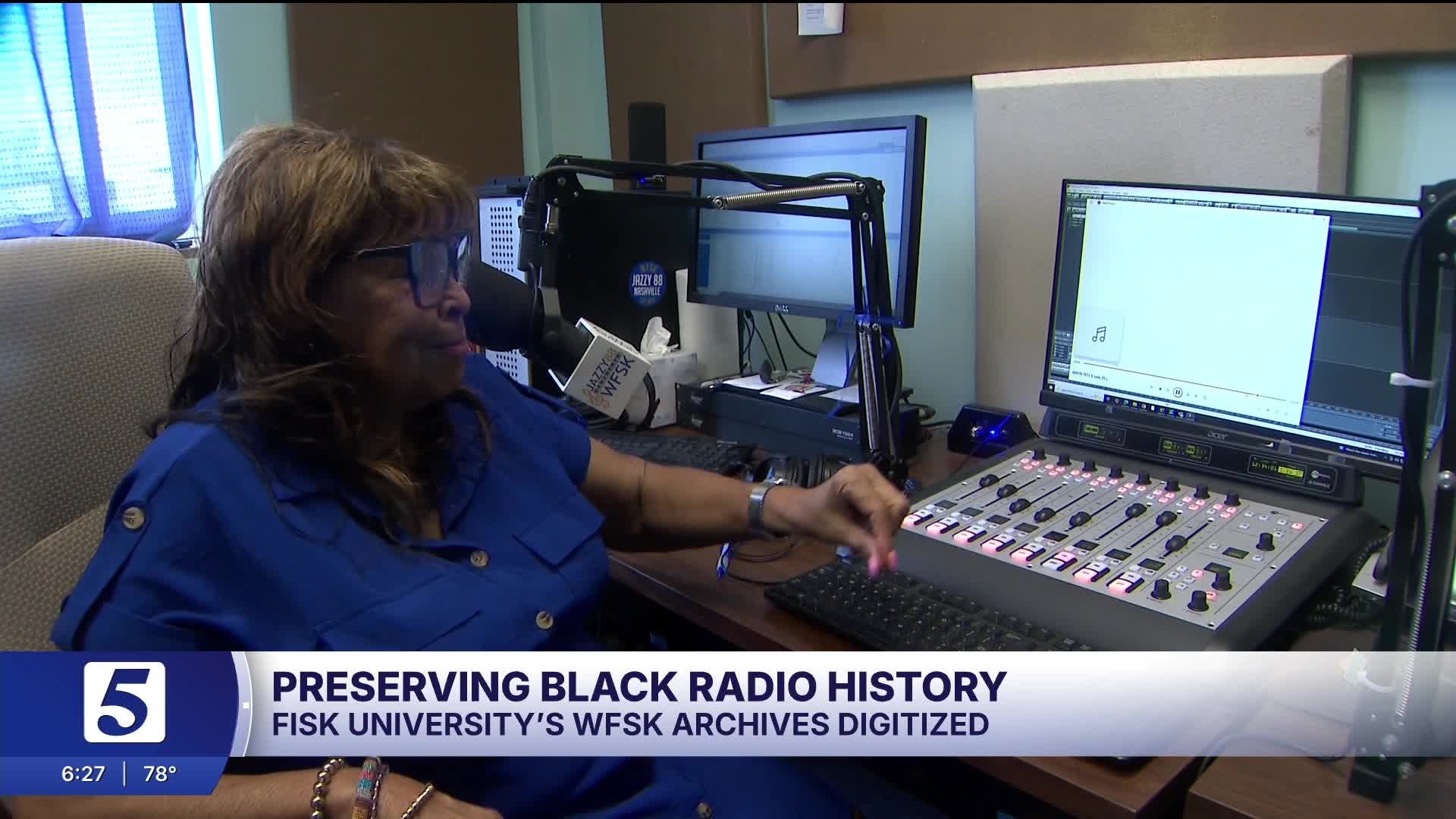


NASHVILLE, Tenn. (WTVF) — Historic recordings from Fisk University’s campus radio station will be digitized to preserve decades of voices, culture, and community.
The HBCU Radio Preservation Project selected WFSK 88.1 to digitize nearly 400 hours of historic audio. The recordings will be available to researchers, students, and creators to ensure the voices continue to be heard.
Nearly one-third of the nation’s 101 HBCUs have radio stations, with many featuring decades of history still on the air today.
When people in Nashville look to wash away the noise of everyday life, many tune in to WFSK 88.1 at Fisk University. The station has maintained its identity on the air since the early 1970s. While the call letters were previously WRFN Radio Free Nashville, the mission has not changed.
"It's Nashville's first and only jazz station, and we want to keep our identity," General Manager Sharon Kay said.
Kay said WFSK has always been a place for the community to be heard.
"You can speak freely here because you're talking to the sisters and the brothers," Kay explained.
When radio was a primary source of information, WFSK informed the community rather than just playing music. "They will talk about the issues and discrimination, deep prejudice, racism. Nashville got history, civil rights history," Kay said.
Director of Archives DeLisa Minor Harris said the milestone helps tell the story of how student-led radio at an HBCU shaped a community.
"They were able to do some intervention work with us for conservation and preservation, and take those to the Northeast Document Conservation Center, where they were able to digitize them," DeLisa Minor Harris added.
"It's been a central part of this campus, and to have it preserved long term tells the full story, gives future Fiskites the opportunity to think about creating."
Kay is grateful that WFSK was chosen for the project, which includes historic audio discussing topics like minimum wage and Watergate.
"People will be able to reflect back on how it was then, how we progressed, set the tone for all things Black Nashville," Kay said.
This story was reported on-air by journalist Aaron Cantrell and has been converted to this platform with the assistance of AI. Our editorial team verifies all reporting on all platforms for fairness and accuracy.

Every night, Forrest Sanders brings us stories showcasing the best of humanity. This story profiles, perhaps, Tennessee's most eccentric resident who made an impact on an aspiring journalist. I'm always in awe of Forrest's storytelling; I truly appreciated his vulnerability with this one.
- Carrie Sharp