

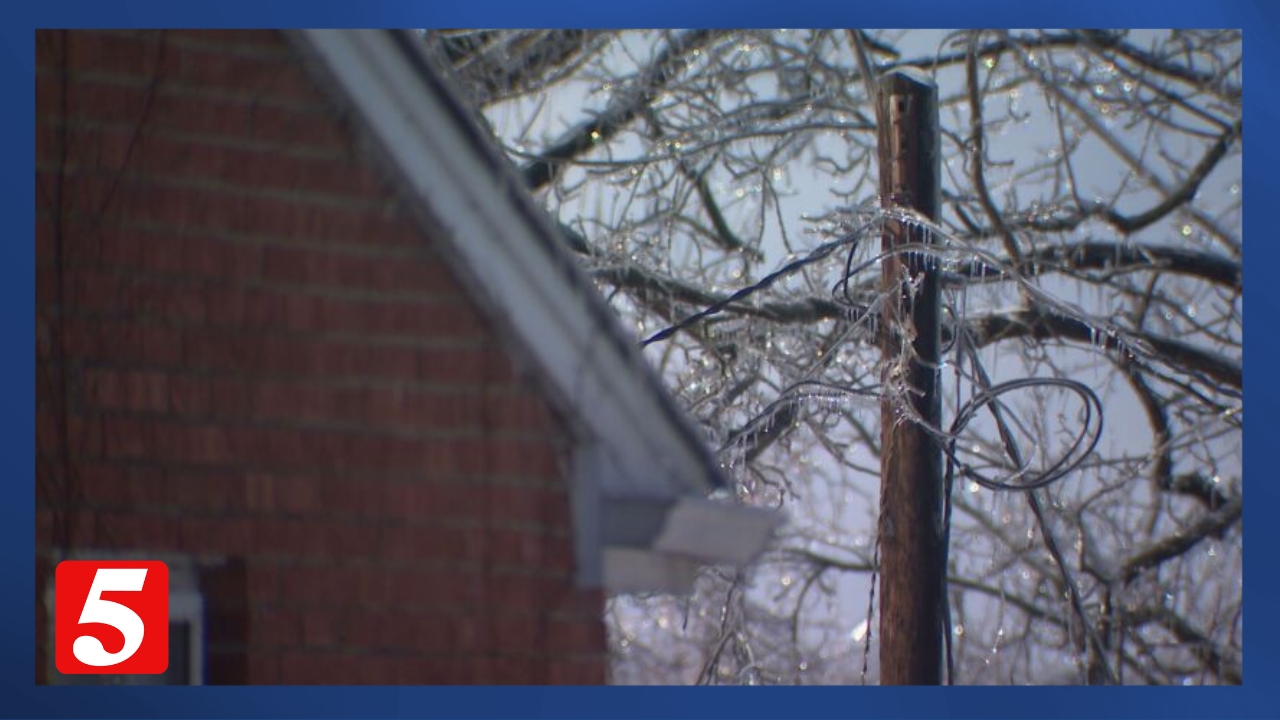


NASHVILLE, Tenn. (WTVF) — Nashville families struggling financially after the recent winter storm received welcome news as an additional $750,000 was added to Davidson County's Emergency Winter Housing Assistance Program to help cover housing costs.
The expanded funding comes after applications poured in on the first day the program opened. Within the first 40 minutes, 130 applications had been received, according to the Metro Action Commission's Executive Director.
"When we looked at what the maximum assistance for individuals was going to receive — up to $2,000 — the 130 applications, we had already provided those services, if everyone is eligible," Jamekia Bies said.
Jarethea Bagwell, a single mother of two, was among those applying for assistance after the winter storm forced her to spend money she had set aside for rent.
"I honestly spent $300 on groceries alone, and I spent about $200 on a hotel stay," Bagwell said.
The storm hit families when January budgets were already tight after the holidays, making the financial impact even more challenging.
"I feel like I was this close, then boom — the winter disaster happened. Then, having to pull money from what I had... it made everything so much worse for me," Bagwell said.
The program was initially kick-started by a $250,000 donation from the Tennessee Titans through their Home Field Advantage Catalyst Fund. By day two of applications, Mayor Freddie O'Connell announced an additional $750,000 in funding to meet the overwhelming demand.
Metro is using leftover American Rescue Plan funds to expand the emergency housing assistance program. Combined, the funding will help at least 500 people in Davidson County cover up to $2,000 in housing payments.
To qualify, applicants must:
- Live in Davidson County
- Have experienced damage or hardship during Winter Storm Fern
- Meet income guidelines (no more than 80% of Area Median Income)
Qualifying hardships must have happened during the storm and include:
- Property damage (electrical, plumbing, fallen trees, etc.)
- Hotel or temporary housing costs
- Lost work or reduced hours
- Death of a household member
- Illness
"If you went to a hotel. If there was a death or illness in the family. It doesn't necessarily mean you lost power because that would include everyone. It has to be an opportunity or event where you had to use additional funds that were not already allocated to meet the need," Bies said.
The Metro Action Commission sends payments directly to landlords or mortgage companies.
The program provides help to those who qualify and need it most until the money runs out.
"I do the best I can do, again, as I say, if I don't get up and try, then how will I know?" Bagwell said.
This story was reported on-air by Hannah McDonald and has been converted to this platform with the assistance of AI. Our editorial team verifies all reporting on all platforms for fairness and accuracy.
