
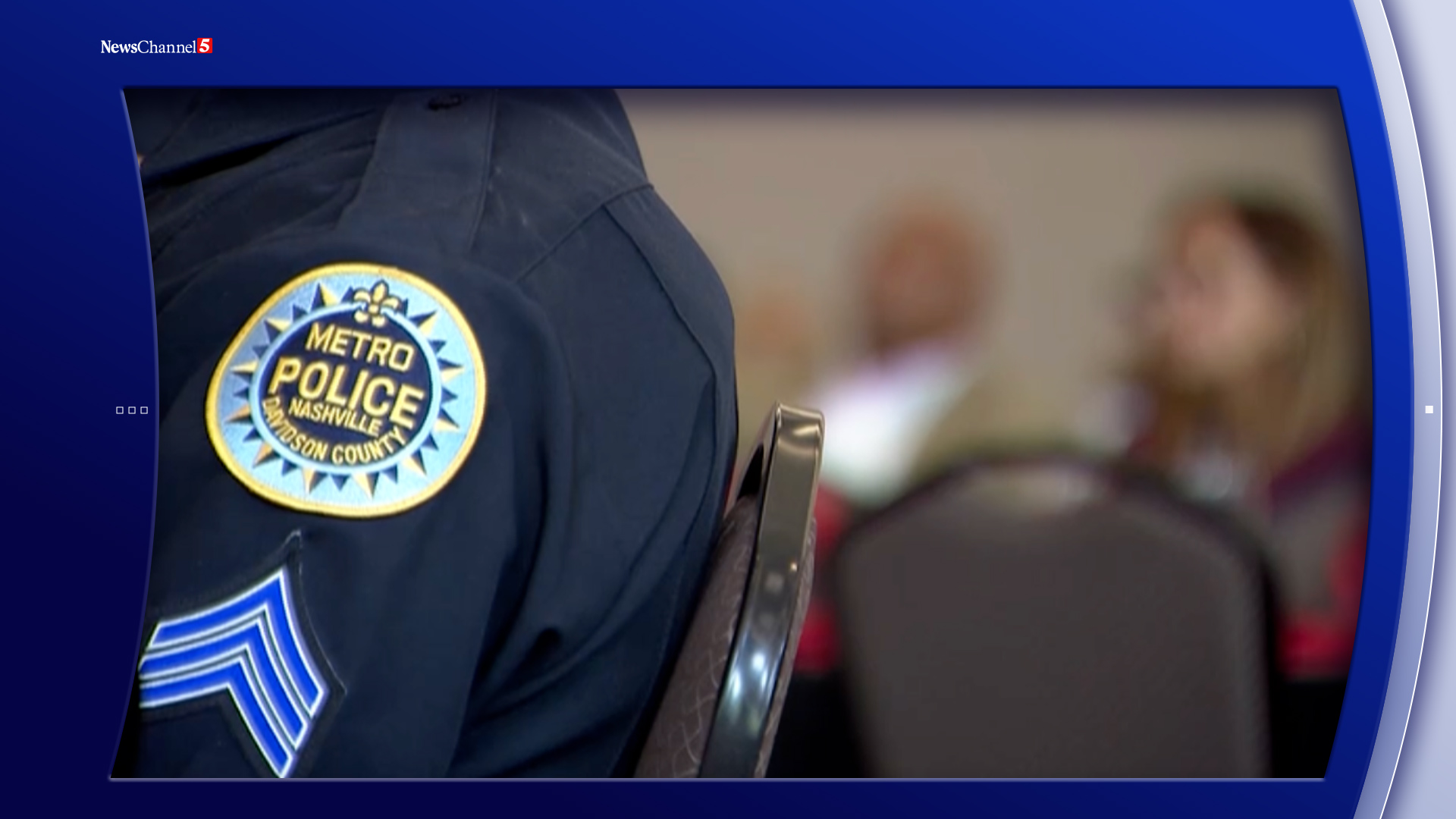


NASHVILLE, Tenn. (WTVF) — A Nashville program is taking a different approach to reducing violence — one focused on prevention rather than punishment.
The Group Violence Intervention program launched several years ago in the mayor's office and is now a partnership between the Metro Nashville Police Department, the health department, and the Urban League of Middle Tennessee.
"We're trying to reduce violence in a way the city hasn't really seen before as a police department," MNPD Captain Anthony Brooks said.
The program works by having police identify individuals who have been impacted by gun violence or are at risk of becoming involved in it. Those individuals are then connected with community partners who deliver tailored support services.
"The police....they look at individuals that might have been impacted by gun violence or some type of violence, and they vet those people to us, and then we go out and deliver a custom message to those individuals to wrap services around them, to help them," GVI Program Manager Glenn Hancock explained.
Those services include job training and mental health support, designed to steer people away from crime. Police said the contacts are not random — data shows each person reached through the program has either been involved in violence or is at risk of becoming part of it.
The results have been significant. Brooks said about 87% of people who received the program's outreach have not reoffended.
"They've stayed off our radar, which is a good thing," Brooks said.
That success was highlighted at the program's first-ever conference, which brought leaders together to focus on strategy and impact.
"It's bringing all the partners together to talk about the strategies and the impact we know the program is having," Urban League of Middle Tennessee's Clifton Harris said.
Leaders said the goal is to break the cycle of violence by showing people there is another path forward.
"If we can come in with some job training, education, things like that, and let them see maybe there is another path, we can start reducing those acts of violence in the community," Brooks said.
This story was reported on-air by a journalist and has been converted to this platform with the assistance of AI. Our editorial team verifies all reporting on all platforms for fairness and accuracy.

September 11, 2001 is a day most associate with terror and tragedy. Austin Pollack shares a story from that day about hope and persistence: the effort to save a little girl’s life – with an organ donation. The problem? The young patient was in Houston, and her life-saving liver here in Nashville. With the grounding of all civilian aircraft, how could it be done? “Nobody ever said this isn’t possible.”
- Rhori Johnston