

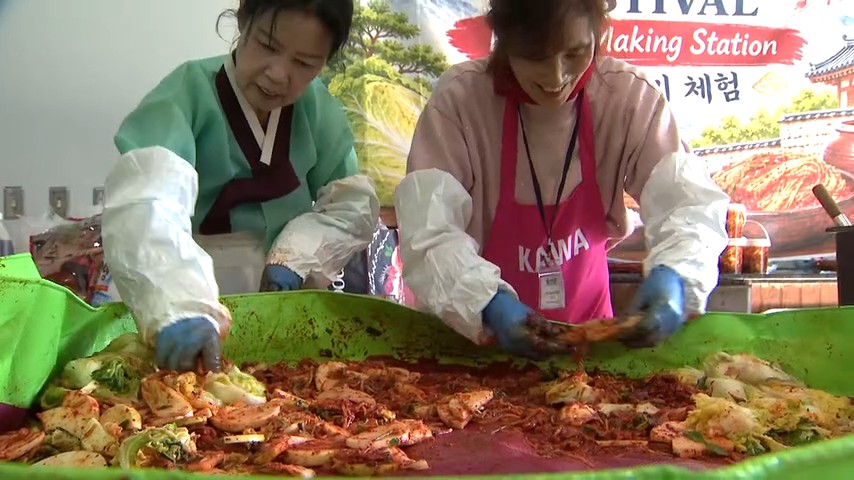

NASHVILLE, Tenn. (WTVF) — An Antioch church is using one of Korea's most beloved foods to build community connections — and to share a culture that has traveled a long way to find a home in Middle Tennessee.
At Korean Unity Baptist Church in Antioch, members recently gathered for a gimjang — a traditional Korean practice of making kimchi together.
AhYoung Kim Stover, a member of the Tennessee Korean Festival, said the tradition goes back generations.
"In the olden days, women in the neighborhood would come together, family, grandmas, aunts, and they would roll up their sleeves and do what's called gimjang, which means to make kimchi together," Kim Stover said. "It kind of symbolizes the perseverance and the kind of the community and love that we have for each other and our culture."
Kimchi — a fermented side dish made with cabbage, red pepper paste, and other ingredients — has grown from a little-known food in the U.S. to a mainstream staple. Kim Stover said that shift reflects a broader cultural journey.
"In the 80s and 90s in the US, people didn't know what kimchi was and it was something almost kind of like people were freaked out about it," she said. "And now they sell it at Costco."
For Kim Stover, food is at the heart of Korean culture — and Korean identity.
"Korean culture is all about food," she said. "Instead of saying I love you or I'm sorry, we'll say 'Bap meogeosse,' which means have you eaten yet? One scoop. This is how we show our love. This is how we make peace. This is how we care for each other, and it's all through food."
She said kimchi also carries a deeper meaning — one rooted in her family's history and the resilience of the Korean people. "In the last generation, my parents' generation, we went through a major war and look how fast we've come from a third world country to one of the superpowers today," Kim Stover said. "It's really a story of perseverance, motivation, not being a victim, and just overcoming anything and everything. We're kind of like, bring it on, you know, and I think kimchi is kind of the signature food that represents what Korean is."
Neighbors Susan Holman and Jennifer Durham said they'd encourage anyone to give kimchi a try.
"I think everybody should at least try it," Holman said. "It's different. Gotta remember that it's different, but it's spicy, and have water available."
