


ROBERTSON COUNTY, Tenn. (WTVF) — During Black History Month, stories of resilience and remembrance often take center stage. At the Robertson County History Museum, one man’s decades-long research is helping ensure a difficult chapter of Tennessee’s past is not forgotten.
John Baker has dedicated much of his life to uncovering the history of his ancestors and others who lived and worked at Wessyngton Plantation.
“It was founded in 1796 by Joseph Washington, who was a distant cousin to President George Washington,” Baker said.
At its peak, Wessyngton Plantation spanned 13,000 acres and enslaved 274 people. According to Baker, it had the largest enslaved population in Tennessee and was once the largest tobacco plantation in America.
“It encompassed 13,000 acres and enslaved 274 individuals… which was the largest slave population in the state of Tennessee,” Baker said.
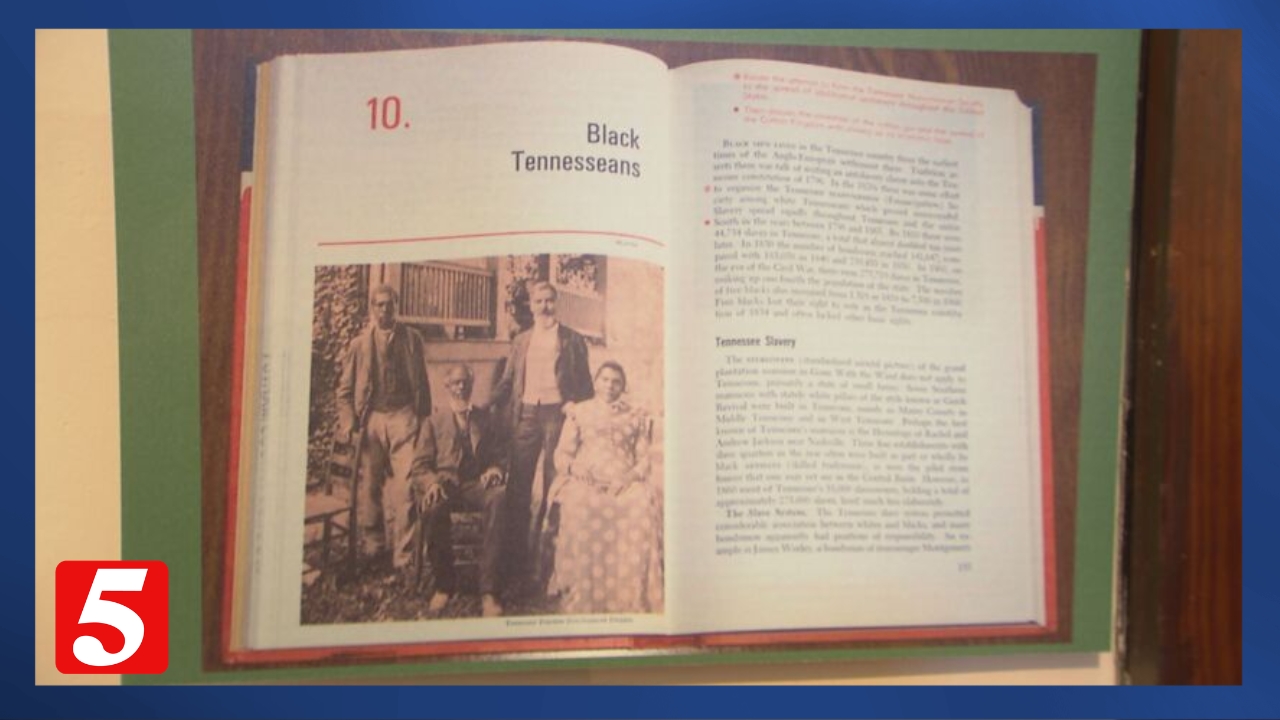
Baker’s personal journey into that history began in the seventh grade when he came across a photograph in his social studies textbook. The same 1891 image later appeared in a newspaper at his home.
When his grandmother saw it, she recognized the people seated in the portrait.
“She said they were enslaved on the Washington plantation Wessyngton and that’s how we got the Washington surname,” Baker said.
He later learned two of the people pictured were his great-great-grandparents.
What began as curiosity grew into a lifelong commitment to research. As a teenager, Baker met with a descendant of the Washington family, who granted him access to plantation records housed at the Tennessee State Library and Archives.
“I had to go through microfilm, deed books, will books and all kinds of correspondents,” he said.
Baker also interviewed more than 20 children and grandchildren of formerly enslaved Wessyngton workers to document their stories.
“I would sit with them after church, and each one would tell different stories about their ancestors, so I was absorbing this information,” Baker said.
Over the years, his research has traced not only his own family’s lineage, but also the histories of other families across Robertson County — even uncovering connections to well-known figures.
“You know Method Man the rapper? … He’s on here. This is his ancestors,” Baker said.
His work led to the publication of a book and a partnership with the Tennessee State Museum to produce a temporary exhibit, now housed at the Robertson County History Museum.
Now 63, Baker said his work continues because preserving Black history is essential.
“It shouldn’t be suppressed. It should be told just like it happened,” he said.
The Wessyngton exhibit is currently on display at the Robertson County History Museum.
This story was reported by journalist Aaron Cantrell and has been converted to this platform with the assistance of AI. Our editorial team verifies all reporting on all platforms for fairness and accuracy

Kelsey Gibbs brings us a powerful story of humanity, compassion, and love in action while showing us the hard and lifesaving work our officers do daily. Nashville is lucky to have people like Lt. Hotz wearing the badge.
- Carrie Sharp