


SPRINGFIELD, Tenn. (WTVF) — More than 60 years ago, it was legal to discriminate against someone because of the color of their skin, until the Civil Rights Act of 1964 changed the course of history.
While the country has made progress, the fight against racism is far from over. This Black History Month, one woman is reflecting on what segregation looked like inside a local movie theater that is now being transformed.
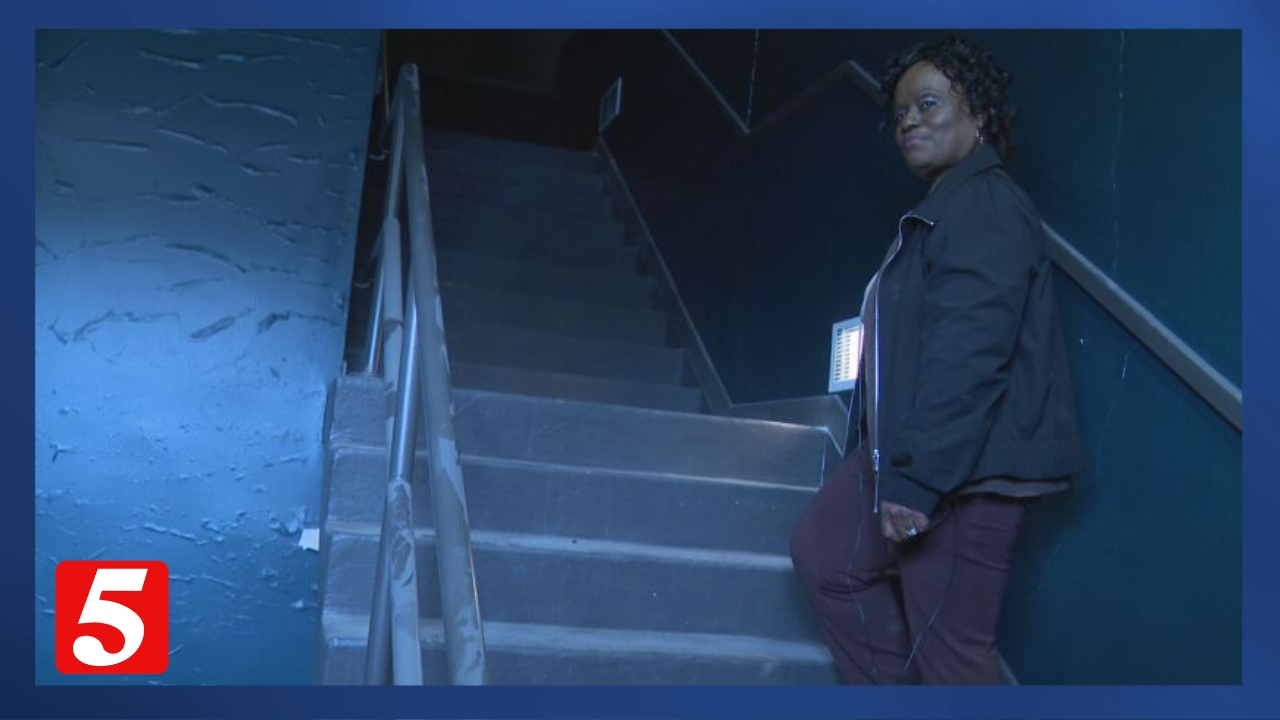
Standing inside the Capitol Theatre in Springfield, Deborah Jones pointed toward the stairwell leading to the balcony of the theatre.
“It was so dark coming up into the balcony,” Jones said.
That stairwell was the path Black moviegoers were required to take.
“You would pay at the ticket booth and go to the door on the right side and come up the steps to the balcony,” she said. “That was your entrance in and out.”
White patrons entered separately and sat downstairs. Black families were directed upstairs.
“You had to hold on to the side of the walls to be able to get up the steps because it was so dark,” Jones said.
She was about 8 or 9-years-old when she first climbed those stairs with her sister in the early 1960s.
“I knew why they were sitting at the bottom, and I knew why we were sitting at the top — because of segregation,” she said.
Jones said she did not question the system at the time.
“I had also experienced going other places where you didn’t go in through the front — you had to go in through the back,” she said.
The feeling of being unwelcome, she said, was simply part of growing up in that era.
“I had one grandchild ask me how I felt about it,” Jones said. “I told him I didn’t feel any certain way. I was used to what was happening at that time. Did I like it? No. But I was able to deal with it.”
As civil rights laws changed, so did the experience inside the theater.
“It felt good sitting wherever I wanted to,” she said.
Now, in 2026, the Capitol Theatre is under new ownership and undergoing renovations.
While the building is being updated, Jones believes the history tied to it should never be forgotten.
“Let people know how you were raised and brought up,” she said. “What was happening during that period of time. What you had to go through.”
If there is a piece of history, culture or a landmark you are working to preserve or someone in your community, past or present, whose story has not been told, Aaron Cantrell wants to hear from you.
He hopes to continue sharing stories that reflect the full history of the communities. You can email him at aaron.cantrell@newschannel5.com.
This story was reported on-air by reporter Aaron Cantrell and has been converted to this platform with the assistance of AI. Our editorial team verifies all reporting on all platforms for fairness and accuracy.

September 11, 2001 is a day most associate with terror and tragedy. Austin Pollack shares a story from that day about hope and persistence: the effort to save a little girl’s life – with an organ donation. The problem? The young patient was in Houston, and her life-saving liver here in Nashville. With the grounding of all civilian aircraft, how could it be done? “Nobody ever said this isn’t possible.”
- Rhori Johnston