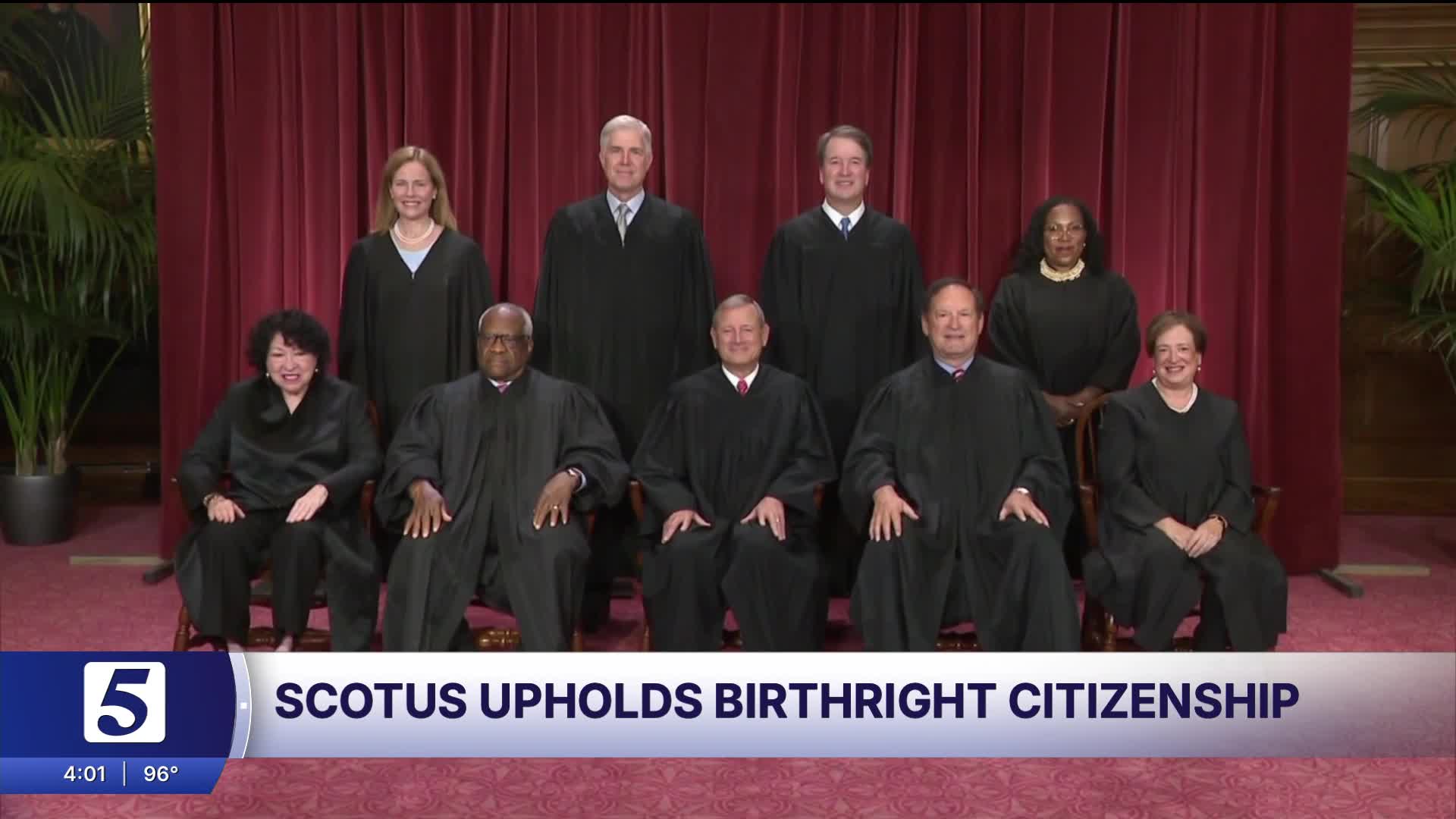


NASHVILLE, Tenn. (WTVF) — The Supreme Court upheld birthright citizenship Tuesday, effectively blocking an executive order from President Donald Trump that sought to deny citizenship to babies born to parents living in the U.S. illegally or on temporary visas.
Justices ruled 6-3 that the Constitution guarantees citizenship to almost all children born in the United States.
Trump's executive order, signed on the first day of the president's second term, aimed to deny citizenship to babies born to parents in the country illegally or on temporary visas. Supporters of the order argued birthright citizenship encourages illegal immigration and increases costs for taxpayers. President Trump argued the 14th Amendment was originally intended for former slaves.
"No other nation does that birthright citizenship. No, not even close. Some did at the end, and it's tremendously destructive. It's extremely costly," President Trump said.
The U.S. is one of dozens of countries that recognize birthright citizenship. It has long been protected under the 14th Amendment. Ratified in 1868, the amendment grants citizenship to nearly anyone born in the United States, regardless of where their parents come from.
"I think most people who were following the case thought that there was an overreach by the president and his executive order to eliminate birthright citizenship. So there was no surprise there," Fisk University Political Science Professor Dr. Sekou Franklin said.
The Tennessee Immigrant and Refugee Rights Coalition is celebrating the decision, saying the ruling gives reassurance to families across the country.
"It's a big deal and definitely a win," TIRRC Votes Campaign Director Cesar Bautista said.
"And it's great to know that many kids are not going to have to doubt themselves if they belong in the United States or not, and that they are American citizens," Bautista said.
Chief Justice John Roberts wrote the majority opinion, saying the 14th Amendment makes a citizen of nearly anyone born in the country, with very limited exceptions. Justice Brett Kavanaugh agreed with the ruling but pointed to federal law rather than the Constitution. Justices Clarence Thomas, Samuel Alito and Neil Gorsuch dissented.
Researchers say the president's order would have affected more than a quarter of a million babies born in the U.S. each year. It would have applied to people in the country illegally, as well as some people legally in the U.S. on temporary visas.
President Trump said the decision is bad for the country and suggested Congress could pass legislation to address the issue. However, because the majority opinion rests on constitutional grounds, overturning birthright citizenship would likely require a constitutional amendment.
The court said the only widely recognized exception applies to children of foreign diplomats.
History shows the rule has applied even during times of national conflict. Children born to Japanese citizens held in U.S. internment camps during World War II were automatically granted citizenship.
Do you have more information about this story? You can email me at Patsy.Montesinos@NewsChannel5.com

September 11, 2001 is a day most associate with terror and tragedy. Austin Pollack shares a story from that day about hope and persistence: the effort to save a little girl’s life – with an organ donation. The problem? The young patient was in Houston, and her life-saving liver here in Nashville. With the grounding of all civilian aircraft, how could it be done? “Nobody ever said this isn’t possible.”
- Rhori Johnston