

NASHVILLE, Tenn. (WTVF) — Commuters across Middle Tennessee are spending more time stuck in traffic, and state leaders are grappling with how to fund desperately needed road improvements with limited resources.
When I asked viewers on social media to share their traffic concerns, responses poured in highlighting problem spots throughout the region. Ironically, elected officials had many of the same complaints and requests for improvements.
"I was on it just the other day, I felt like I was on the moon," said State Rep. Joe Towns (D-Memphis) describing the state highway that runs in front of Graceland in Memphis.
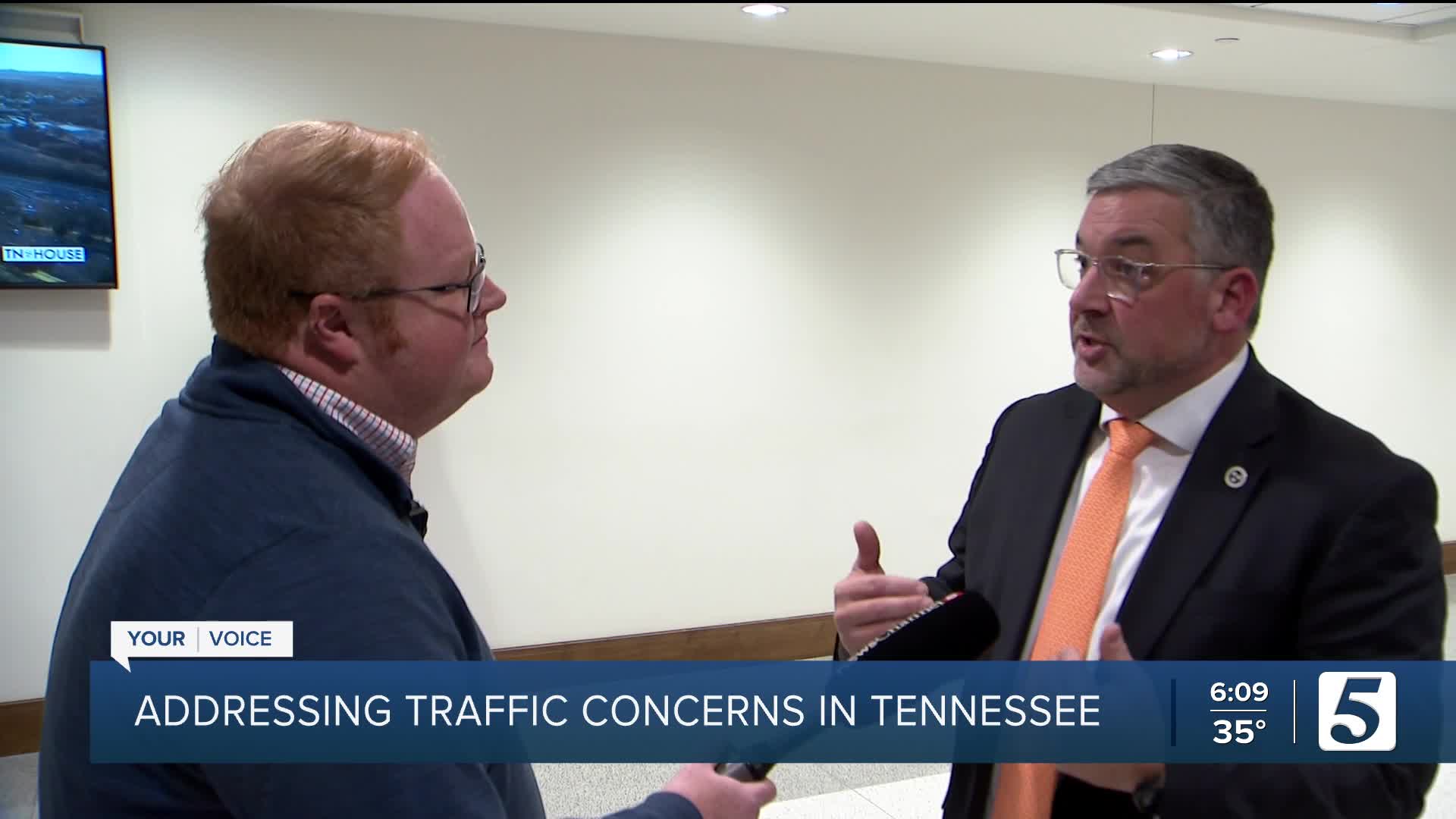
When I asked Tennessee Transportation Commissioner Will Reid about addressing issues like I-24, Briley Parkway and Highway 109 in Lebanon, he emphasized the need for transparency about funding priorities. "I think what you have to do, you have to be very transparent about how many dollars are coming in, and frankly, how you're prioritizing them," Reid said.
Reid said his department would tackle all requested projects immediately if possible, but funding constraints force difficult decisions.
"The reality is, we have to make hard decisions every day about where those dollars go, because there's not enough of them to satisfy everyone's needs," Reid said.
Tennessee is among the few states that doesn't finance road projects through borrowing, instead spending only directly allocated funds. Between federal and state dollars, TDOT has about $2.8 billion this year.
That amount seems substantial until considering TDOT's wish list of urgent projects. Commissioner Reid said widening all interstates in Tennessee to at least three lanes in each direction would cost $19.5 billion, handling urban congestion around cities like Nashville, Memphis and Knoxville would cost $23.9 billion and finishing off projects announced during the 2017 Improve Act would cost $14.6 billion.
"If you want to do quick math -- that's $58 billion just in those three buckets," Reid said to lawmakers during a hearing.
Lawmakers appear willing to explore additional funding options for TDOT.
"I believe all opportunities and all options are on the desk," said State Rep. David Hawk (R-Greeneville).
One possibility involves allocating more money to TDOT in the next budget, though that could mean cuts to other programs. "I believe if we don't make a significant investment in the state budget, we are never going to get caught up," said State Rep. Ed Butler (R-Rickman).
Democrats have suggested borrowing money for road construction, similar to other states' approaches.
"I think bonding transportation projects is a no brainer. Of course, we don't want to incur so much debt that it's unhealthy for our state economy or state government. So there should be a cap there. But bonding has to be an option," said Rep. John Ray Clemmons, D-Nashville, in a sit down interview earlier this month.
Lawmakers could also raise gas taxes for the first time since 2017, though tax increases typically face political resistance.
Tennessee lawmakers did pass a provision last year that would raise TDOT revenue by $80 million each year, re-directing sales tax revenue from tire sales directly into transportation funding. Rep. Hawk has pitched the idea of including sales tax revenue from car sales to also flow into TDOT's coffers. He dubs it the "Hawk Plan" and joked that the idea will celebrate its 9th birthday later this session.
Whatever lawmakers decide, Reid said the department wants to address these infrastructure challenges proactively rather than delay action. "Whether it's a pothole, whether it's sitting in traffic. No matter what it is, we want to come up with a solution," Reid said.
Do you have questions you'd like for us to raise with Tennessee lawmakers? You can email me at Chris.Davis@NewsChannel5.com.

September 11, 2001 is a day most associate with terror and tragedy. Austin Pollack shares a story from that day about hope and persistence: the effort to save a little girl’s life – with an organ donation. The problem? The young patient was in Houston, and her life-saving liver here in Nashville. With the grounding of all civilian aircraft, how could it be done? “Nobody ever said this isn’t possible.”
- Rhori Johnston