
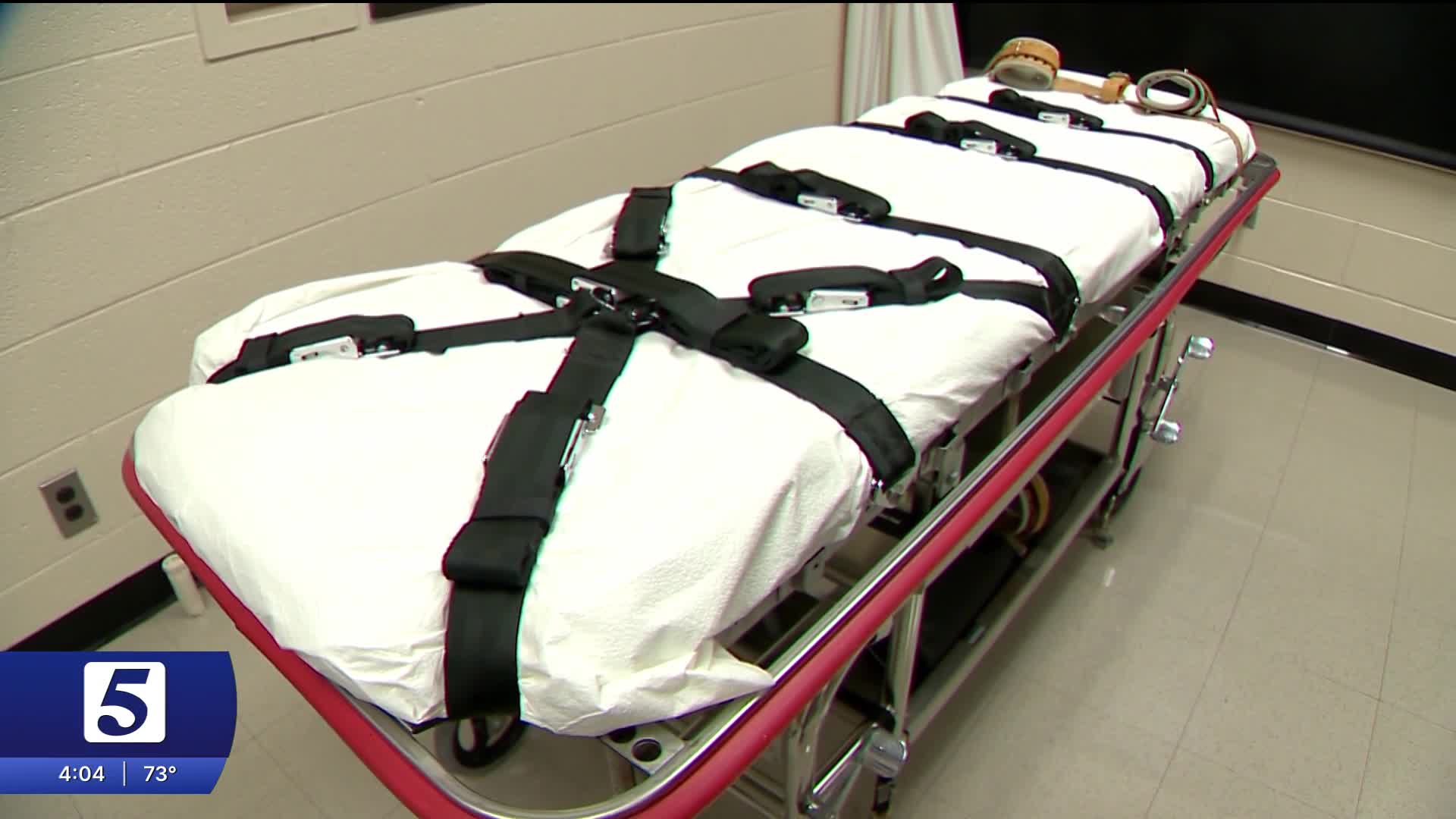


NASHVILLE, Tenn. (WTVF) — Tennessee Gov. Bill Lee granted death row inmate Tony Carruthers a year-long reprieve Thursday after corrections staff were unable to perform a lethal injection, raising serious questions about the state's execution protocol and what it means for every other inmate on death row.
The Tennessee Department of Corrections said staff established a primary IV line for the lethal injection but failed to set up the required backup line. The team continued attempts — including inserting a central line — without success. Ultimately, the execution was called off.
Carruthers' attorney Amy Harwell said the team punctured her client repeatedly for more than an hour — in the arms, feet, hand, chest and shoulder.
Steven Hale, a criminal justice reporter with our news partners at the Nashville Banner who witnessed the execution attempt, said observers never saw Carruthers because the curtain was never opened. Under Tennessee's execution protocols, the curtain is opened for media witnesses after the IV lines are established. "The longer it went, the more we started to think something was up," Hale said. "They never opened the curtain so we never saw Mr. Carruthers, we just heard his voice, his attorney's voice and some commotion," Hale said.
A few minutes later, Hale said he heard what he believed was Carruthers in distress. "I heard Mr. Carruthers groaning. I say we heard him groaning. We thought it was him but we couldn't see," Hale said.
David Raybin, a Nashville attorney who has followed death row cases for decades, said the failed attempt was unlike anything Tennessee has ever experienced. As a young prosecutor, Raybin helped craft Tennessee's 1976 death penalty statute. "I've never seen one quite as calamitous as this. This is virtually unprecedented in Tennessee," Raybin said. "But this particular execution was bungled from the start."
Raybin said if Carruthers experienced significant pain, it could prevent the state from executing him again.
"You're going to see a host of lawsuits filed by [Carruthers], asking that the execution never occur because he endured so much anguish at the time of this proceeding and maybe they'll argue that he was punished enough," Raybin said.
Gov. Lee's decision to issue a year-long reprieve — rather than a shorter delay of a few weeks — is significant, Raybin said. "You're absolutely going to see a delay. If the Governor stayed this man's execution for a year, everyone else is going to say I want at least a year's delay until they sort out the problems with him," Raybin said.
Raybin also said Tennessee lawmakers may call for a full investigation into the failed attempt.
About the case
Tony Carruthers was convicted of the 1994 kidnappings and murders of three people in Memphis, Tennessee: Marcellos "Cello" Anderson, his mother Delois Anderson, and a 17-year-old family friend, Frederick Tucker.
The three victims were kidnapped from the Anderson home, killed and buried in a freshly dug grave beneath another casket at Rose Hill Cemetery in South Memphis.
Do you have more information about this story? You can email me at Chris.Davis@NewsChannel5.com.
This story was reported on-air by a journalist and has been converted to this platform with the assistance of AI. Our editorial team verifies all reporting on all platforms for fairness and accuracy.

Kelsey Gibbs brings us a powerful story of humanity, compassion, and love in action while showing us the hard and lifesaving work our officers do daily. Nashville is lucky to have people like Lt. Hotz wearing the badge.
- Carrie Sharp