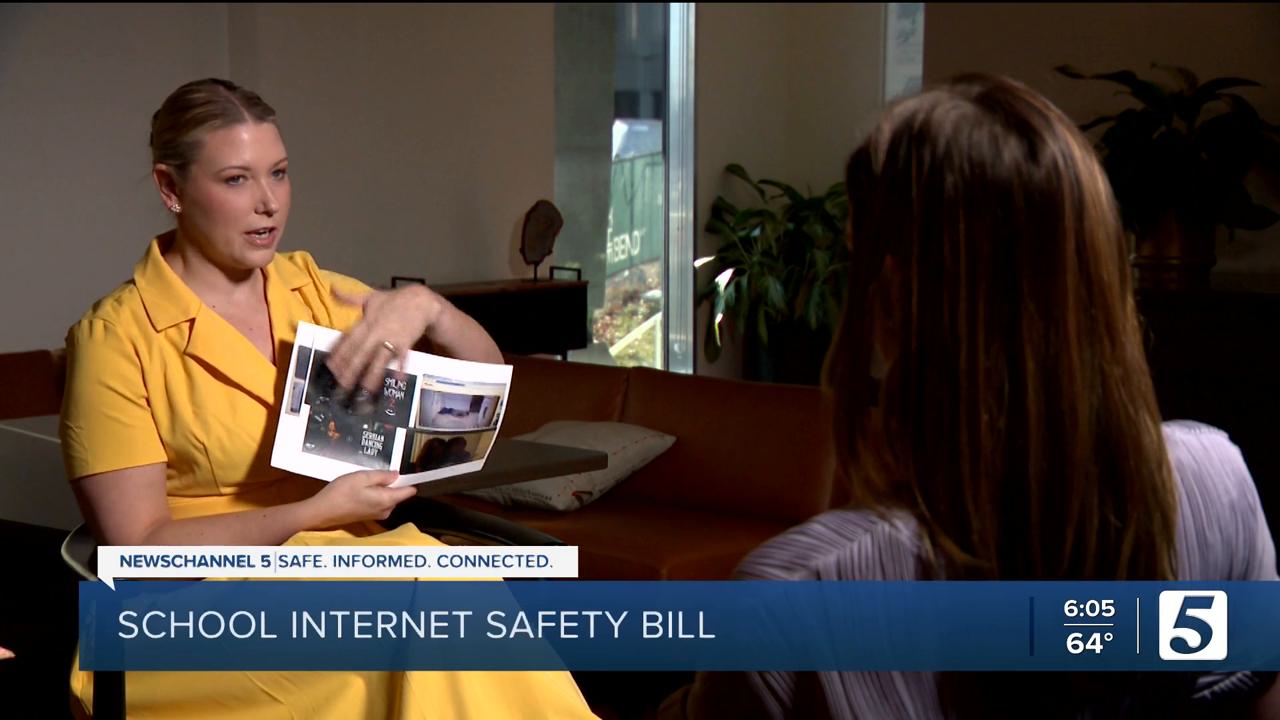


NASHVILLE, Tenn. (WTVF) — A Tennessee mother's discovery that her third-grade daughter easily accessed disturbing content on a school-issued device has led to proposed legislation aimed at strengthening internet protections for students.
Elle Benson was shocked when she found her daughter had watched 40 inappropriate videos over the course of a month on her school device. The content ranged from horror films to clips showing people harming others with knives.
"This was just psychologically really creepy... a lot of stalking... sexual harassment," Benson said.
The incident prompted Benson to team up with other parents to develop a solution for policymakers.
Proposed legislation seeks stricter controls
On Tuesday, the Education Committee heard testimony on the Student Internet Protection Act, HB 1886, sponsored by Maury County Representative Scott Cepicky. The bill would require school technology departments to create approved website lists and notify parents when students access banned content. It would also eliminate school email accounts for pre-K through fifth-grade students.
Benson testified alongside two other mothers and former FCC Commissioner Deborah Taylor Tate, who emphasized her personal stake in the issue.
"Even more importantly, I'm here as a mom and grandmother of four who cares deeply about the online world we have opened to our youngest children right in the palm of their hands, " Tate said.
Current protections may not be enough
Federally funded K-12 schools are already required to block harmful online content under the Children's Internet Protection Act (CIPA), which has been in place for years. However, with rapidly evolving technology, some states are exploring additional safeguards.
Benson acknowledged that the pandemic created gaps in digital safety policies.
"We gave these kids these devices so they could work remotely. And we didn't quite have the policies or procedures in place... It was COVID. It was wild. But now we're out of COVID, and we haven't really caught up to the technology we passed out," Benson said.
While lawmakers appeared supportive of the proposal, retired teacher and Representative Gloria Johnson warned that restricting student website access could create problems for educational research.
"Limiting to 100 or 200 websites for a school system, when kids are doing research, I mean there's millions of sites when it comes to doing research and science and history and any of the things a 10th grader might choose to do their research report on," Johnson said.
The bill does not appear to put a cap on the list of approved websites.
The bill wouldn't take effect until the 2027-2028 school year, giving school districts time to adjust their systems. The legislation would also require local school boards and charter schools to conduct annual reviews, ensuring students use the internet safely and follow established rules.
This story was reported on-air by a journalist and has been converted to this platform with the assistance of AI. Our editorial team verifies all reporting on all platforms for fairness and accuracy.

September 11, 2001 is a day most associate with terror and tragedy. Austin Pollack shares a story from that day about hope and persistence: the effort to save a little girl’s life – with an organ donation. The problem? The young patient was in Houston, and her life-saving liver here in Nashville. With the grounding of all civilian aircraft, how could it be done? “Nobody ever said this isn’t possible.”
- Rhori Johnston