

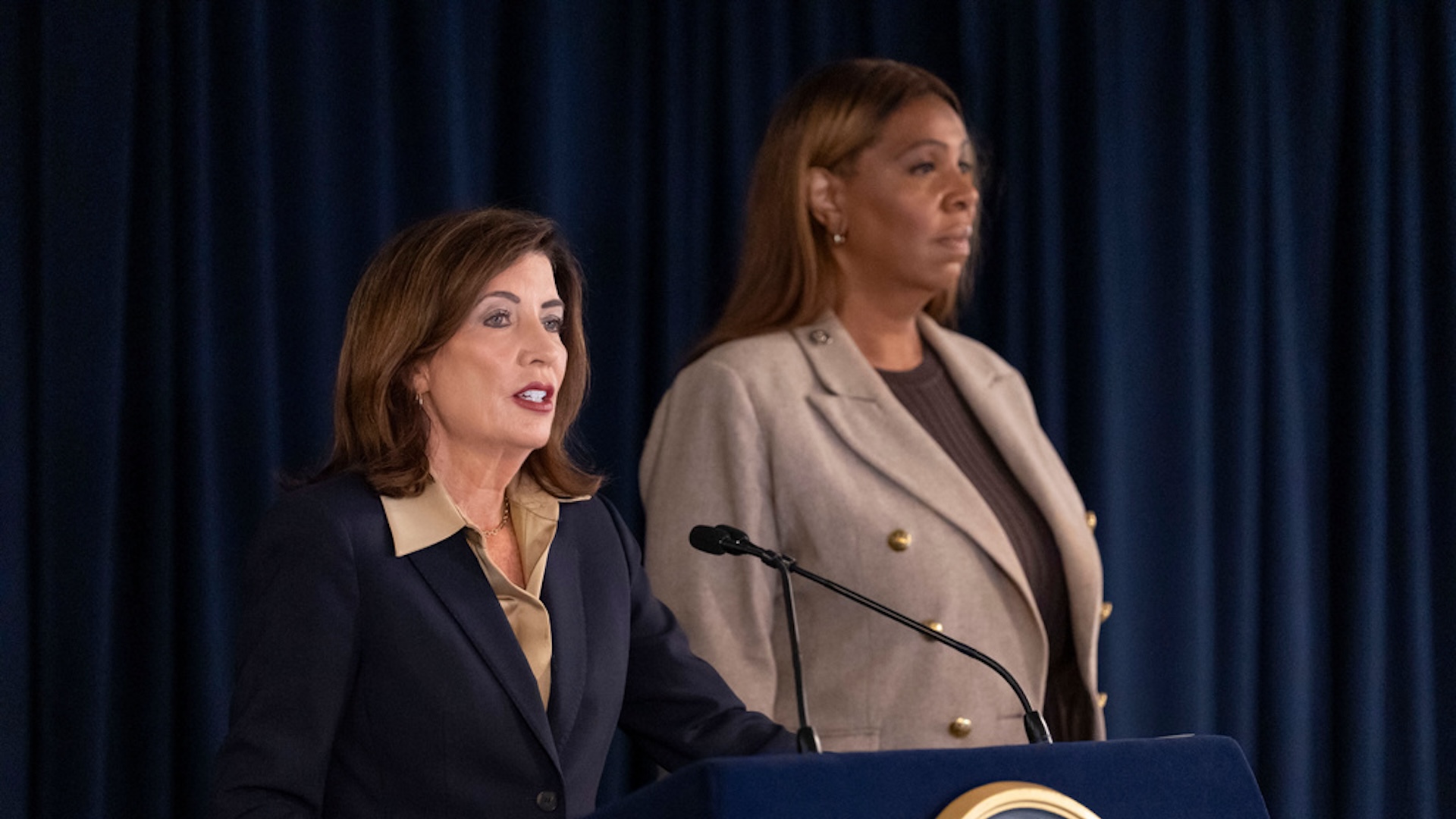


New York Gov. Kathy Hochul announced that Attorney General Letitia James would serve as an independent special prosecutor in the Cornell University rape case, saying she had lost confidence in the local prosecutor.
"This woman, this young woman, had already endured something that is utterly unspeakable. And then at every turn, she was failed by people and institutions," Hochul said during a press briefing on Friday.
A woman identified in court documents only as Jane Doe alleges she was gang raped at a Cornell University fraternity house in 2024.
The initial investigation was closed without criminal charges that year. Tompkins County District Attorney Matthew Van Houten reopened the investigation last month after Jane Doe filed a lawsuit over the alleged assault.
Van Houten said he supported Hochul's decision to appoint James to oversee the case.
"I trust that she will examine the facts and apply the law," he said. "It has become clear that we were not provided the full picture by the University."
Hochul said her decision to appoint James as a special prosecutor came after she learned new information about how the original investigation was conducted, noting that Jane Doe was never interviewed by the district attorney.
The local prosecutor has said he did not file charges in 2024 because Jane Doe’s written statement to police “did not allege that she was drugged against her will or gang raped.” He said her statement instead described her drug use and sexual activity as “voluntary, conscious, and consensual.”
Under New York law, a person can be considered mentally incapacitated by drugs or alcohol if the substance was administered without their consent. The law does not provide the same protection when someone voluntarily becomes too intoxicated to consent, a provision critics have dubbed the “voluntary intoxication loophole.”
Hochul said on Friday that she would work with lawmakers to change the law.
"Voluntary intoxication is not a license for sexual assault or gang rape," Hochul said.
