

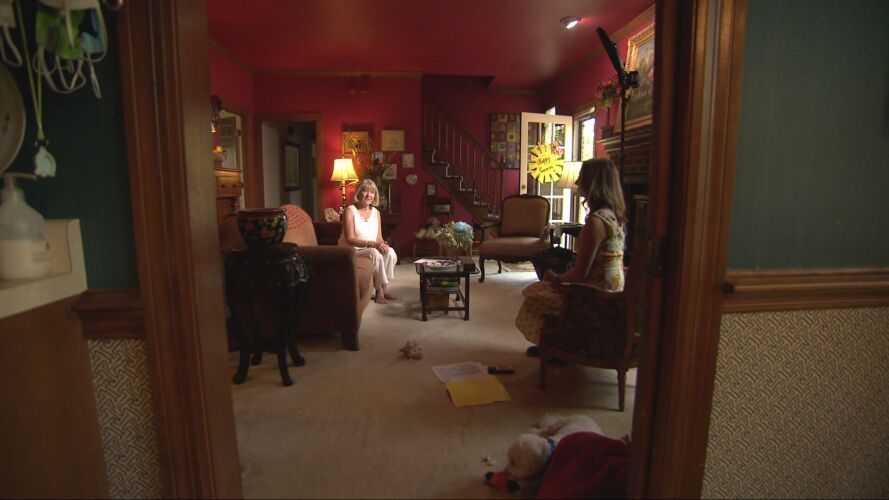


NASHVILLE, Tenn. (WTVF) — Gail Crockett keeps a binder of every message and document tied to the self-proclaimed handyman she says "took her to the cleaners."
It's a problem we first explored on July 30, when Elizabeth Johnson, 79, won a $1,500 small claims judgment against a neighbor whose truck damaged her property — only to find herself unable to collect. After that story aired, thousands watched and shared it, and more viewers came forward with the same problem.
For the past five years, Crockett has been working to undo damage she says he did to her patio, her roof, and a concrete slab, among other things. She took him to court and represented herself.
A judge sided with her, ordering him to pay her for the damage.
"I was so, so proud of myself and the court system for working with me," Crockett said.
But winning the case is only half the battle. According to the court, collecting the money is the responsibility of the person who wins — not the court.
"It's up to me, or the individual or the homeowner, to track down the money, the court is finished," Crockett said.
Legal tools exist that can help collect a judgment — including wage garnishment and property liens — but winning in court doesn't always mean getting paid. Those options require the winning party to first track down where the defendant works or banks. The sheriff's office only intervenes when a judge orders it to.
Attorney Katie Ovalle leads the Legal Aid Society's Consumer Unit.
"If a person is suing another person and that person, for example, doesn't have any income, doesn't own any real property, then the limitations can be insurmountable," Katie Ovalle said.
"It almost becomes a game of cat and mouse where a person who is owed the judgment is spending a lot of time and resources trying to collect on it," Ovalle said.
Ovalle added even firms that specialize in debt collection rely on volume — taking many cases because they may only recover a fraction of what’s owed.
"It's a dead-end unless the person has property," Crockett said.
Crockett doesn't know if she'll ever get her money back. But she hopes her story leads to more protections for consumers.
"There needs to be some way of a collection once this is made," Crockett said.
If you're facing a similar situation, there are legal options available to you. Consumers who win a judgment can ask the court for a post-judgment subpoena to learn about the other person's income or assets — information that could help collect what is owed. A court judgment can also be attached to any property the debtor owns and collected when it sells, according to the Davidson County Register of Deeds Office — though that could take years. Consumers can also contact local police if they believe a contractor took money for work never completed.
A list of resources, including help for those facing legal troubles, is available at newschannel5.com/hannahcanhelp.
This story was reported on-air by a journalist and has been converted to this platform with the assistance of AI. Our editorial team verifies all reporting on all platforms for fairness and accuracy.
