



PRINCETON, Ky. (WTVF) — Firmon Cook has previously negotiated with utility companies over the use of his family's farmland.
He said those conversations typically involved both sides working together to address concerns. But this time feels different.
Cook's 108-acre farm sits along the proposed route of a 53-mile natural gas pipeline being developed by the Pennyrile Regional Energy Agency (PREA). PREA is an interlocal agency that was created in recent years by the Cities of Guthrie and Trenton, Kentucky.
Like several other Kentucky landowners, Cook says he has spent more than two years trying to get answers about the project and what it will ultimately mean for his property.
"It was sign this for a small amount of money or spend your money in court because we're going to win; we'll use eminent domain," Cook said. "That didn't sit very well."
A portion of the proposed route would cross Cook's property, including an area near the westbound lanes of Interstate 24. But landowners say key details about the project remain unclear, including portions of the final route and who all of the pipeline's customers will be.
"The more we've learned about this project, it's not going to benefit anyone in Kentucky," Cook said. "No residents can use this supply, and it appears it's probably destined for another state."
Using maps published on PREA's website, NewsChannel 5 pieced together the pipeline's proposed 53-mile route.
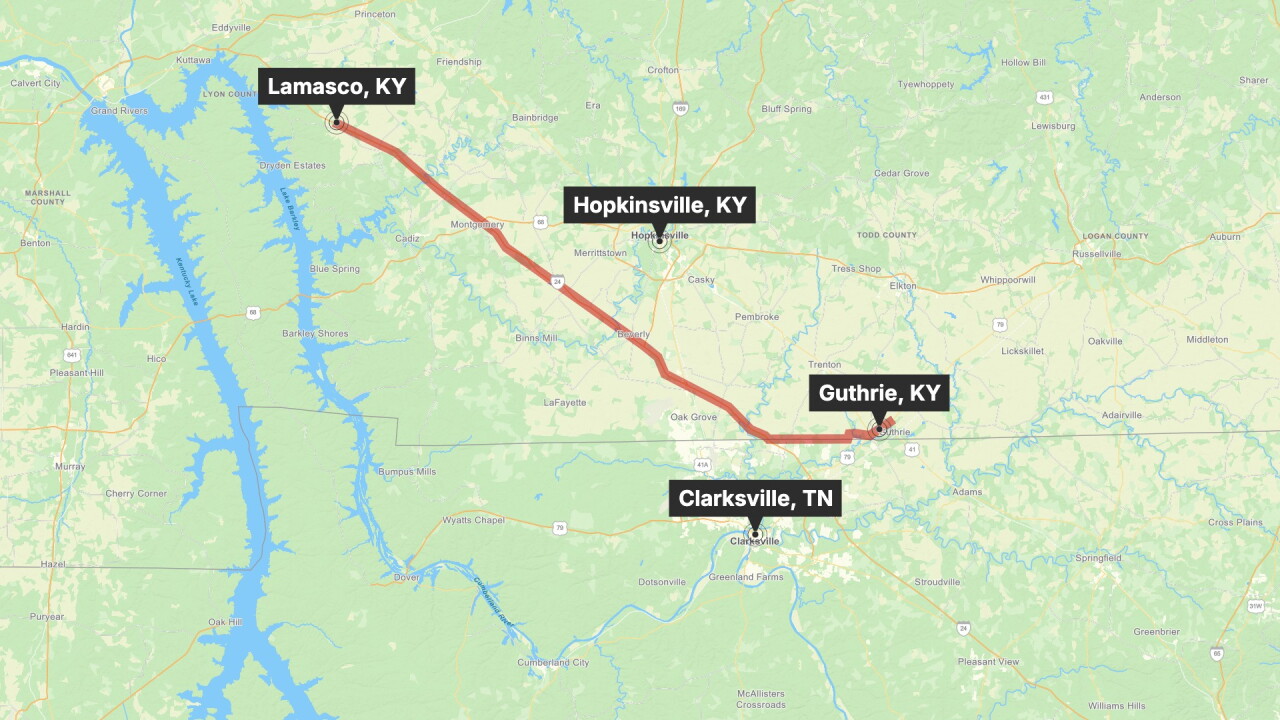
When NewsChannel 5 contacted PREA, the agency provided a written statement before it could ask questions and said it would be its only response.
In that statement, PREA said it has contracts to sell natural gas to Guthrie, Fort Campbell and Clarksville.
However, during a deposition earlier this year, PREA's chairman was asked whether the agency had contracts with anyone to supply natural gas for the pipeline.
His response: "We have no contract with anybody for the supply of gas."
That apparent discrepancy has fueled concerns among some landowners who say they still do not have a clear picture of the project's purpose.
"It's kind of an undefined project and don't really know what the purpose is," Cook said.
Kentucky provided $30 million in 2022 to help start the project. NewsChannel 5 asked the governor's office about oversight and audits related to that funding but had not received a response by deadline.
Meanwhile, PREA has filed condemnation actions against multiple landowners who declined the agency's standard offer of $4 per linear foot for a pipeline easement.
At least one judge has approved a forced easement agreement. But even then, the judge noted unresolved legal questions remain, including whether PREA must obtain additional state approval before construction can begin. Complicating matters, Kentucky lawmakers passed legislation this year addressing Public Service Commission oversight of interlocal agencies. We're still working to determine what that means for this project.
For Cook, the debate extends beyond a single pipeline.
"Whether it's a home, yard or anything, I mean it's who gets to determine a justification for seizing someone's property," he said.
As condemnation cases continue to move through the courts, many landowners say they are still waiting for answers about who will ultimately benefit from the proposed pipeline and whether the project justifies the use of private land.
Do you have more information about this story? You can email me at hannah.mcdonald@newschannel5.com.
This story was reported by Hannah McDonald and has been converted to this platform with the assistance of AI. Our editorial team verifies all reporting on all platforms for fairness and accuracy

September 11, 2001 is a day most associate with terror and tragedy. Austin Pollack shares a story from that day about hope and persistence: the effort to save a little girl’s life – with an organ donation. The problem? The young patient was in Houston, and her life-saving liver here in Nashville. With the grounding of all civilian aircraft, how could it be done? “Nobody ever said this isn’t possible.”
- Rhori Johnston