
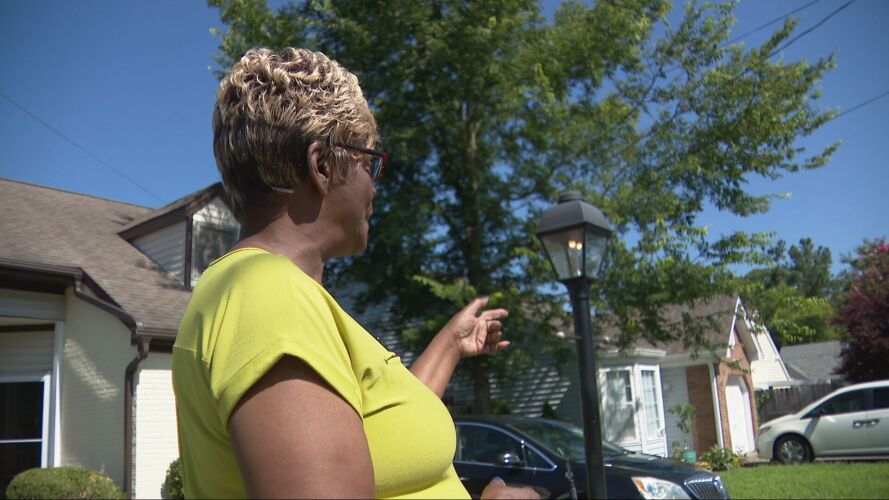


EAST NASHVILLE, Tenn. (WTVF) — Elizabeth Johnson won in court. She just couldn't get paid — until now.
The 79-year-old East Nashville resident had been waiting to collect $1,500 after a neighbor's truck rolled out of park in February and knocked down the decorative gas lamp post at the end of her driveway.
"I had it paid off and then for him to come and tear it up like that, and then they're trying to make me pay for it again. I said, 'Oh no,'" Johnson said.
Johnson said the neighbor wrote her a note promising to pay for the repairs, but never followed through.
"They've been ducking and dodging... they haven't said one word since this accident happened. It was February the third. It's been five months, getting ready to go into the sixth month," Johnson said.
She took the neighbor to small claims court, paying about $150 in court fees. The neighbor did not show up. A judge ruled he was responsible and ordered him to pay $1,500.
But winning the judgment was only the first hurdle. According to the court, collecting the money is the responsibility of the person who wins — not the court.
“I just want some help to get this resolved because I didn't cause this damage, and I wouldn't dare go tear up someone's property and think I'm going to get away with it.”
— Elizabeth Johnson
A month after the ruling, Johnson said she has not received a dime, and her Piedmont repair bill continues to grow with late fees.
"That's when I got in touch with you because I needed some help," Johnson said.
I reached out to the gas company, the court, and the sheriff's office to find out how small claims judgments are actually enforced.
The sheriff's office said it only intervenes when a judge orders it to. Court officials described legal tools available to collect the money, including garnishing paychecks or freezing bank accounts — but those options require the winning party to first track down where the defendant works or banks.
"I don't have any resources to do that, and as old as I am now, you know, I just don't know how to do all that stuff," Johnson said.
Late Thursday, the story took a turn. Johnson said Piedmont called with good news. The call came after I contacted the company on her behalf — Piedmont is removing the charges from her account completely and will take over the debt collection process itself.
"I just want some help to get this resolved because I didn't cause this damage, and I wouldn't dare go tear up someone's property and think I'm going to get away with it," Johnson said.
If you're facing a similar situation, there is one more legal tool available to you. A court judgment can be attached to any property the debtor owns and collected when it sells, according to the Davidson County Register of Deeds Office — though that could take years.
Think I can shine a light on a system that isn't working? Email me at hannahcanhelp@newschannel5.com.
This story was reported on-air by a journalist and has been converted to this platform with the assistance of AI. Our editorial team verifies all reporting on all platforms for fairness and accuracy.

September 11, 2001 is a day most associate with terror and tragedy. Austin Pollack shares a story from that day about hope and persistence: the effort to save a little girl’s life – with an organ donation. The problem? The young patient was in Houston, and her life-saving liver here in Nashville. With the grounding of all civilian aircraft, how could it be done? “Nobody ever said this isn’t possible.”
- Rhori Johnston