
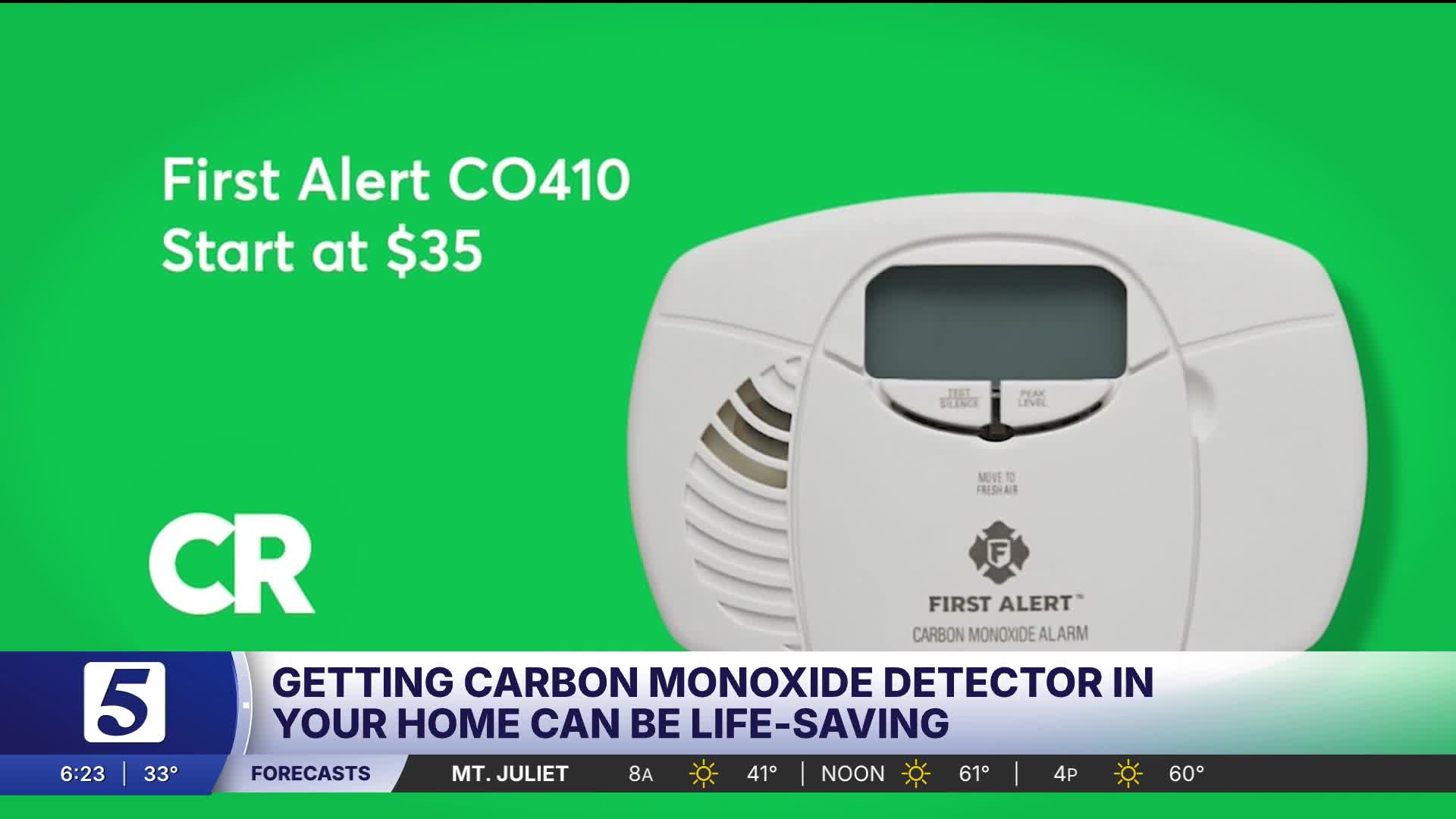


NASHVILLE, Tenn. (WTVF) — A carbon monoxide detector could save your life, Consumer Reports saysYou can’t see it, smell it or taste it, which is what makes carbon monoxide so dangerous. Every year, it kills more than 400 people in the U.S.
Consumer Reports says a relatively inexpensive alarm could save your life. One of CR’s own experts learned firsthand just how important an early warning can be.
Consumer Reports' Paul Hope has spent years warning people about the dangers of carbon monoxide. Recently, the danger hit home when his own CO alarm sounded early one morning.
“The first really cold night of the year caused our boiler to kick on, and it triggered our carbon monoxide alarm.”
Hope and his wife moved fast to get their family and pets out of the house. The alarm was the only warning that anything was wrong, which is why it’s so important to have a working carbon monoxide detector in your home, says CR’s Gabe Knight.
“We can’t see it, we can’t smell it, we can’t taste it. So, your best line of defense against carbon monoxide poisoning is a working detector.”
Consumer Reports tests show some CO detectors are faster to alarm than others. CR recommends a battery-powered First Alert detector. If you prefer an alarm you can plug in, consider one from Kidde.
Consumer Reports also tests portable CO detectors you can take with you while traveling. They can serve as added protection in your home and help detect lower levels of carbon monoxide. In CR’s tests, a portable detector earned top scores.
And remember: The most important thing is to have a working carbon monoxide detector in your home.
“If your carbon monoxide detector alarms, that’s your cue to get out of the house as quickly as possible,” Knight said.
Carbon monoxide poisoning symptoms can also be difficult to recognize.
“CO poisoning symptoms are vague and can easily be mistaken for other things. They can be headache, nausea, shortness of breath, or even confusion and sleepiness.”
As for Hope, the carbon monoxide was traced to a blocked chimney, which has since been repaired.
"It's entirely possible that having carbon monoxide alarms in our house saved our lives or, at the very least, kept us from getting really sick."
CR says to be sure the CO detector you choose meets specific safety standards, look for one with a UL, ETL or CSA group certification label.
Consumer Reports’ carbon monoxide detector ratings are available for free.

North Nashville lost a passionate advocate and historian with the passing of Lorenzo Washington. I had the pleasure to get to know him while working on a story and left with a wealth of information and appreciation for how Jefferson Street shaped the sound of Music City. Aaron Cantrell shows us how Lorenzo will forever be part of that.
- Carrie Sharp