
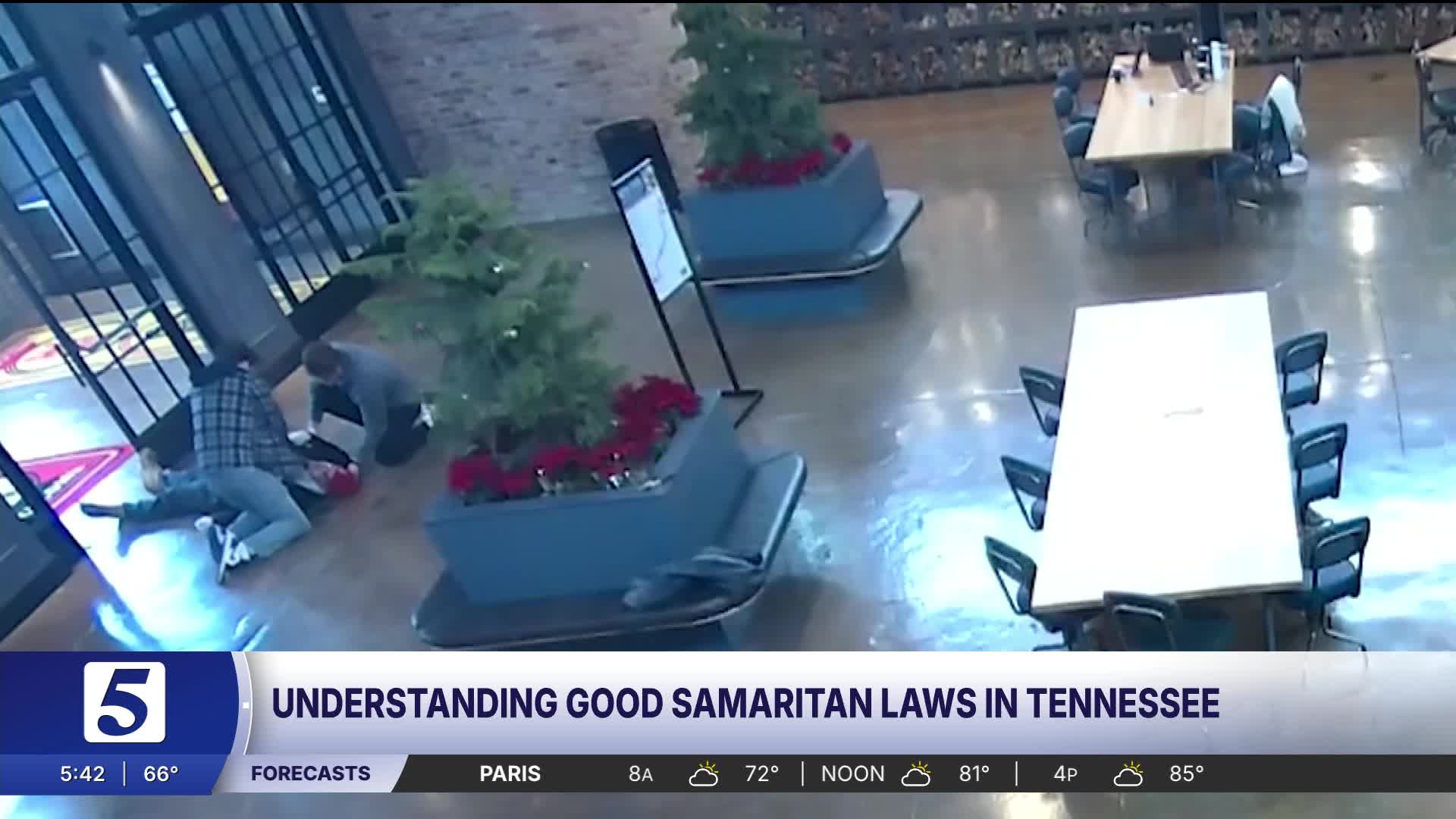


NASHVILLE, Tenn (WTVF) — Remember the story of the heroic bystanders who stepped up to help during a cardiac arrest at The Factory at Franklin? First responders are taking this opportunity to remind people about Tennessee's Good Samaritan Law.
After our story aired featuring the actions of a group of people who helped save a 65-year-old man's life, a comment on social media took us back to Franklin.
When Wayne Young collapsed while making a delivery, several people rushed to his side and called 911. A dispatcher instructed them to start CPR and find an automated external defibrillator (AED). Lieutenant Paramedic Austin Cooper said their actions were the difference that helped save his life.
"From the time the patient goes down, to the time they walk out of the hospital, there's a chain of survival, everybody has to do their own thing. With them doing what they did, it helps out that chain of survival a lot. It's really encouraging."
A comment on social media following our story said, "It's sad to say this but I'd be scared to administer CPR in this sue-happy culture. Who's to say this man wanted to [be] saved? And who's to say he wouldn't sue them for saving his life if he didn't want to be saved."
We took that concern of liability to the Franklin Fire Department. EMS Officer Sarah Glenn said the state's Good Samaritan Law protects people who step in to help during an emergency and act in good faith.
"Anything that you're doing to try and help someone is considered in good faith," explained Glenn. "As long as you're doing everything you can to try to help, you're doing what you know to be best, then the Good Samaritan Law would protect you from liability in that case."
Glenn said this protection extends to the use of an AED. It also protects you if you intervene and you have no training at all and something goes wrong.
"One thing you really need to understand is, somebody who is in cardiac arrest is clinically dead. Anything that you do to try to intervene, to try and help that person is a positive thing, it's going to make a positive difference. If you don't do anything they will die," she said.
Williamson County dispatchers coached callers through CPR 430 times in 2025. Even if you are not trained in CPR, they can walk you through it step by step.
"I don't like to hear that people are afraid to step in and help. I wish that we could provide training and an understanding for everybody because people make a huge difference in this community and communities all over the place everyday. They save people's lives. CPR and early defibrillation can absolutely make a difference and can save somebody's life."
There are cases where someone cannot intervene in a situation, maybe because of age or mobility. The Good Samaritan Law does not require someone to act in an emergency, but offers protection if you do.
Have you ever stepped up to help when it mattered the most? Were you ever saved due to the help of a bystander? Do you have more information on CPR training? Share your experience with me at Megan.Scarano@NewsChannel5.com

A slip-and-slide for seniors?! Who knew it could stir laughter and tears. Photojournalist Angie Dones captures a story filled with so much joy and one that will tug at your heartstrings.
- Carrie Sharp