

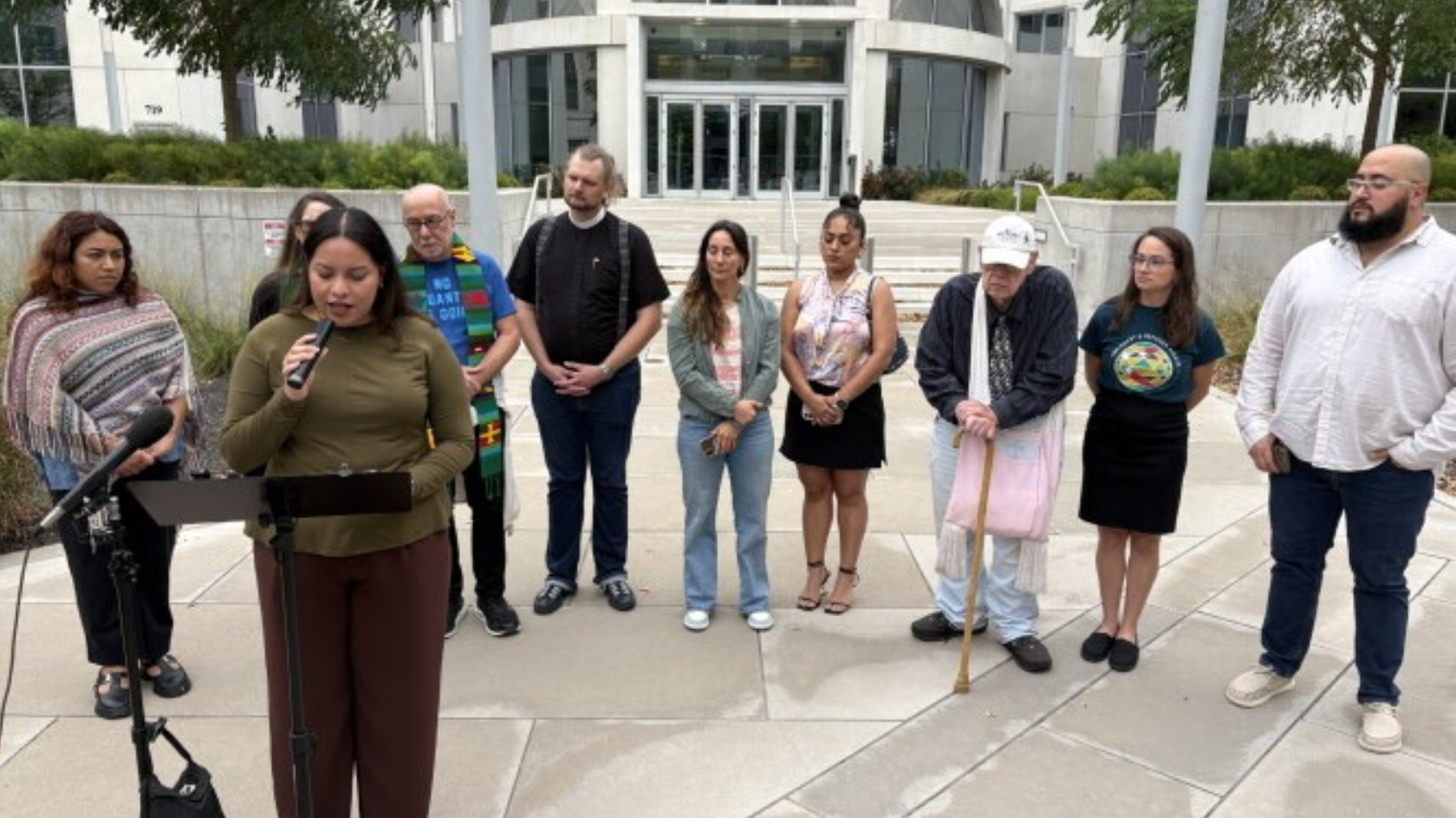


NASHVILLE, Tenn. (WTVF) — The Tennessee Immigrant and Refugee Rights Coalition (TIRRC) presented arguments to a federal court for the first time over what the group called a "massive racial profiling event in the heart of Tennessee's immigrant community."
The lawsuit names the Tennessee Highway Patrol, the Tennessee Department of Safety and Homeland Security Commissioner Jeff Long, and THP Colonel Matt Perry as defendants.
Watch report from Levi Ismail
TIRRC attorneys argued THP violated Fourth and Fourteenth Amendment rights by racially profiling immigrants during the Trump administration's Operation Flood the Zone in Nashville last May. The lawsuit cites cases where troopers said they were doing what their supervisors instructed.
TIRRC also asked Judge Aleta Trauger to grant a preliminary injunction preventing THP and ICE from partnering on immigration enforcement while the lawsuit proceeds.
THP said they had 10 troopers that night working alongside ICE agents to make stops related to "hazardous traffic violations," but the footage routinely showed troopers questioning drivers about where they were born.
In some of the more than 200 videos, troopers pressed drivers for a more believable answer if they heard even a hint of an accent.
Attorneys said since ICE cannot detain motorists for traffic violations and THP cannot detain people for simply violating immigration laws, the two agencies worked together to make as many immigration-related arrests as possible. They argued the on-the-spot immigration checks went well beyond traffic safety and violated the rights of both drivers and passengers.
Faith leader Kaki Friskics-Warren said those detained were often ripped from their families without due process.
"We saw family providers detained leaving their families without any source of support. We saw mothers zip tied and put in the back of unmarked cars, and what's really astounding is that only about three percent of the people detained had prior criminal charges. So, the lines and narratives that we're being told that this is about the worst of the worst, or we're trying to get criminals off the street, it's just not true,” Friskics-Warren said.
Different drivers, different standards
In one video clip, a white driver was stopped and, even though we could see someone in the passenger seat, the trooper never asked the passenger for an ID.
On that same night, troopers questioned certain minorities about where they were from before turning to passengers.
Those who refused, remained silent, did not have identification, or had identification from another country were almost always taken away in handcuffs.
THP conducted more than 600 traffic stops and helped make more than 100 arrests. While some troopers asked drivers where they were born, others handed ID's to ICE agents who took over the majority of the traffic stop.
TIRRC Board Member Alejandra Hodge said she witnessed people treated as less than human based on their perceived race.
One of the most talked about interactions from these traffic stops involved an ICE agent telling others to give the passenger of a vehicle “the mark of the beast.”
“Regardless of immigration status, nationality or the color of our skin, every human being deserves to be treated with dignity and respect. That conviction should not be controversial,” Hodge said.
No matter how you feel about the immigration debate, Hodge said she worries these collaborations do more to fracture trust between these immigrant communities and law enforcement in general.
She said she’s seen cases where domestic violence victims chose not to contact law enforcement knowing it could jeopardize their safety or their family’s safety.
"I have watched trust in law enforcement deteriorate. When we see law enforcement agencies cooperating with immigration authorities, fear of one agency can quickly become fear of them all...and that has serious consequences for our community," Hodge said.
THP representatives have said the agency declined invitations from ICE to collaborate on similar operations in Nashville. Samantha Morris of the State Attorney General's office, who represents THP in court, said the injunction request is based on data from a Nashville operation that's already complete.
Morris argued granting an injunction does not make sense if it is meant to stop future operations THP says will not happen.
As for collaborations in the Memphis Safe Task Force, Morris said these operations are not one in the same.
She pointed out how the task force involves several agencies all brought together by President Donald Trump to make Memphis a safer place.
Maria Oceja is the founder of Vecindarios 901 in Memphis where one of the city’s largest immigration raids took place earlier this month. More than 120 people were taken away in zip ties as the Tennessee Bureau of Investigation executed a search warrant at a Memphis bar. Oceja says what she’s seen so far has done little to make anyone in her city feel safe.
“Families are being ripped apart. Children are being left behind. Students are being detained. Working people are being taken off the streets. This is not going to help improve Tennessee’s economy and this is not going to help improve our social community,” Oceja said.
Judge Trauger said she’s taking the arguments under advisement and expects to have a decision on the preliminary injunction soon.
This is a developing story.
