
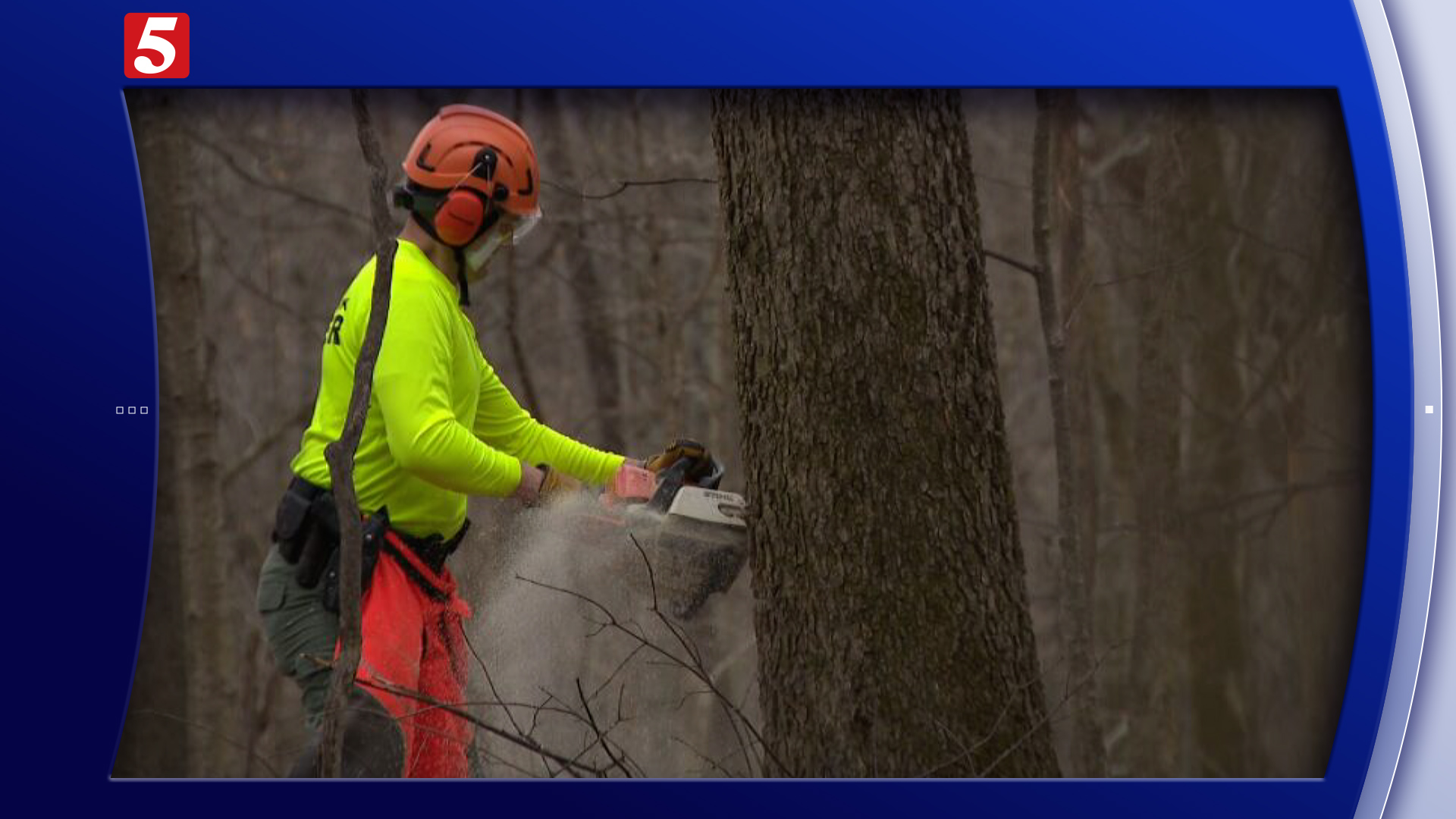


OAK HILL, Tenn. (WTVF) — Radnor Lake State Park is back open to the public, weeks ahead of schedule, after an ice storm forced it to close and left the landscape dramatically changed.
What park management initially feared could take until May 1 ended up taking only about five weeks, thanks to an army of volunteers and a dedicated park staff.
Park Ranger Brandon Jarratt described the scale of the damage in the immediate aftermath.
"The Lake Trail was covered with trees," Jarratt said. "Plenty of long days, no shortage of work."
The storm left too much debris for park staff to handle alone. Volunteers stepped in to tackle smaller tasks like raking and clearing fallen timber, carrying their own tools to help with the effort.
"There's been like six days of crews coming out here, I think 40-50 people a time," volunteer Dale Gill said.
For Gill, the motivation was personal.
"It feels like you're trying to give back something to a place I come to quite often and enjoy it very much," said Gill.
Park rangers handled the more dangerous work. Along the Gainer Ridge Trail, Rangers Paul Schauer and another colleague faced two large trees tangled together and leaning over the path. "So we've got two danger trees, kind of stuck together here. It's complicated," Schauer said.
The situation quickly grew more complex. The rangers determined they may need to cut down a third tree to safely bring the others down. "That is an option. I don't know if I love the option, but it is an option," Schauer said.
They ultimately went with that option. With volunteers watching closely, Schauer made a series of precise chainsaw cuts. The operation was ultimately successful.
Park Manager Steve Ward said crews have been running chainsaws since Jan. 24. When the storm first hit, his initial assessment pointed to a May 1 reopening.
"The initial assessment we made on the second or third day, was May 1st," said Ward.
Instead, the park reopened far sooner. Word spread quickly, and regular visitors like Priscilla Morris made sure to be first in line.
"I'm extremely excited. Extremely excited," Morris said. "I do about 7-8 miles every time I come. And I go for the owls that are in certain places now, and the eagles."
While the park looks different than it did before the storm, Ward said the fallen trees could actually benefit local wildlife.
"That's food source and habitat for those birds. Things like small mammals, other things, have new habitats to live in and raise their young. So we'll probably see some population increases with some of our wildlife," Ward said.
For now, park management plans to pause recovery efforts and let guests enjoy the park through the spring. This summer, officials plan to convert some of the hardest-hit areas into native grasslands, which could help support the struggling population of Monarch butterflies.
Do you have more information about this story? You can email me at Chris.Davis@NewsChannel5.com.

September 11, 2001 is a day most associate with terror and tragedy. Austin Pollack shares a story from that day about hope and persistence: the effort to save a little girl’s life – with an organ donation. The problem? The young patient was in Houston, and her life-saving liver here in Nashville. With the grounding of all civilian aircraft, how could it be done? “Nobody ever said this isn’t possible.”
- Rhori Johnston