

NASHVILLE, Tenn. (WTVF) — Philip Sydnor, Yadezia Jones, and Marcus Rutledge were all recently identified in the last two months after their remains were discovered years, even decades ago.
Advances in DNA technology and the persistence of detectives are leading to big breaks in cold cases in Nashville.
I spoke with Metro Police about forensic genealogy and how it could help anyone currently looking for a loved one.
Some cold cases can feel unsolvable, but advances in technology are giving detectives hope.
"It's been able to give us a lot of answers to a lot of our unidentified human remains cases as well as homicides," said Metro Police Cold Case Unit Detective Andrew Davis.
Davis is talking about forensic genetic genealogy, a tool recently used to identify a human skull found in 1991.
"You had such limited information when it came to this case, it seems," I asked Davis.
"Right," he responded.
"That's what made it a good candidate?" I continued.
"Yes," Davis said.
The remains were discovered in an Antioch neighborhood that likely looks very different now than 35 years ago. They were first found by a dog, not a resident. Using investigative genetic genealogy, police confirmed the remains on Barksdale Lane belonged to Philip Sydnor, who would have been 40 at the time.
He was not someone the police had considered, and his family, assuming he had passed away, never contacted authorities.
"We had an anthro report that initially told us the skull belonged to a woman, but obviously that was incorrect," Davis said.
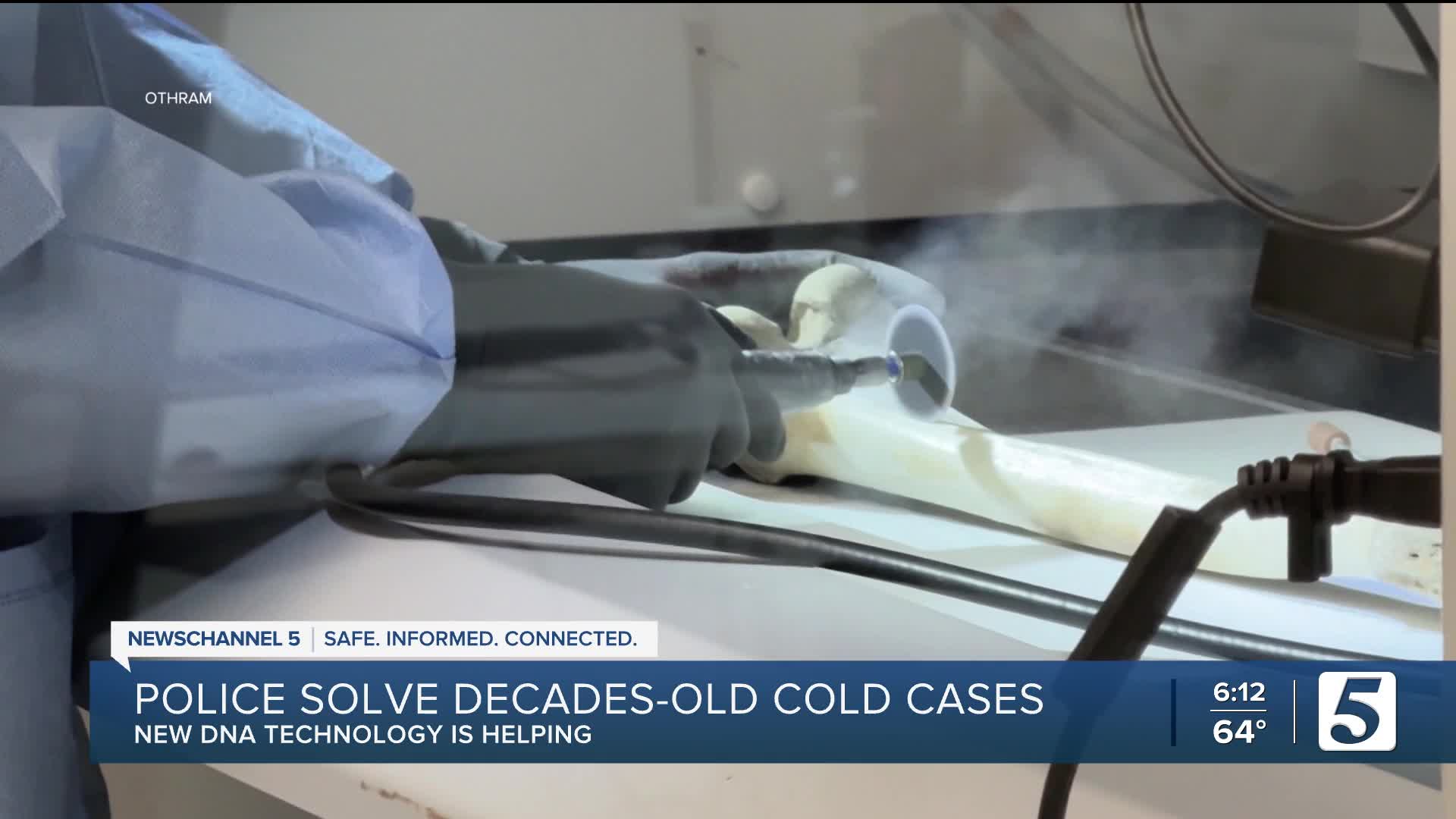
Metro Police partnered with Othram Lab in Texas on the case and are collaborating with them on nearly a dozen others. Forensic genetic genealogy is expensive, often costing more than $7,500, and a lengthy, meticulous process. Scientists extract DNA, sequence it to build a profile, and law enforcement uses it to find potential relatives.
In both the Sydnor case and the Vandy Jane Doe case, recently identified as Yadezia Jones, some testing was funded by everyday people through Othram's DNASolves platform.
"I know that it is a terrible pain not to know where a loved one or family member is, and I think people connect with that and bring resolution to a case," Davis said.
For families with long-missing loved ones, sharing DNA could be the key to solving a case.
"We have tons of unidentified human remains, and they are just waiting for a match. Unless we have a family member who has put their DNA forward, they will remain unsolved," Davis said.
Othram Lab reports they have worked on at least 30 unsolved cases from Tennessee.
As for the Sydnor case, anyone with information about him is asked to call the Cold Case Unit Detective at 615-862-7720.

September 11, 2001 is a day most associate with terror and tragedy. Austin Pollack shares a story from that day about hope and persistence: the effort to save a little girl’s life – with an organ donation. The problem? The young patient was in Houston, and her life-saving liver here in Nashville. With the grounding of all civilian aircraft, how could it be done? “Nobody ever said this isn’t possible.”
- Rhori Johnston