
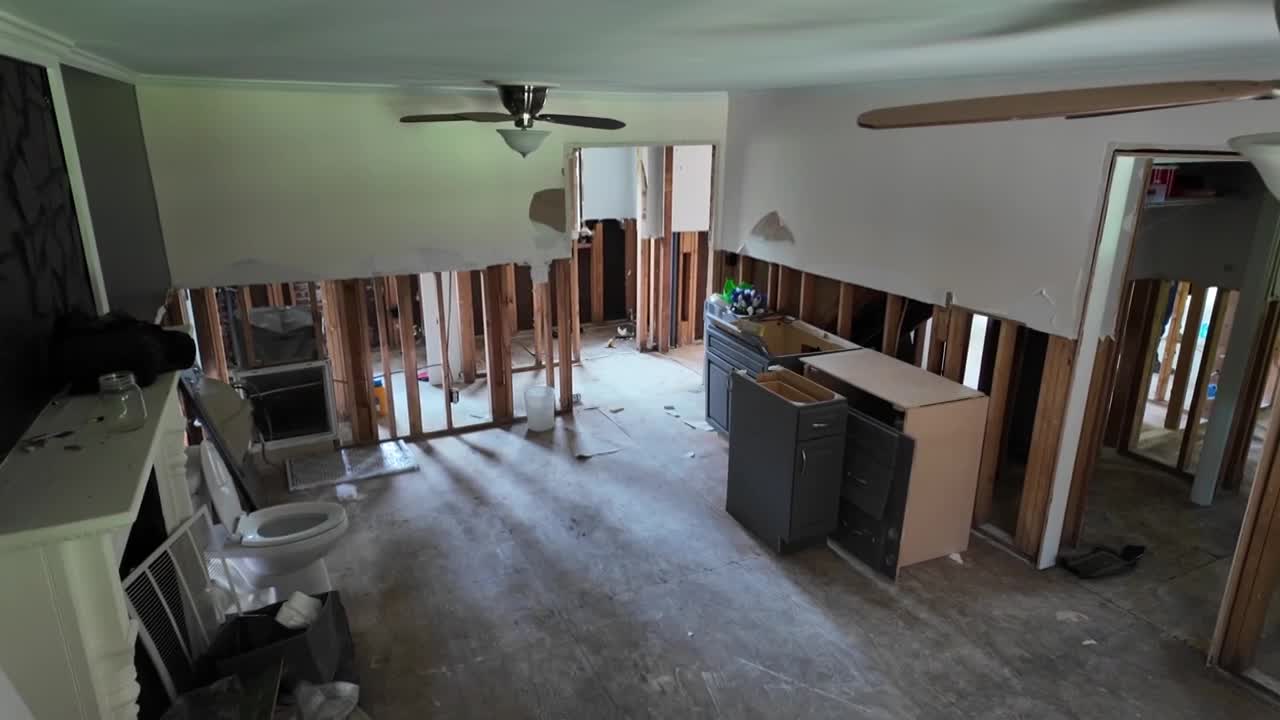


HERMITAGE, Tenn. (WTVF) — A Hermitage family has been living with relatives for months after floodwater destroyed their home and their council member said there is no capital improvements project planned to prevent it from happening again.
Kendre Streeter and his wife became first-time homeowners, a milestone he described as a proud moment for their family of seven.
"We have five kids — 17, 15, 12, 11 and a newborn," Streeter said.
But floodwater rushed into their Port Anadarko Trail home weeks ago, forcing the family out.
"It was coming through my vents, my garage, came through front door and back door, so we were scrambling, unplugging things, moving as much as we can before it got damaged," Streeter said.
Metro Water said the home and surrounding properties sit in a FEMA-designated 100-year floodplain, meaning the property has a 1% chance of flooding in any given year and roughly a 26% chance of flooding over a 30-year mortgage period. A portion of the property also sits in a floodway — the highest-risk area, where high-velocity flows occur during flood events and where flooding cannot be prevented.
Streeter knew the home was in a flood zone but said he did not realize part of the property was in a floodway.
"They said it could be fixed, but it would be tremendously expensive because they couldn't do just my area. They would have to do the whole ravine," Streeter said.
Council member Erin Evans, who walked the property with Streeter and Metro Stormwater's Ricky Swift, told NewsChannel 5's Aaron Cantrell there is no capital improvements project that would potentially save them from being flooded again.
Metro Water said the homes were built before current stormwater standards took effect. Under today's regulations, homes cannot be built in a floodway, and homes built in a floodplain must be constructed 4 feet above the base flood elevation. Metro said elevation or relocation are the only options to avoid future flood losses.
Streeter is also navigating flood insurance complications after learning the home had flooded under previous owners.
"Some things are covered and some things are not based off previous homeowners," Streeter said.
His policy does not cover temporary housing, leaving his family to stay with relatives while repairs are made.
One additional option exists: a FEMA buyout, but Evans said the financial cost of restoration would need to reach at least half the property's value to potentially qualify — and funding would have to be available. Swift recommended Streeter gather all documentation from this flood and previous floods, along with repair costs, as a starting point.
Metro Water said flood insurance is available to all Davidson County property owners through the National Flood Insurance Program. For insured homes with substantial flood damage, FEMA coverage may also provide money through Increased Cost of Compliance to help elevate the home.
Residents can check whether a property is at risk of flooding by viewing FEMA flood maps at msc.fema.gov or Nashville's flood map tool at nashvilletn.withforerunner.com.
For Streeter, the experience has underscored what he wishes he had known before purchasing the home.
"If you're going to take that undertaking on, you want to have the security in knowing you're going to be taken care of — or your investment," Streeter explained.
You can support the family's recovery efforts, here.
This story was reported on-air by a journalist and has been converted to this platform with the assistance of AI. Our editorial team verifies all reporting on all platforms for fairness and accuracy.

September 11, 2001 is a day most associate with terror and tragedy. Austin Pollack shares a story from that day about hope and persistence: the effort to save a little girl’s life – with an organ donation. The problem? The young patient was in Houston, and her life-saving liver here in Nashville. With the grounding of all civilian aircraft, how could it be done? “Nobody ever said this isn’t possible.”
- Rhori Johnston