

NASHVILLE, Tenn. (WTVF) — When young people get in trouble, the consequences can follow them, but there's a program out there giving students a role in helping their peers get back on track.
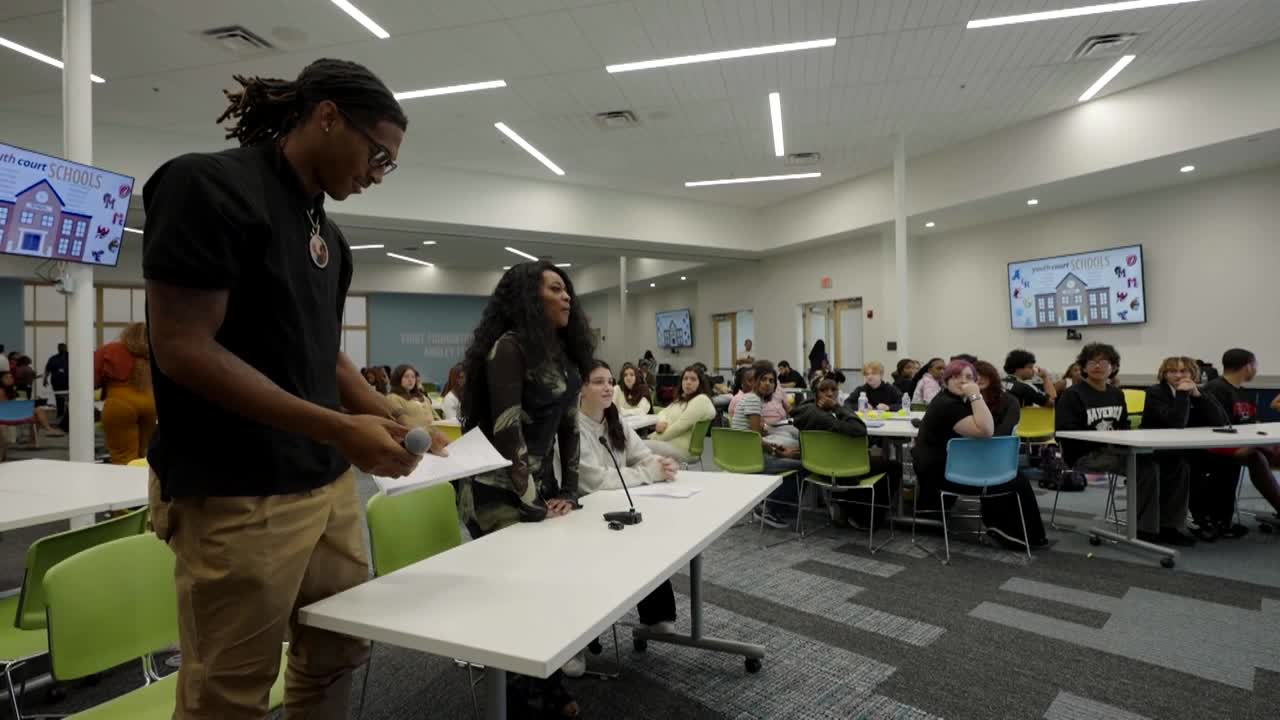
Through Youth Court, Metro Nashville Public Schools students hear real juvenile cases involving lower-level offenses and help determine what happens next.
Students participating in the program took part in training Monday, including a mock trial that gave them a chance to practice the roles they will take on.
Youth Court gives high school students a voice in deciding how their peers are held accountable while offering young people an alternative within the juvenile justice system.
“People make a mistake and now this is the rest of your life, or they put you in a certain box and in reality, it was never that,” said Nevaeh Brown, a junior at John Overton High School.
Brown said students who find themselves in trouble may also be dealing with challenges outside of school.
“Not everyone had the same opportunities as someone who grew up in a stable household,” Brown said. “Or grew up ... where they didn’t have to struggle about providing or making sure [they could] get to point A to point B with no worries.”
Youth Court is one of several diversion programs offered through Davidson County Juvenile Court.
Juvenile Court Judge Sheila Calloway said cases can include curfew violations, driving without a license, disorderly conduct, shoplifting and other lower-level misdemeanor offenses.
“We will have cases that range from curfew violations, driving without a license, disorderly conduct, shoplifting, some lower-level misdemeanor cases,” Judge Calloway said.
Students also receive training and mentorship from community leaders, including Nashville Chief Public Defender Martesha Johnson Moore.
“Things happen in school. Harms happen in school. But they get to be an incredible part of figuring out: How do we restore that harm? How do we keep a kid engaged with their education and school environment?” Johnson Moore explained.
For the students involved, the program also gives them an opportunity to advocate for people their own age.
“We can fight for them from our point of view,” said Mikhai Moshay, a senior at Pearl-Cohn High School.
Ashford Hughes with MNPS said the program can help students repair relationships within their schools and communities.
“This is a way they can restore themselves, get their relationship and get that culture back at that school and school community,” Hughes said.
The students participating in Youth Court have different career aspirations, but the program is also giving them an opportunity to learn about the justice system while making a difference in the lives of other young people.
“I love to see a change in somebody’s life,” Brown said.
Calloway said young people who participate in Youth Court programs across Tennessee have a recidivism rate of less than 4%, meaning the vast majority do not return to the juvenile justice system after completing the program.
This story was reported on-air by a journalist and has been converted to this platform with the assistance of AI. Our editorial team verifies all reporting on all platforms for fairness and accuracy.

September 11, 2001 is a day most associate with terror and tragedy. Austin Pollack shares a story from that day about hope and persistence: the effort to save a little girl’s life – with an organ donation. The problem? The young patient was in Houston, and her life-saving liver here in Nashville. With the grounding of all civilian aircraft, how could it be done? “Nobody ever said this isn’t possible.”
- Rhori Johnston