
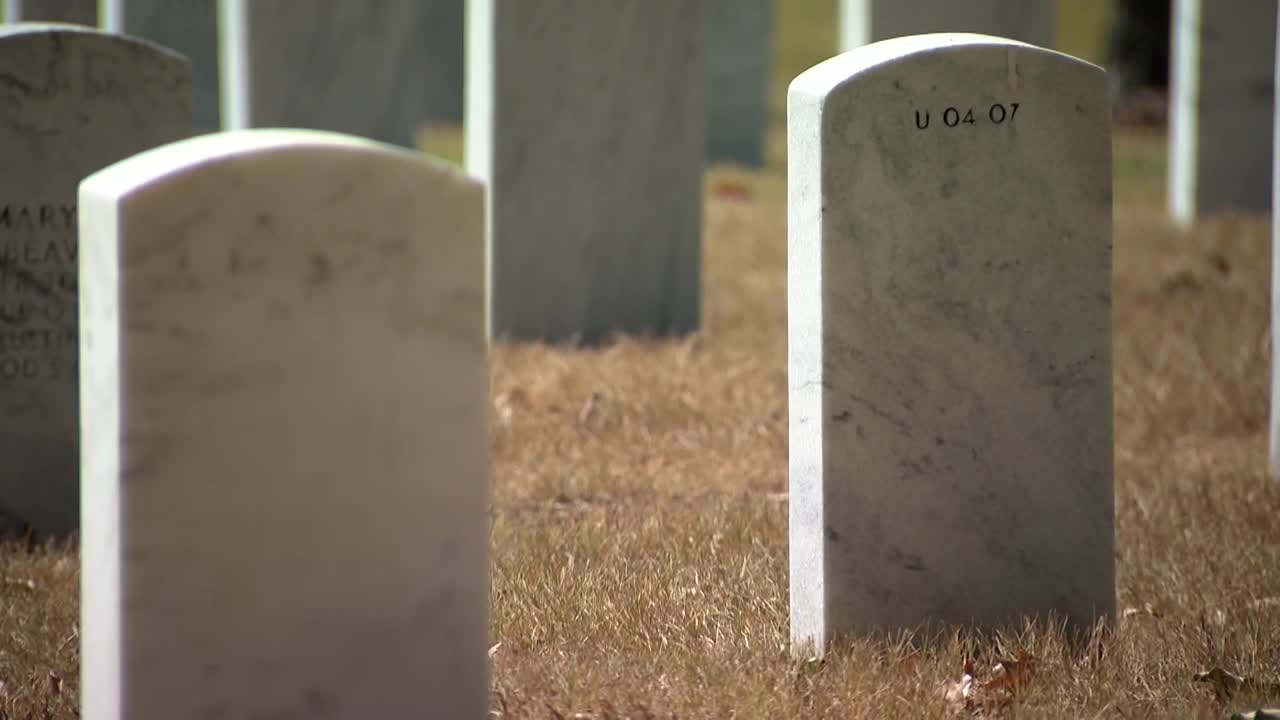


NASHVILLE, Tenn. (WTVF) — For years, some Tennessee National Guard and Reserve members found themselves in an unexpected position. Despite serving their country, they were not eligible to be buried in Tennessee's state veterans cemeteries.
That included Richard Norment, a Tennessee National Guard veteran who was surprised to learn he did not qualify when he inquired several years ago about burial at the Middle Tennessee State Veterans Cemetery.
Norment frequently visits the cemetery, describing it as a peaceful place where he can reflect and pay his respects. "Just drive through and stop and meditate," he said. "Beautiful place to be."
When the time comes, Norment hopes to be buried there as well.
But four years ago, after the cemetery director reviewed his records, Norment said he was told he was not eligible. "He looked at my records, and said, 'Oops. You don't qualify because the order you went to serve active duty was by order of the governor and the president of the United States,'" Norment recalled.
The issue stemmed from eligibility rules that left some National Guard and Reserve members outside the requirements for burial in Tennessee's veterans cemeteries.
Norment served in the Tennessee National Guard and was activated in Memphis in 1968 during the unrest surrounding the assassination of civil rights leader Martin Luther King Jr. "Primarily, our mission was to help backup the Memphis Police Department," he said.
For years, Tennessee lawmakers discussed changing the eligibility requirements.
Supporters argued that service to the state and nation should be recognized regardless of whether a service member's activation qualified under previous standards.
This year, lawmakers approved legislation expanding eligibility for Tennessee's state veterans cemeteries.
Under the new law, National Guard and Reserve members may qualify if they served honorably for at least eight years. The law also allows eligibility for those who were called to duty under state orders, regardless of length of service.
The change means more Guard and Reserve members will be eligible for burial in Tennessee's state veterans cemeteries.
Eligible veterans and their spouses may also be buried in those cemeteries at no cost. "That's a significant amount of money for anybody," Norment said.
But he says the change is about more than saving money. "It's respect," he said. "We were serving our country and now we're honored just like everybody else."
What documents do I need?
- NGB Form 22 — Your National Guard separation record
- DD Form 214 — Separation record for any active-duty period
- NGB Form 438 or 439 — Notice of eligibility for Reserve retirement
- DD Form 215 — A correction to a DD Form 214, bring it with the DD-214
- Honorable Discharge Certificate — DD Form 256, 256AF or 257
- State activation orders — Orders from a state call up: flood, tornado or another emergency
- Marriage certificate — If you are married and wanting to be buried together
If you'd like to learn more about eligibility requirements or begin the application process, click here.
Do you have more information about this story? You can email me at Chris.Davis@NewsChannel5.com.

September 11, 2001 is a day most associate with terror and tragedy. Austin Pollack shares a story from that day about hope and persistence: the effort to save a little girl’s life – with an organ donation. The problem? The young patient was in Houston, and her life-saving liver here in Nashville. With the grounding of all civilian aircraft, how could it be done? “Nobody ever said this isn’t possible.”
- Rhori Johnston