

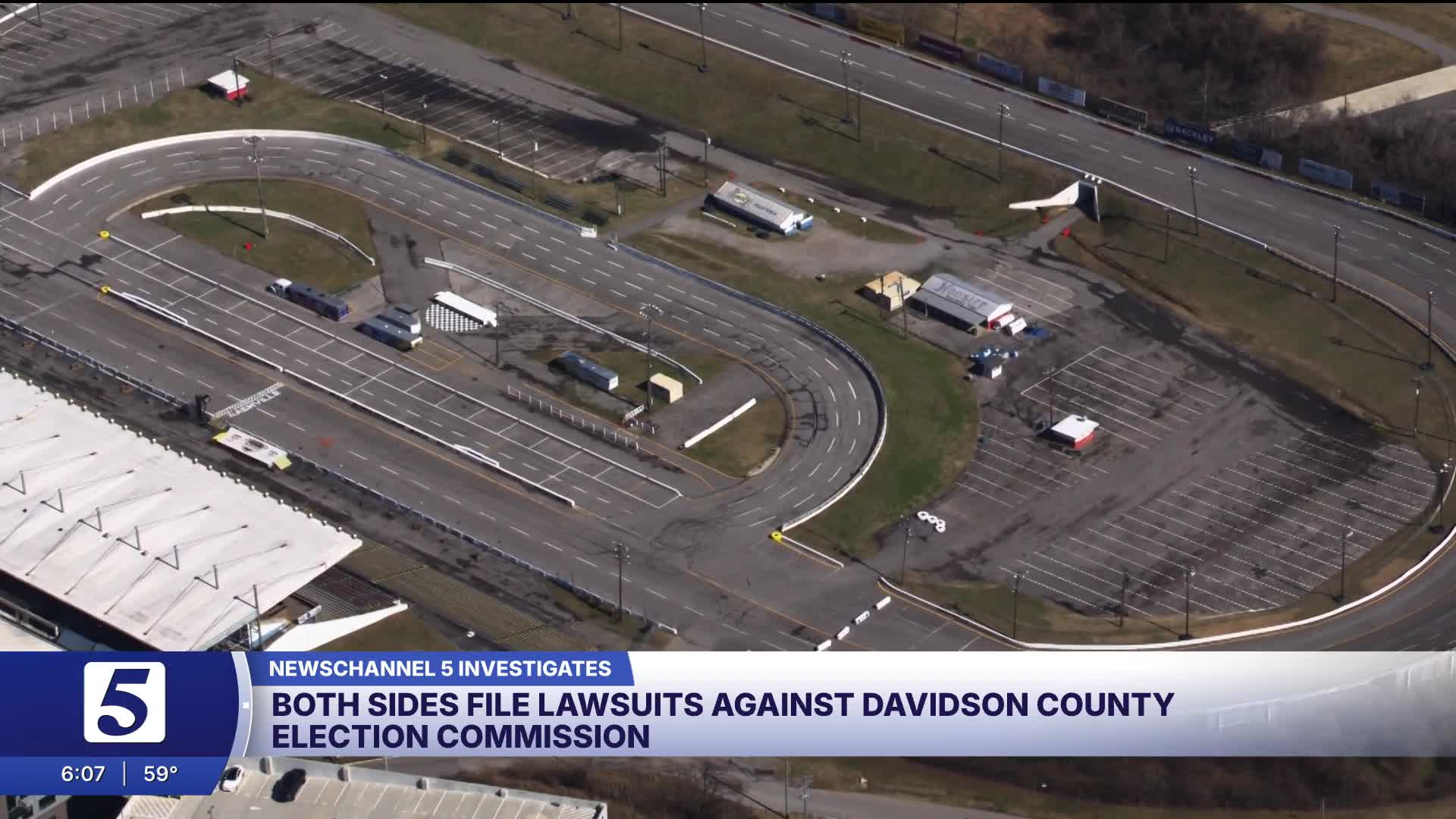


NASHVILLE, Tenn. (WTVF) — Both sides of Nashville’s controversial racetrack debate have filed separate lawsuits against the Davidson County Election Commission, each alleging mistakes were made during the counting of signatures.
The legal challenges come after the commission certified a petition by the Restore Our Fairgrounds coalition in October, meant to put the future of one of the country's oldest racetracks on a ballot for voters to decide in summer 2027.
The lawsuit filed by Decline to Sign not only questions the coalition's methods in getting these signatures, but the group also says the Commission used the wrong threshold for how many signatures were needed to certify the petition.
“This case asks a simple question: Will fraud be allowed to put a measure on the ballot to change the city’s charter? We are asking the Davidson County Chancery Court to overturn the Election Commission’s October 16, 2026 approval of a petition that would end auto racing at the Nashville Fairgrounds Speedway due to the rampant forgery and fraud in the petition submitted by Citizens Against Racetrack Expansion (CARE).”
The Metro Nashville and Davidson County Charter says, "petitions shall be signed by at least ten percent (10%) of those registered to vote in Nashville-Davidson County as of the date on which the Charter Revision Commission files the certification of the petition with the metropolitan clerk."
The commission told me the threshold was based on the number of registered "active" voters in the county, which Decline to Sign says unlawfully moved the threshold from 47,000 signatures to 40,194.
Restore Our Fairgrounds finished their petition drive with 47,679 valid signatures, meaning depending on which threshold is considered, there’s virtually no margin for error.
Decline to Sign sent more than 2,000 names to the Commission before they certified the petition. They say these are people who either felt misled into signing under false pretense or their signatures were forged.
Several affidavits were also attached to the lawsuit with names of people who in some cases haven’t lived in the state for years and want their name removed.
“The Election Commission accepted signatures of dozens of individuals who have signed affidavits that signatures in their names were forged, including former residents who left Tennessee years ago. It’s clear that multiple canvassers conducted extensive forgery and fraud, and it is also clear from the Election Commission’s own internal recorded notes that their reviewers observed patterns of abuse. The Metro Charter requires the Commission to verify that every signature is genuine, and a forged signature can never pass that test. Beyond accepting outright fraud, the Commission also improperly counted undated and duplicate entries, people who were not registered when they signed, and signatures withdrawn before filing. The court should void this certification and tell citizens that forgery and fraud cannot be used to decide what goes on Nashville’s ballot.”
The Restore Our Fairgrounds coalition led in part by former Metro attorney Saul Solomon, filed their own lawsuit claiming the Commission wrongfully turned down more than 700 signatures that should have been included in the final total.
They say the names were incorrectly labeled as “not registered” when they were. Solomon is asking the court to consider applying their legal challenge only if the opposing side’s lawsuit could mean removing names from a petition, leaving them with less than what’s needed for certification.
The lawsuit also disputes the idea that the threshold for signatures is anything less than the 40,194 quoted by Commissioners. They point to Tennessee law (TCA 2-2-106) over voter purging that states: "Voter registrations that are inactive pursuant to this section shall not be included in a county's total of registered voters. The administrator shall maintain a separate total of voters on inactive status."
“Nashvillians are tired of this constant drumbeat of frivolous litigation. At this point, it’s time to consider the source. The fact is: Decline to Sign is a thinly veiled political operation backed by Speedway Motorsports and Darden Copeland’s Calvert Street Group, which has a documented history of deceiving the public. Meanwhile, it’s clearer than ever that the Fairgrounds Speedway’s culture is not aligned with our community – as evidenced by the hateful display of the Confederate flag during this month’s races. We invite all Nashvillians to join our movement to restore the speedway site to community green space and leverage a portion of the property to address urgent community needs like affordable housing and cleaning up the polluted Brown’s Creek. We want a Nashville for Nashvillians, not toys for tourists who don’t share our community’s values."
NewsChannel 5 Investigates reported earlier this week about the changes promised by racetrack promoters over the Confederate flag appearing on a race car.
Officials say the driver has apologized, but the NAACP Nashville chapter demanded accountability over how a symbol of “white supremacy” was allowed in a public space.
As for what's expected from the chancery court, it's now the second legal challenge by Decline to Sign to throw out the petition since it was certified.
Chancellor Anne C. Martin ruled last month that the commission was not required to create a process allowing voters to withdraw their names from the petition.
In her ruling, Martin found that while the Metro Charter requires election officials to verify signatures, it does not require them to establish a withdrawal process. She also noted that opponents have other legal options to challenge the commission's certification.
Much of the controversy behind the petition-gathering process has centered on whether canvassers misled people into signing without explaining that the proposal could end racing at the fairgrounds.
